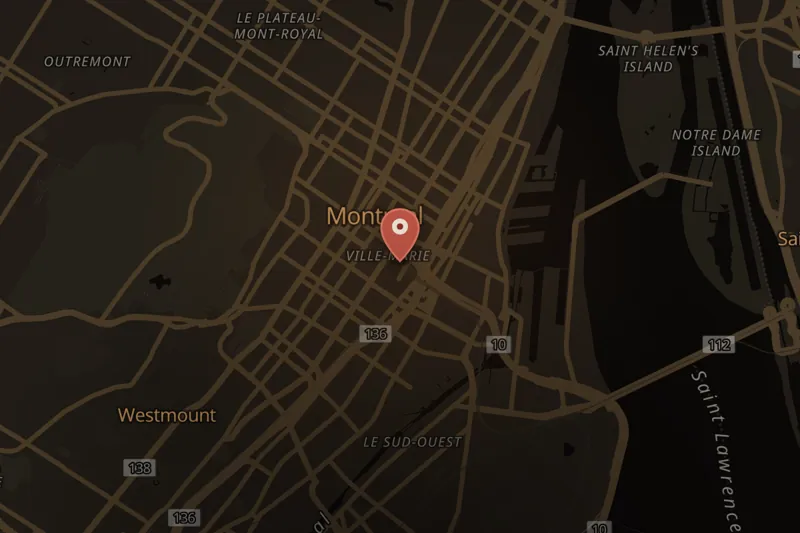
On the morning of September 3, 1984, a pipe bomb made of gunpowder, dynamite and possibly gasoline exploded in locker #132 at Montreal Central Station in Montreal, Quebec, at 10:22 a.m. The explosion killed three French tourists — 25-year-old Marcelle Leblond, 24-year-old Michel Dubois, and 24-year-old artist Eric Nicolas — and injured between 30 and 47 other people, including Robert Georges Duponte, who separated his shoulder. A fourth member of the tourist group, Joel Mary, survived and was treated at Royal Victoria Hospital. Witnesses reported hearing someone shout "Le pape est mort!" ("The Pope is dead!") shortly before the blast, which occurred days before Pope John Paul II's scheduled visit to Canada.
In the lead-up to the bombing, Via Rail police had received a warning phone call and an anonymous letter referencing "the end of the Unholy Vatican" and threatening violence. On the day of the attack, a man later identified as Thomas Bernard Clark Brigham, an American who lived near the station and frequently watched trains, approached journalist Kathryn Leger and discussed the bombing's timing and numerology, while denying involvement. Leger reported the conversation to police, and Brigham was taken in as a material witness that evening after acknowledging he had written threatening letters, though he continued to deny planting the bomb.
Brigham, a divorced father of 11 and a World War II veteran who had been committed to psychiatric institutions multiple times and had been under Secret Service surveillance for stalking President Ronald Reagan, was initially "ruled out" by police two days after the bombing, who said they were seeking a bearded younger man. He was nonetheless held, and prosecutors later argued for a hearing into his mental competence to stand trial. At trial in Quebec Superior Court before Justice Kenneth Mackay, the prosecution called twenty witnesses and the defence nine, including Brigham's ex-wife. A key piece of evidence — the locker key — was lost before it could be tested for fingerprints. On May 4, 1985, a jury found Brigham guilty on three counts of first-degree murder, and he was sentenced to life imprisonment with no parole for 25 years, to be served at the Pinel Institute for the Criminally Insane.
A successful appeal in 1989 led to a new trial before Justice Charles Phelan, which produced an identical verdict and sentence. A second successful appeal, based on alleged errors by an earlier defence attorney, was pending when Brigham died of a heart attack in 1993 at age 73, shortly after meeting with his attorney. Because his death occurred between trials, the presumption of innocence applied, leaving the case's legal status unresolved despite the original 1985 jury conviction.

 Credit: Coastal Elite from Halifax, CanadaCC BY-SA 2.0SourceSOLVEDListen


