

 SOLVEDListen
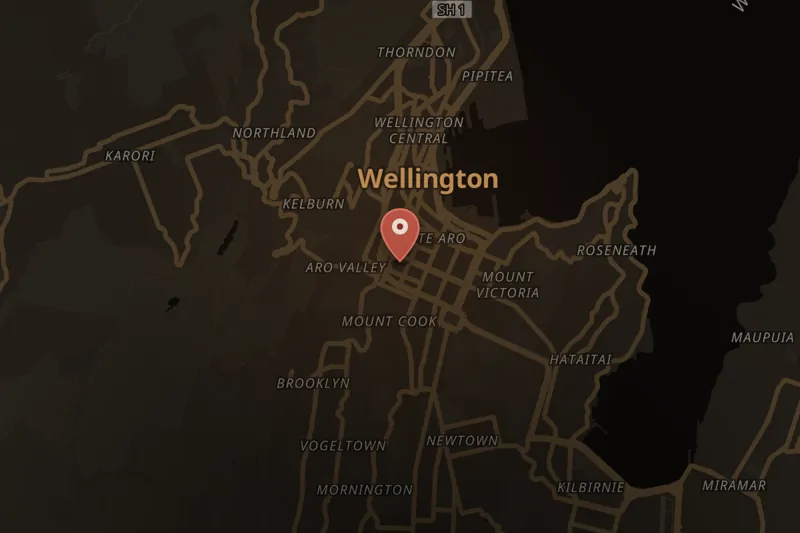
Te Aro, Wellington, New Zealand · 1990s
Murder of Jeff Whittington
Jeff Whittington, a 14-year-old from Wellington, New Zealand, was beaten to death in an anti-gay attack in May 1999, and two men were convicted of his murder.
Solved case · 1997
Also known as The Sounds murders · Sounds murders
The short answer
Ben Smart, 21, and Olivia Hope, 17, disappeared after a New Year's Eve party at Furneaux Lodge in New Zealand's Marlborough Sounds on 1 January 1998; their bodies were never found, and Scott Watson was convicted of their murders in 1999 in a case that remains contested.
No one's coverage is attached to this file yet.
Know great coverage of this case?
A documentary, a podcast episode, a careful long-form video. Suggest it and an editor will review it before it appears here.
Suggest coverage for Murders of Ben Smart and Olivia HopeBen Smart, aged 21, and Olivia Hope, aged 17, were two young New Zealanders who disappeared in the early hours of 1 January 1998 after celebrating New Year's Eve at Furneaux Lodge, a remote waterfront venue in Endeavour Inlet in the Marlborough Sounds. Hundreds of people attended the festivities. In the pre-dawn hours, having found their intended sleeping arrangements aboard a chartered yacht already full, the pair accepted an offer from a man travelling alone to sleep aboard his yacht. A water taxi carried the three of them across the inlet and dropped them at a vessel at around 4 a.m. That was the last confirmed sighting of Smart and Hope. Despite extensive searches of the water and surrounding land, their bodies have never been found.
Police reported the pair missing on 2 January 1998 and soon launched a homicide investigation. Attention turned to Scott Watson, a Picton resident, who was arrested and charged with the murders in June 1998. After an eleven-week trial, a jury found Watson guilty of murdering both Smart and Hope in September 1999. He was sentenced to life imprisonment with a minimum non-parole period of 17 years. Watson has consistently denied involvement and has maintained his innocence since his conviction.
The prosecution's case was largely circumstantial. It rested substantially on the identification of Watson by witnesses, on two hairs found on a blanket taken from Watson's sloop, Blade, that were linked to Olivia Hope, and on statements attributed to Watson. The conviction has been contested for many years. A central dispute concerns the description of the vessel to which the pair were taken: the water taxi operator initially described a two-masted wooden ketch, whereas Watson's boat was a single-masted steel sloop. Questions have also been raised about the photographic identification procedures used with witnesses and about the reliability and handling of the forensic hair evidence.
Watson pursued numerous challenges to his conviction. The Court of Appeal dismissed an appeal in 2000, and the Privy Council declined to hear the case in 2003. Applications invoking the royal prerogative of mercy were made in later years. In 2020 the convictions were referred back to the Court of Appeal. Following a hearing, the Court of Appeal in September 2025 declined to quash the convictions, finding no miscarriage of justice. Watson has been repeatedly denied parole, in part because he continues to deny responsibility.
The case, widely known as the Sounds murders, remains one of New Zealand's most debated criminal cases. The conviction stands, but doubts about it continue to be raised publicly.
Ben Smart and Olivia Hope attend New Year's Eve celebrations at Furneaux Lodge, Endeavour Inlet, in the Marlborough Sounds.
In the early hours, the pair board a water taxi with a man travelling alone and are dropped at a yacht around 4 a.m.; this is the last confirmed sighting of them.
Smart and Hope are reported missing and a homicide investigation begins.
Scott Watson, a Picton resident, is arrested and charged with the murders.
After an eleven-week trial, a jury finds Watson guilty of both murders; he is sentenced to life imprisonment with a 17-year minimum non-parole period.
The Court of Appeal dismisses Watson's appeal.
The Privy Council declines to hear the case.
Watson's convictions are referred back to the Court of Appeal.
The Court of Appeal hears the referred case.
The Court of Appeal declines to quash the convictions, finding no miscarriage of justice.
Victims first. Every legal label is set from public records and court outcomes, not from the prose.
One of two victims; disappeared on 1 January 1998 at age 21 and was never found.[3]
One of two victims; disappeared on 1 January 1998 at age 17 and was never found.[3]
Convicted in 1999 of the murders of Ben Smart and Olivia Hope and sentenced to life imprisonment with a 17-year minimum non-parole period; he maintains his innocence, and the conviction is contested.[3]
From the record
Coverage is not a source: every fact in this file rests on the records below.
Are you family of someone named in this file? Corrections and removal requests from victims’ families are prioritized.
SOLVEDListenTe Aro, Wellington, New Zealand · 1990s
Jeff Whittington, a 14-year-old from Wellington, New Zealand, was beaten to death in an anti-gay attack in May 1999, and two men were convicted of his murder.
 Credit: Archives New Zealand from New ZealandCC BY-SA 2.0SourceUNSOLVEDListen
Tasman Sea, between Australia and New Zealand · 1920s
Lieutenant John Moncrieff and Captain George Hood disappeared on 10 January 1928 while attempting the first trans-Tasman flight from Australia to New Zealand in their aircraft Aotearoa. Radio signals ceased after about 12 hours and, despite extensive searches over the following decades, no trace of the men or their plane has ever been found.
 Credit: stug.stugCC BY-SA 3.0SourceSOLVEDListen
Maungatapu track, near Nelson, South Island, New Zealand · 1860s
In June 1866, five men were robbed and killed in two attacks on the Maungatapu track near Nelson, New Zealand; three men were convicted and hanged and a fourth was convicted after an accomplice turned informant.
Robin Hood Hills, West Memphis, Arkansas · 1990s
Three eight-year-old boys were found murdered in West Memphis, Arkansas, in 1993; three teenagers were convicted the following year in a case marked by disputed evidence, allegations of coerced confession, and claims of a Satanic motive, and were released in 2011 after entering Alford pleas.
 Credit: Photo by Calvin Beale, as an employee of the Economic Research Service, part of the…Public domainSourceSOLVEDListen
Madison, Jefferson County, Indiana · 1992
In January 1992, twelve-year-old Shanda Sharer was abducted and killed in southern Indiana by four teenage girls, all charged as adults; each pleaded guilty and received prison sentences.
 Credit: en:User:Paul.hPublic domainSourceSOLVEDListen
Petaluma, California, United States · 1993
Polly Hannah Klaas, a 12-year-old girl, was abducted at knifepoint from her home in Petaluma, California, on October 1, 1993, and later found murdered. Richard Allen Davis was convicted of first-degree murder in 1996 and sentenced to death.
