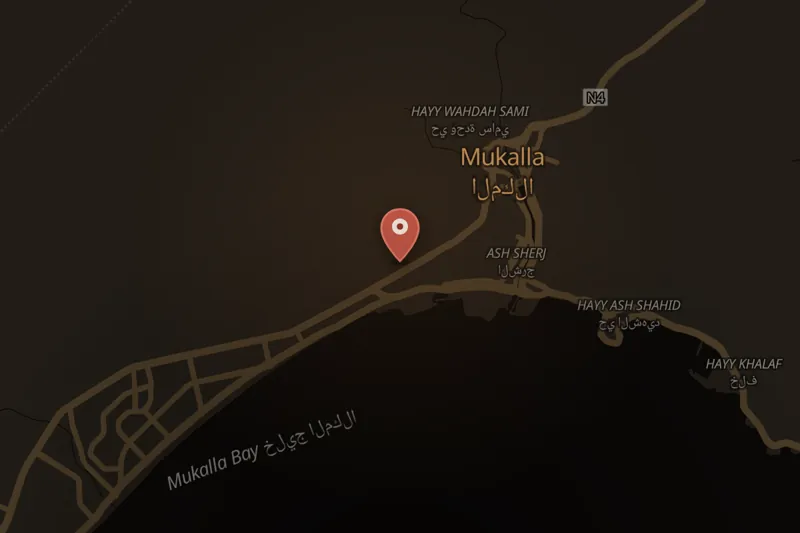
The MV Limburg was a French-flagged supertanker owned by Euronav, chartered by Malaysian state oil company Petronas, traveling off the coast of Yemen near Mukalla on 6 October 2002. As it prepared to receive a pilot boat near al-Dhabba port, a small fishing boat carrying two men and more than 1,200 kg of TNT and 20 kg of C-4 approached at high speed and detonated against the tanker's starboard side. The blast tore an 8-metre hole through the hull, penetrated the double hull, and destroyed a bulkhead. A large fire followed, forcing all 25 crew members — eight French citizens and 17 Bulgarians — to abandon ship by midday. One Bulgarian shipfitter was killed; his body was recovered on 8 October. Twelve crew members sustained minor injuries. The explosion caused approximately 90,000 barrels of oil to spill, contaminating about 45 miles of Yemen's northeastern coastline.
Yemeni officials initially denied a terrorist attack occurred, attributing the fire to an accidental fuel tank explosion, a claim disputed by the ship's captain and crew. A joint investigation involving French officials, U.S. Naval Criminal Investigative Service personnel, and Yemeni authorities examined the wreckage and found hull damage and debris consistent with an external explosive attack, along with TNT residue. On 16 October, Yemen's Interior Minister confirmed the blast was a deliberate terrorist bombing.
The Aden-Abyan Islamic Army initially claimed responsibility, but U.S. officials attributed the attack to al-Qaeda. Statements attributed to Osama bin Laden in October and November 2002 praised the bombing. Testimony from detained al-Qaeda members, including Ahmed al-Darbi and Muhsin al-Fadhli, described planning that began around 2000, involving funding, boat purchases, and training organized with support from Abd al-Rahim al-Nashiri and Yemen-based al-Qaeda leader Mohammed al-Ahdal.
A Yemeni trial of a 15-man cell led by Fawaz al-Rubaiee began in May 2004. Five defendants — Omar Hassan Jarallah, Fawzi Yahya al-Hababi, Muhammad al-Umda, Fawzi Muhammad Abdul-Qawi, and Yasser Ali Salim — were specifically charged in connection with the Limburg bombing. On 28 August 2004, they were convicted and sentenced to prison terms of three to ten years. An appeal concluded in February 2005, upholding a death sentence for a co-defendant convicted of killing a police officer and increasing Rubaiee's sentence to death; two other sentences were increased.
Separately, at the Guantanamo military commission, Abd al-Rahim al-Nashiri was charged in 2011 with planning the Limburg bombing; charges were dismissed in 2014 for lack of evidence but later reinstated on appeal. Ahmed al-Darbi pleaded guilty in February 2014 to charges including planning the Limburg attack and was sentenced to 13 years under a plea agreement requiring cooperation with prosecutors.


 UNSOLVEDListen


