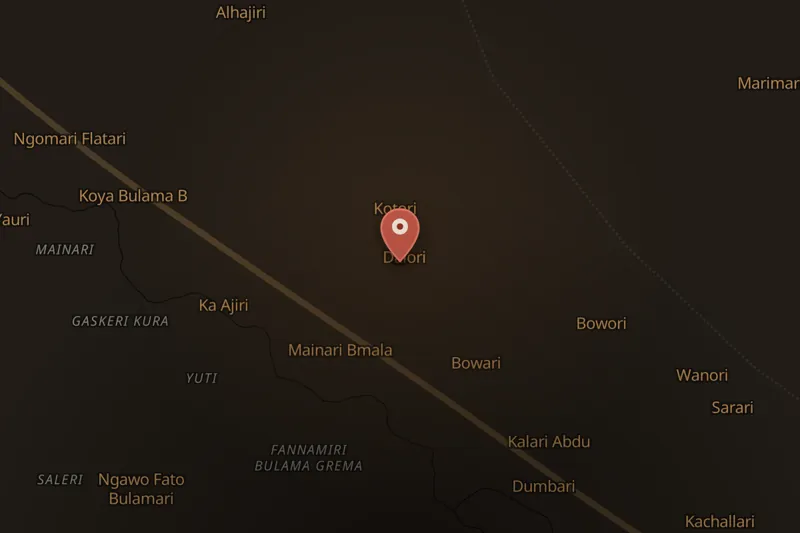
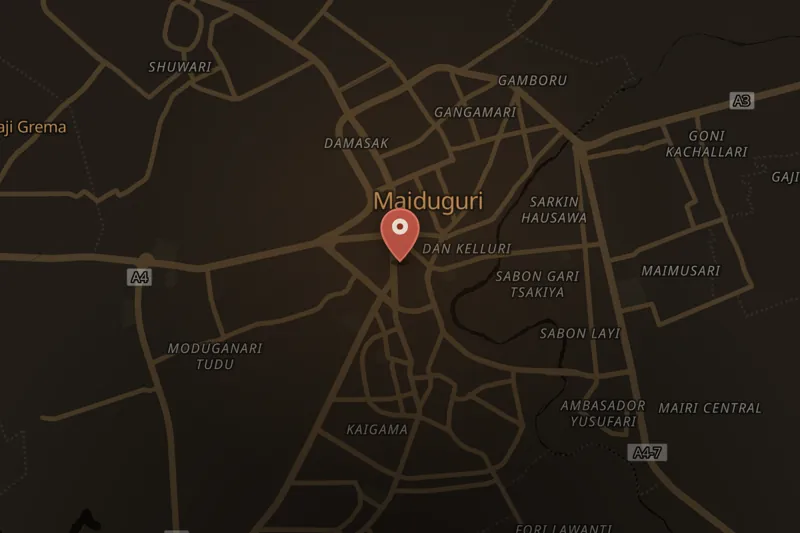
Boko Haram, officially Jama'at Ahl al-Sunna li al-Da'wa wa al-Jihad, is a jihadist militant group founded by Mohammed Yusuf in 2002 in Maiduguri, the capital of Borno State, northeastern Nigeria. Yusuf established a religious complex and school that attracted poor Muslim families and became a recruiting ground for the group, which initially operated relatively peacefully while withdrawing into remote areas to build strength before waging jihad. The Nigerian government repeatedly ignored warnings about the group's increasingly militant character.
In July 2009, an uprising led to a military crackdown in which more than 700 people were killed and Yusuf was arrested and died in police custody. He was succeeded by his deputy, Abubakar Shekau, who led the group until his death in 2021. A mass prison break in Bauchi in September 2010 marked the group's resurgence, followed by increasingly sophisticated attacks, including a June 2011 suicide car bombing at Abuja police headquarters and an August 2011 bombing of the United Nations headquarters in Abuja that killed 11 UN staff and 12 others.
The conflict escalated through 2012 and 2013, with the Nigerian government declaring a state of emergency that was later extended to cover Borno, Adamawa and Yobe states. Human rights organizations, including Amnesty International and Human Rights Watch, documented abuses by both Boko Haram and Nigerian security forces, including extrajudicial killings, torture, and mass detention deaths. Notable attacks in this period included a January 2012 assault on police buildings in Kano that killed 190 people, and a 2013 mosque shooting in Konduga that killed 44.
In 2014, Boko Haram carried out a series of mass-casualty attacks that drew international attention. On 25 February 2014, the group killed at least 59 boys at the Federal Government College in Buni Yadi, Yobe State, burning some students alive in their dormitories and shooting or knifing others. On 14–15 April 2014, Boko Haram abducted 276 schoolgirls from a school in Chibok, Borno State; more than 50 later escaped, while Shekau announced an intention to sell the remaining girls into slavery. The Chibok kidnapping generated the global "#BringBackOurGirls" campaign. Later in 2014, attacks included a November mosque shooting in Kano that killed over 120 worshippers, and continued operations by Boko Haram in northern Cameroon, including abductions and village raids.
The group split in 2016 after part of its membership aligned with the Islamic State, forming the Islamic State's West Africa Province, while Shekau retained leadership of the original Boko Haram faction. Shekau died in May 2021 during clashes with the rival faction in the Sambisa Forest. The insurgency has resulted in tens of thousands of deaths since 2009, more than 300,000 child deaths associated with the broader conflict, and the displacement of 2.3 million people, with regional food crises linked to the violence.


 UNSOLVEDListen