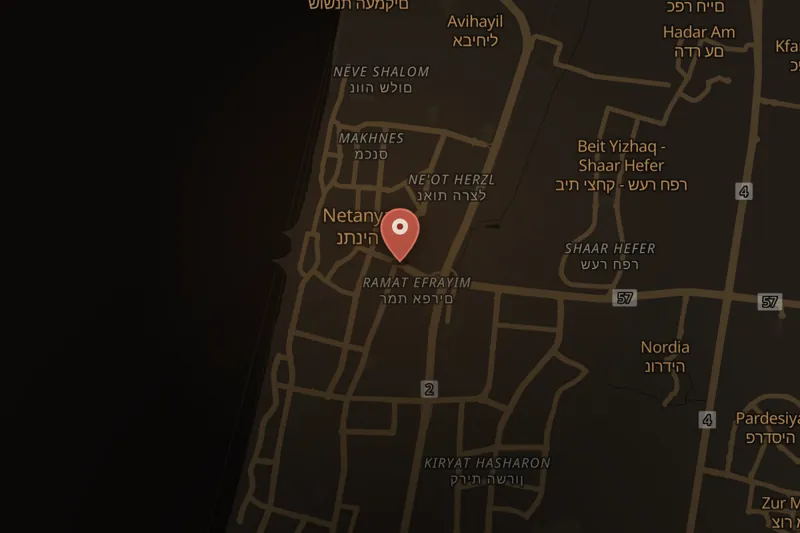
On the afternoon of Sunday, 19 May 2002, a Palestinian suicide bomber disguised as an Israeli soldier detonated an explosive belt packed with nails and bolts at the entrance to the main open-air fruit and vegetable market in Netanya, Israel. The attack site was reportedly chosen to maximize casualties. Three civilians were killed and between 56 and 59 people were injured, with at least 10 left in severe condition.
The bombing occurred less than two months after a prior attack at the Park Hotel in Netanya on 27 March 2002, which killed 29 people during a Passover Seder and prompted Israel's Operation Defensive Shield military offensive in the West Bank. Netanya had been a frequent target of Palestinian suicide bombers during this period.
Both Hamas and the Popular Front for the Liberation of Palestine (PFLP) claimed responsibility for the market bombing. The attack is believed to have been carried out by the PFLP's Abu Ali Mustapha Brigades. The PFLP stated the attack was intended to protest the detention of its leader, Ahmad Saadat, by the Palestinian Authority in connection with the PFLP's earlier assassination of Israeli tourism minister Rehavam Ze'evi. The Israeli defense establishment later stated that the attack had been ordered by Saadat from his cell in the PA-run Jericho Prison, which was under U.S. and British supervision at the time.
Investigators determined that the bomber had reached the market with the help of others. A resident of Taybeh admitted to driving the suicide bomber and a female collaborator to Netanya. The woman, Da'a Jiusi, a 21-year-old Palestinian student from Tulkarem, later confessed that she had been asked to accompany the bomber to provide cover as an apparently innocent couple. On 30 June 2003, an Israeli military court sentenced Jiusi to three life sentences plus 30 years in prison for leading the bomber into the civilian market. A separate individual, identified as Alam Kabi of Nablus, was sentenced in 2004 to nine life sentences for dispatching the bomber who carried out this attack along with several other attacks.
Israeli officials also stated that security forces had received a warning about the attack approximately 20 minutes before it occurred but said they were unable to stop it at that point.
In the aftermath, Israeli officials indicated no broad military retaliation was planned, though Israeli forces conducted short operational activities in Tulkarm and Ramallah the same evening. Lawsuits were later filed against Arab Bank, NatWest, and Crédit Lyonnais alleging they had channeled funds to Hamas. On 18 October 2011, Jiusi (referred to in some records as Jiwasi Ziyad Dawa'a) was released to the West Bank as part of the Gilad Shalit prisoner exchange between Israel and Hamas.
International reactions included U.S. Vice President Dick Cheney calling on Yasser Arafat to act against militant groups, and National Security Adviser Condoleezza Rice emphasizing the need for a unified Palestinian security apparatus. The Palestinian National Authority condemned the attack. The UK Foreign Office requested evidence from Israel regarding claims that Saadat authorized the bombing while in Jericho custody.

 Credit: צביקה גולן / IDF Spokesperson's UnitCC BY-SA 3.0SourceSOLVEDListen