Start here
Ruby Ridge, Waco, & the bombing that TERRIFIED America | Dark History
Bailey Sarian's 49-minute breakdown, the fullest single telling on file.
Watch on YouTubeBefore you continue
This case involves crimes against children. Casepin presents the record in neutral, non-graphic language. Choose whether to continue.
Solved case · 1995
 Murrah Building - AerialCredit: Leonard Brakebill, Oklahoma Air National Guard·Public domain·Source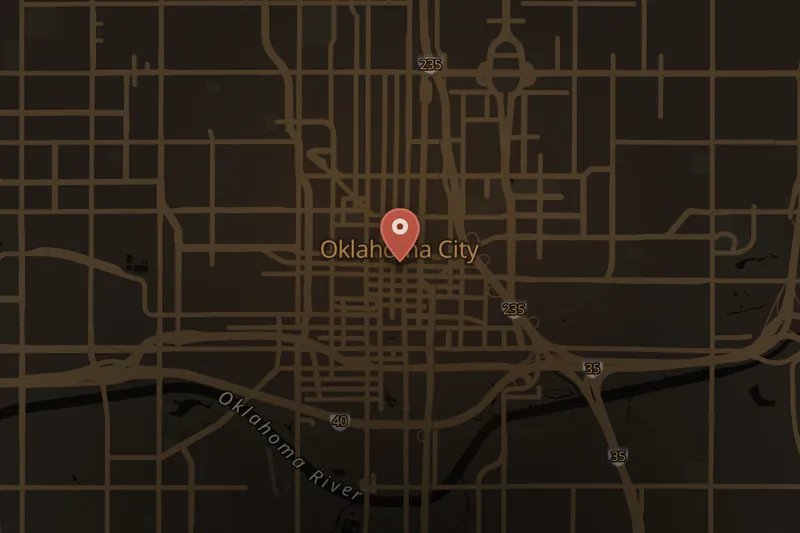
The short answer
On April 19, 1995, Timothy McVeigh detonated a truck bomb outside the Alfred P. Murrah Federal Building in Oklahoma City, killing 168 people and injuring more than 680 others in the deadliest act of domestic terrorism in U. S. history.
Start hereRuby Ridge, Waco, & the bombing that TERRIFIED America | Dark HistoryBailey Sarian · 49 minThe coverage index
7 pieces from 3 creators: ranked, with duplicates removed and short clips set aside.
Start here
Video · YouTube · 49 min · 2024
Bailey Sarian's 49-minute breakdown, the fullest single telling on file.
Watch on YouTubeTimothy McVeigh Murders | Mental Health & Personality
 Dr. Todd GrandeVideo · YouTube · 15 min · 2020
This U.S. soldier was responsible for the Oklahoma City bombing!? | Dark History: CLIP
 Bailey SarianVideo · YouTube · 10 min · 2024
The Dark History of The Oklahoma City Bombing!
Bailey SarianVideo · YouTube · 1 min · 2024How the Oklahoma City Bombing tragedy unfolded...
Bailey SarianVideo · YouTube · 1 min · 202430 YEARS AGO... AMERICA WAS ATTACKED BY ONE OF ITS OWN
Bailey SarianVideo · YouTube · 1 min · 2025The Oklahoma City Bombing, Part 2
Titles and descriptions are the creators’ own and may not reflect current legal status. The sourced facts are in the file below. Players load only when you press play. Suggest coverage we’re missing.
The case file
On the morning of April 19, 1995, Timothy McVeigh parked a rented Ryder truck loaded with a homemade bomb of ammonium nitrate fertilizer, nitromethane, and diesel fuel in front of the Alfred P. Murrah Federal Building in downtown Oklahoma City, Oklahoma, and detonated it at 9:02 a.m. The blast destroyed more than a third of the nine-story building, which housed 14 federal agencies, including the Drug Enforcement Administration and the Bureau of Alcohol, Tobacco and Firearms. It also destroyed or damaged 324 other buildings within a four-block radius and destroyed 86 vehicles, causing an estimated $652 million in damage. The bombing and the building's partial collapse killed 168 people, including 19 children, most of whom were in the building's day-care center, and injured more than 680 others. Victims ranged in age from three months to 73 years and included three pregnant women; 108 of the dead worked for the federal government. The attack remains the deadliest act of domestic terrorism in United States history.
McVeigh, a Gulf War veteran, and Terry Nichols, whom he had met during U.S. Army basic training in 1988, planned the attack over several months. Both men were angered by the federal government's handling of the 1992 standoff at Ruby Ridge and the 1993 siege of a Branch Davidian compound near Waco, Texas, which ended with dozens of deaths, as well as by a 1994 federal assault weapons ban. McVeigh and Nichols bought and stole materials for the bomb, including ammonium nitrate fertilizer purchased in Kansas and explosives stolen from a quarry, stored them in rented sheds, and robbed an Arkansas gun collector to help fund the plot. McVeigh rented the Ryder truck in Junction City, Kansas, under a false name, and the two men assembled the bomb at Geary Lake State Park before McVeigh drove it to Oklahoma City. He had chosen April 19 to coincide with the anniversary of the Waco siege.
McVeigh was stopped less than two hours after the bombing by Oklahoma Highway Patrol Trooper Charlie Hanger, who pulled him over on Interstate 35 near Perry, Oklahoma, for driving without a license plate and arrested him after finding a concealed weapon. Investigators traced a vehicle identification number recovered from the truck wreckage to the Kansas rental agency and identified McVeigh within days; Terry Nichols turned himself in to police on April 21, 1995, after learning he was being sought. The FBI's investigation, known internally as OKBOMB, involved roughly 28,000 interviews and more than 7,100 pounds of evidence.
Rescue workers pulled 50 survivors from the wreckage within the first hour, and the last survivor, a 15-year-old girl, was found that evening. More than 12,000 people took part in the rescue and recovery effort, which concluded on May 5, 1995; the damaged building was demolished on May 23, 1995. Rebecca Anderson, a nurse who volunteered to help in the rescue effort, was killed after being struck on the head by falling debris. President Bill Clinton declared a federal emergency and ordered flags at federal buildings flown at half-staff for 30 days. In response to the bombing, Congress passed the Antiterrorism and Effective Death Penalty Act of 1996 and legislation to increase security around federal buildings.
McVeigh and Nichols were tried separately and convicted in 1997. McVeigh was sentenced to death and was executed by lethal injection on June 11, 2001, at the federal penitentiary in Terre Haute, Indiana. Nichols was sentenced to life in prison without the possibility of parole.
18 dated entries · 1988–2001
Timothy McVeigh and Terry Nichols met at Fort Benning, Georgia, during U.S. Army basic training.
A federal standoff at Ruby Ridge became one of the grievances McVeigh later cited against the federal government.
A 51-day siege at a Branch Davidian compound near Waco, Texas, ended in dozens of deaths; McVeigh later cited it as a motivation for the bombing.
McVeigh obtained nine binary-explosive Kinestiks from a gun collector in Arkansas and, with Nichols, test-ignited devices in Herington, Kansas.
Terry Nichols bought forty 50-pound bags of ammonium nitrate fertilizer from a farm cooperative in McPherson, Kansas.
Nichols bought an additional 50-pound bag of ammonium nitrate fertilizer.
McVeigh traveled to Oklahoma City and scouted the Alfred P. Murrah Federal Building as a target.
McVeigh paid for a room at the Dreamland Motel in Junction City, Kansas, and rented a Ryder truck under a false name.
McVeigh and Nichols drove to Oklahoma City, where McVeigh parked a getaway car several blocks from the Murrah Federal Building.
McVeigh and Nichols loaded the bomb materials into the Ryder truck and assembled the bomb at Geary Lake State Park.
McVeigh detonated the truck bomb outside the Alfred P. Murrah Federal Building at 9:02 a.m., killing 168 people and destroying more than a third of the building.
Oklahoma Highway Patrol Trooper Charlie Hanger stopped and arrested McVeigh on Interstate 35 near Perry within 90 minutes of the bombing.
Terry Nichols turned himself in to police after learning he was being sought.
Rescue and recovery operations at the site concluded.
The damaged Murrah Federal Building was demolished.
In response to the bombing, Congress passed the Antiterrorism and Effective Death Penalty Act of 1996.
McVeigh and Nichols were tried separately and convicted for the bombing.
Timothy McVeigh was executed by lethal injection at the U.S. federal penitentiary in Terre Haute, Indiana.
5 named in this file
Victims first. Every legal label is set from public records and court outcomes, not from the prose.
An infant who died at a hospital after being carried from the wreckage; photographed in a firefighter's arms in an image that became a symbol of the bombing.[3]
A nurse who volunteered in the rescue effort and died after being struck on the head by falling debris.[3]
Convicted in 1997 of assisting in planning the attack and building the bomb; sentenced to life in prison without the possibility of parole.[3]
Convicted in 1997 of carrying out the bombing; sentenced to death and executed by lethal injection on June 11, 2001.[3]
Oklahoma Highway Patrol trooper who stopped and arrested Timothy McVeigh on Interstate 35 within 90 minutes of the bombing.[3]
From the record
3 cited
Coverage is not a source: every fact in this file rests on the records below.
PressThe New York TimesAccessed Jul 6, 2026
PressThe Washington PostAccessed Jul 6, 2026
EncyclopedicWikipediaAccessed Jul 6, 2026
Trust
Are you family of someone named in this file? Corrections and removal requests from victims’ families are prioritized.
Near this case
 Credit: Atomic Taco from Seattle, WA, USA·CC BY-SA 2.0·SourceSOLVEDListen
Edmond, Oklahoma post office · 1980s
On August 20, 1986, postal worker Patrick Sherrill shot and killed 14 coworkers and wounded 6 others at a post office in Edmond, Oklahoma, before killing himself as police arrived.
 Image record·Public domain·SourceSOLVEDListen
University of Oklahoma campus, Van Vleet Oval near George Lynn Cross Hall, Norman, Oklahoma · 2000s
On October 1, 2005, a bomb exploded near George Lynn Cross Hall on the University of Oklahoma campus in Norman, just outside a packed football stadium. The bomber, OU student Joel Henry Hinrichs III, was killed in the blast; no one else was killed. The FBI concluded in 2006 that he acted alone with no terrorist motive.
 SOLVEDListen
Meeker, Oklahoma · 2000s
Kelsey Smith-Briggs, a two-year-old Oklahoma girl, died in October 2005 of blunt force trauma to the abdomen after months of documented abuse while under state child welfare monitoring; her mother and stepfather were later convicted of enabling child abuse.
Happy Valley, near Redding, California · 1999
Gary Matson and Winfield Mowder, a gay couple from Happy Valley near Redding, California, were shot to death in their home on July 1, 1999, by brothers Benjamin Matthew Williams and James Tyler Williams, who told investigators and media the killings were motivated by the victims' sexual orientation. Both brothers were convicted; Matthew Williams died by suicide in jail in 2002 before sentencing, and Tyler Williams pleaded guilty to first-degree murder in 2003.
 Credit: Liam.minero·CC BY-SA 4.0·SourceSOLVEDListen
Wedgwood Baptist Church, Fort Worth, Texas · 1999
On September 15, 1999, Larry Gene Ashbrook opened fire at a teen prayer rally inside Wedgwood Baptist Church in Fort Worth, Texas, killing seven people and wounding seven others before killing himself.
 Image record·Public domain·SourceSOLVEDListen
North Valley Jewish Community Center, Granada Hills, Los Angeles, California · 1999
On August 10, 1999, white supremacist Buford O. Furrow Jr. opened fire inside the North Valley Jewish Community Center in Granada Hills, Los Angeles, wounding five people, then shot and killed Filipino American postal worker Joseph Santos Ileto before fleeing and later surrendering to the FBI.
Also covered by
 Credit: CBS News / Travis Alexander (personal photo)·Editorial use·SourceSOLVEDListen
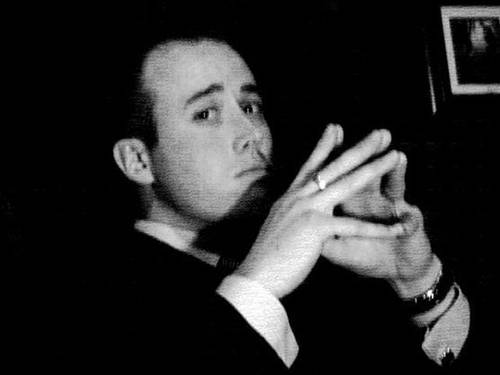
Mesa, Arizona, United States · 2000s
Travis Alexander, 30, was stabbed, slashed, and shot to death in his Mesa, Arizona home on June 4, 2008. His ex-girlfriend, Jodi Arias, was convicted of first-degree murder in 2013 and sentenced to life without parole in 2015 after two juries deadlocked on the death penalty.
 Credit: English Wikipedia·Editorial use·SourceSOLVEDListen
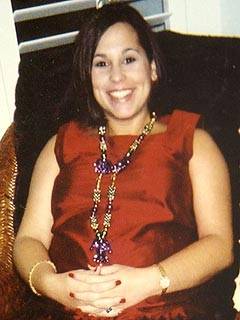
Modesto, California · 2002
Laci Peterson, 27 and eight months pregnant, disappeared from her Modesto, California home on December 24, 2002; her body and that of her unborn son Conner were found in San Francisco Bay in April 2003, and her husband Scott Peterson was convicted in 2004 of murdering both.
 COLDListen
Cumming, Georgia · 2018
Tamla Horsford, a 40-year-old mother of five, died from a fall at a home in Cumming, Georgia, during a gathering on November 3-4, 2018; two separate investigations ruled her death accidental, though her family has disputed that finding and pushed for further inquiry.
 Credit: Los Angeles Police Department·Public domain·SourceUNSOLVEDListen
Leimert Park, Los Angeles, California, USA · 1940s
Elizabeth Short, known posthumously as the Black Dahlia, was found murdered in Los Angeles in January 1947 in a case that remains unsolved.
 Credit: Ted Van Zyl·Editorial use·SourceSOLVEDListen
Albuquerque, New Mexico, United States · 1993
Girly Chew Hossencofft, a Malaysian-born bank teller living in Albuquerque, New Mexico, disappeared on September 9, 1999, shortly after filing for divorce from her husband Diazien Hossencofft. He and his girlfriend Linda Henning were later convicted of her murder. Her body has never been found.
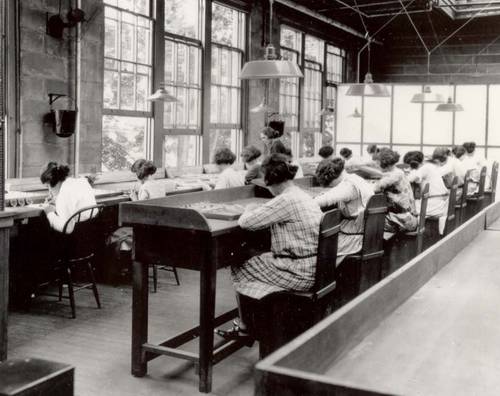 Credit: Argonne National Laboratory / Wikimedia Commons, c.1922–23·Public domain·SourceSOLVEDListen
Orange, New Jersey · 1917
Beginning in 1917, factory workers who came to be known as the Radium Girls were poisoned after being instructed to shape radium-paint brushes with their lips; the resulting illnesses, deaths, and lawsuits against the United States Radium Corporation and the Radium Dial Company reshaped U.S. occupational health and labor law.
.jpg)