Case file
Patagonia Rebelde

Background
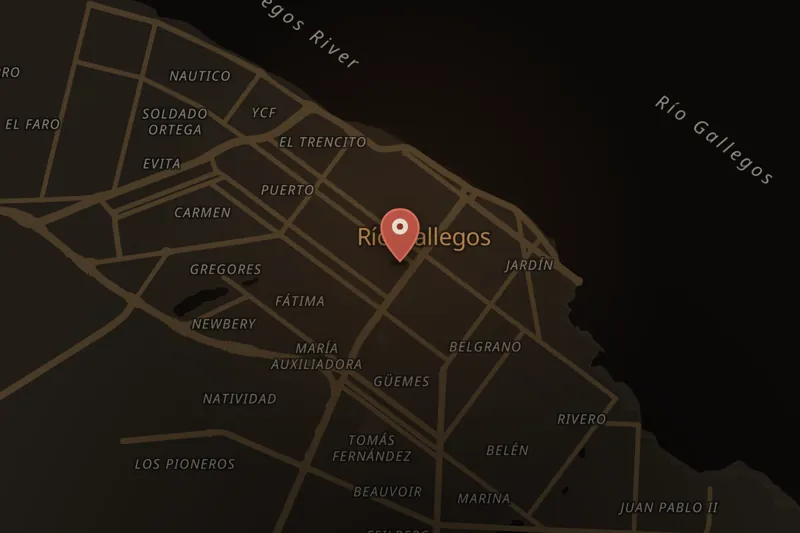
Rural workers in Santa Cruz, a wool-producing region of Argentine Patagonia, organized through the Sociedad Obrera de Río Gallegos, led by Spanish anarchist Antonio Soto. Following the end of the First World War, the price of wool collapsed, deepening already harsh conditions for shearers and rural laborers, who worked up to 16-hour days for minimal wages, often paid in devalued currency or bonds. In September 1920, workers presented landowners with demands including better living conditions, a minimum wage, and recognition of the Sociedad Obrera as their representative. When these demands were rejected, a general strike was declared across the province.
First strike and initial repression
Strikes spread through Santa Cruz beginning in August 1920, with a general strike declared on 1 November. Armed clashes began on 2 January 1921 near El Cerrito, killing four policemen and one striker. The provincial government requested federal intervention, and President Hipólito Yrigoyen dispatched Colonel Héctor Benigno Varela's 10th Cavalry Regiment. An initial, comparatively restrained deployment produced a negotiated settlement by May 1921, but the regiment returned in October 1921 after ranch owners reneged on promised reforms and strikes resumed.
Second strike and mass killings
The 10th Cavalry Regiment, reinforced by National Gendarmerie troops, returned to Santa Cruz in November 1921. Strikers took hostages, including ranch owners and their families, some of whom were reportedly killed. The regiment responded with widespread arbitrary arrests and executions, including of unarmed workers suspected of collaboration, such as Santiago González and Albino Argüelles. Ranch owner Daniel Ramírez, accused of aiding strikers, was tortured and executed in early February 1922. At Cañadón León, the regiment captured roughly 480 strikers, more than half of whom were executed by firing squad. Further mass executions, estimated around 500 people, followed the capture of La Anita and Menéndez Behety estancias. Strikers made a final stand at Tehuelches train station before being defeated and executed. Two soldiers died during the campaign: Private Fernando Pablo Fischer, killed in action, and Corporal Domingo Montenegro, killed accidentally by a fellow soldier.
Aftermath
News of the mass executions reached Buenos Aires, but the government did not open an official investigation. In January 1923, German immigrant Kurt Gustav Wilckens killed Colonel Varela in a gun and bomb attack, citing opposition to what he called a "criminal system." Wilckens was subsequently killed in Villa Devoto prison by José Pérez Millán Temperley, who was later found guilty of manslaughter, declared insane, and eventually killed by a fellow psychiatric patient. The events have been the subject of extensive historical research, notably by Argentine journalist Osvaldo Bayer, and were dramatized in the 1974 film "La Patagonia rebelde," which was censored under both Juan Domingo Perón and Isabel Perón's governments before being shown freely after Argentina's return to democracy in 1984.

Key facts
- Victims
- Santiago González, Daniel Ramírez, Domingo Montenegro, Albino Argüelles, Fernando Pablo Fischer
- Date
- 1921
- Location
- Santa Cruz Province, Patagonia, Argentina
- Case status
- solved
Case timeline
1920
Sociedad Obrera de Río Gallegos, led by Antonio Soto, organizes rural workers in Santa Cruz province amid economic crisis caused by falling wool prices.
1920-09
Workers present a list of demands for improved conditions, which is rejected by landowners; a general strike is declared.
1920-11-01
General strike declared across Santa Cruz province.
1921-01-02
First armed confrontation occurs near El Cerrito, killing four policemen and one striker.
1921-05
10th Cavalry Regiment returns to Buenos Aires after negotiating a settlement between strikers and ranch owners.
1921-10
Strikes resume after ranch owners renege on promised reforms; the 10th Cavalry Regiment is ordered back to Santa Cruz.
1921-11-04
National Gendarmerie detachment sails for Santa Cruz to reinforce the 10th Cavalry Regiment.
1921-11
Mass arbitrary arrests and executions begin, including the killings of Santiago González and Albino Argüelles.
1921-12
Ranch owner Daniel Ramírez is detained on suspicion of aiding strikers.
1922-02
Daniel Ramírez is executed after being tortured for over a week.
1922
Mass executions occur following the capture of strikers at Cañadón León, La Anita and Menéndez Behety estancias, and Tehuelches train station.
1923-01
Kurt Gustav Wilckens kills Colonel Héctor Benigno Varela in a gun and bomb attack in Buenos Aires.
1974
Film 'La Patagonia rebelde,' directed by Héctor Olivera and scripted by Osvaldo Bayer, is released and subsequently censored.
1984
The film is shown freely following Argentina's return to democracy.
Best coverage
No approved coverage links are attached yet.
People
José Pérez Millán Temperley
CONVICTEDConvicted of manslaughter for killing Kurt Gustav Wilckens in Villa Devoto prison; sentenced to eight years, later declared insane.
Antonio Soto
LAW ENFORCEMENTSpanish anarchist and general secretary of the Sociedad Obrera de Río Gallegos who led the striking workers.
Santiago González
VICTIMStonemason and anarchist forced to dig his own grave before being shot by soldiers in November 1921.
Daniel Ramírez
VICTIMRanch owner detained for allegedly assisting striking workers; tortured for over a week and executed in early February 1922.
Domingo Montenegro
VICTIM19-year-old army corporal accidentally shot and killed by a fellow soldier during sentry duty.
Albino Argüelles
VICTIMSecretary general of the Sociedad Obrera of San Julián, blacksmith and Socialist Party member, captured and shot in November 1921.
Fernando Pablo Fischer
VICTIMArmy private killed in action during the campaign, the only soldier killed in combat.
Kurt Gustav Wilckens
CHARGEDGerman immigrant charged in connection with the January 1923 killing of Colonel Varela; killed in prison before sentencing.
Héctor Benigno Varela
LAW ENFORCEMENTColonel commanding the 10th Cavalry Regiment of the Argentine Army, which carried out the suppression and mass executions; later killed in a 1923 attack.
Roles reflect public records and court outcomes at the time of writing — supporting citations are on file under Sources.
Archival records
Places
Common questions
- What happened to the victim?
- Between 1920 and 1922, a rural workers' strike in Argentina's Santa Cruz province, Patagonia, was suppressed by the Argentine Army's 10th Cavalry Regiment under Colonel Héctor Benigno Varela, resulting in the mass execution of an estimated 300 to 1,500 striking workers, many after they had surrendered.
- Where did the crime happen?
- Santa Cruz Province, Patagonia, Argentina.
- Who was convicted?
- José Pérez Millán Temperley (Convicted of manslaughter for killing Kurt Gustav Wilckens in Villa Devoto prison; sentenced to eight years, later declared insane.).
- What is the current status of the case?
- Status: solved. Last verified July 2026.
Sources
- ENCYCLOPEDICPatagonia RebeldeWikipedia · 2026-07-07
- PRESSContemporaneous coverage — clarin.comclarin.com · 2026-07-07
- PRESSContemporaneous coverage — search.worldcat.orgsearch.worldcat.org · 2026-07-07
Record history
- First published
- JUL 07, 2026
- Last verified against sources
- JUL 07, 2026