
 SOLVEDListen
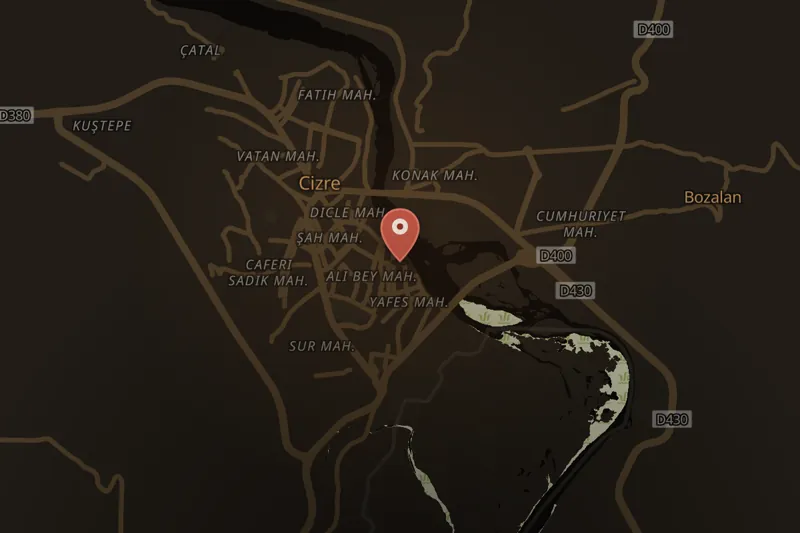
Konak neighborhood, Cizre, Şırnak Province, Turkey · 2010s
2016 Cizre bombing
A PKK member detonated a truck bomb at a police checkpoint in Cizre, Turkey, in 2016, killing 12 police officers and injuring dozens more.
Unsolved case · 2007
The short answer
On August 14, 2007, four coordinated suicide car bomb attacks struck the Yazidi towns of Til Ezer (al-Qahtaniyah) and Siba Sheikh Khidir (al-Jazirah) in northern Iraq, killing 796 people and wounding at least 1,500 others, making it the deadliest car bomb attack of the Iraq War.
No one's coverage is attached to this file yet.
Know great coverage of this case?
A documentary, a podcast episode, a careful long-form video. Suggest it and an editor will review it before it appears here.
Suggest coverage for Qahtaniyah bombingsFor several months before the attack, tensions had escalated in northern Iraq's Nineveh Governorate between the Yazidi religious minority and Sunni Muslim Arabs and Kurds. Some Yazidis reportedly received threatening letters calling them "infidels," and leaflets circulated denouncing Yazidis as "anti-Islamic" and warning of an imminent attack. The bombings were possibly linked to the earlier killing of Du'a Khalil Aswad, a 17-year-old Yazidi girl stoned to death by fellow Yazidis four months prior, reportedly over her wish to convert religion to marry a Sunni man. After video of that stoning spread online, Sunni gunmen reportedly stopped minibuses carrying Yazidis and killed 23 Yazidi men. Separately, the Sinjar area — home to a mixed population of Yazidis, Kurds, Assyrians, Turkmen, and Arabs — was scheduled to hold a plebiscite in December 2007 on joining the Kurdistan Region, a prospect that reportedly angered neighboring Arab communities. In response to rising violence, roughly 600 Kurdish Peshmerga forces were deployed to the area, and protective ditches were dug around Yazidi villages.
At around 7:20 pm on August 14, 2007, four coordinated suicide bombers detonated a fuel tanker and three car bombs in the Yazidi towns of Qahtaniyah and Jazeera (Siba Sheikh Khidir), near Mosul. An Iraqi Interior Ministry spokesman said roughly two tons of explosives were used. The blasts collapsed buildings, trapping families under rubble, and flattened entire neighborhoods. Rescue workers dug through debris by hand searching for survivors. The mayor of the Al-Ba'aj District, Abdul-Rahim al-Shammari, described hospitals running out of medicine and empty pharmacies, warning of a further humanitarian catastrophe. The attack killed 796 people and wounded at least 1,562 others, destroyed around 1,000 homes, and left the two villages almost entirely destroyed — a rescue worker estimated 80 percent of one village was destroyed or damaged.
Al-Qaeda claimed responsibility for the bombings. Iraq's President Jalal Talabani accused Iraqi Sunni insurgents, citing a history of Sunni violence against Yazidis and the earlier distribution of leaflets branding Yazidis "anti-Islamic." US military spokesman Lieutenant Colonel Christopher Garver said Al-Qaeda was considered the "prime suspect." On September 3, 2007, the US military reportedly killed a man identified as Abu Muhammad al-Afri, described as the suspected mastermind of the bombings. The same two villages were among the first Yazidi settlements targeted by the Islamic State during the 2014 Yazidi genocide.
Du'a Khalil Aswad, a 17-year-old Yazidi girl, was stoned to death by fellow Yazidis, an incident possibly connected to the later bombings.
Four coordinated suicide car bomb attacks detonated in the Yazidi towns of Til Ezer (al-Qahtaniyah) and Siba Sheikh Khidir (al-Jazirah), killing 796 people and wounding at least 1,500 others.
The US military reportedly killed Abu Muhammad al-Afri, the suspected mastermind of the bombings.
The same two villages were among the first Yazidi settlements targeted by the Islamic State during the Yazidi genocide.
Victims first. Every legal label is set from public records and court outcomes, not from the prose.
Officially named a person of interest by US military investigators; not charged. He was described as the suspected mastermind of the 2007 Qahtaniyah bombings and was reportedly killed by US forces on 3 September 2007.[3]
Coverage is not a source: every fact in this file rests on the records below.
Are you family of someone named in this file? Corrections and removal requests from victims’ families are prioritized.
SOLVEDListenKonak neighborhood, Cizre, Şırnak Province, Turkey · 2010s
A PKK member detonated a truck bomb at a police checkpoint in Cizre, Turkey, in 2016, killing 12 police officers and injuring dozens more.
 UNSOLVEDListen
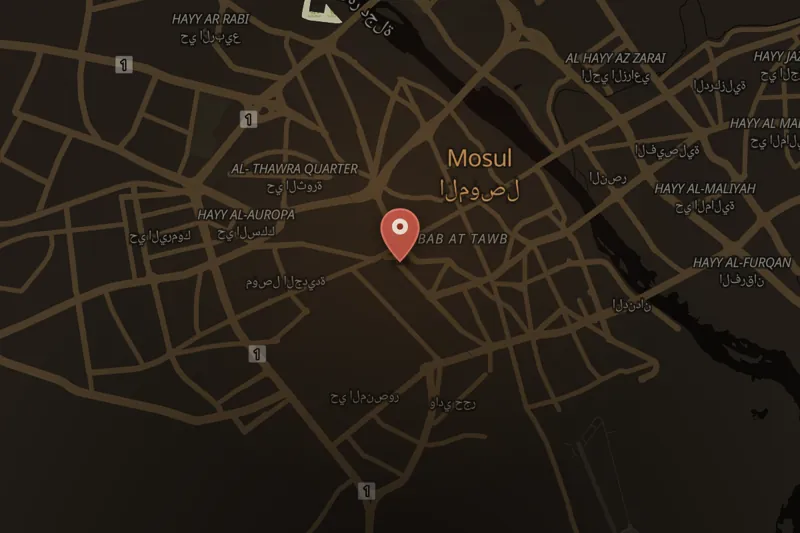
Mosul, Iraq · 2000s
In late 2008, a series of killings and threats targeted Iraqi Christians in Mosul, Iraq, prompting thousands to flee to the Nineveh Plains and Iraqi Kurdistan. Sunni extremists and, according to some Christian residents and politicians, Kurdish Peshmerga forces were blamed for the violence.
 SOLVEDListen
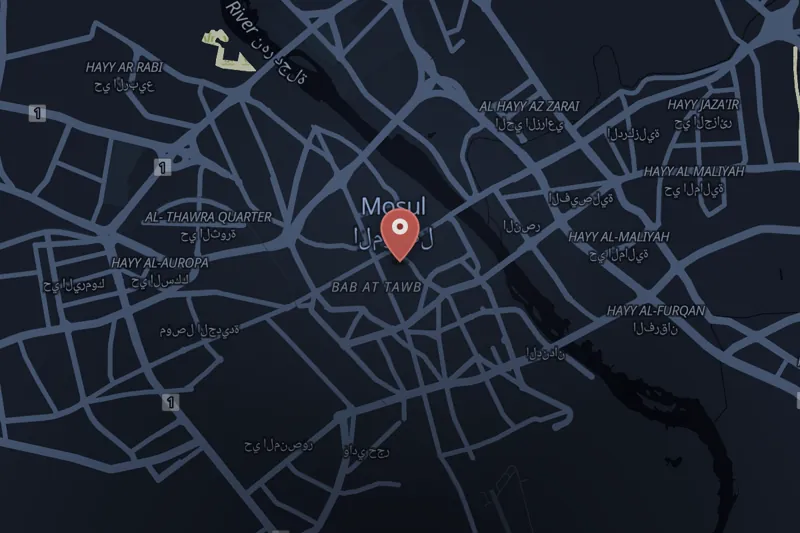
al-Aghawat al-Jadidah (al-Jadida) neighborhood, western Mosul, Iraq · 2010s
A U.S.-led coalition airstrike on 17 March 2017 in the al-Aghawat al-Jadidah (al-Jadida) neighborhood of western Mosul killed a large number of civilians, with estimates ranging from 105 to 278 dead, in one of the deadliest single incidents of civilian casualties from a coalition strike since the 2003 invasion of Iraq.
Shanksville, Somerset County, Pennsylvania · 2001
On September 11, 2001, four hijackers affiliated with al-Qaeda took control of United Airlines Flight 93 en route from Newark to San Francisco, intending to crash it into a federal government building in Washington, D.C. After learning by phone of the day's other attacks, passengers and crew fought back, and the aircraft crashed into a field near Shanksville, Pennsylvania, killing all 44 people aboard.
 Credit: nrkbetaCC BY-SA 2.0SourceSOLVEDListen
Oslo and Utøya, Norway · 2011
On 22 July 2011, Anders Behring Breivik detonated a car bomb in Oslo's government quarter, killing 8, then carried out a mass shooting at a Workers' Youth League (AUF) summer camp on the island of Utøya, killing 69. He was convicted in 2012 and sentenced to 21 years of preventive detention, Norway's maximum sentence.
 Credit: Oliver MarkCC BY-SA 4.0SourceSOLVEDListen
Liaquat National Bagh, Rawalpindi, Pakistan · 2007
Former Pakistani Prime Minister Benazir Bhutto was killed on 27 December 2007 in Rawalpindi following a shooting and suicide bombing after a political rally, an attack that also killed 23 other people. A UN inquiry found her security had been fatally insufficient and the crime scene mishandled; two police officers were later convicted, five Taliban-linked suspects were acquitted, and Pervez Musharraf was indicted but declared a fugitive before being separately sentenced in absentia on unrelated treason charges.
