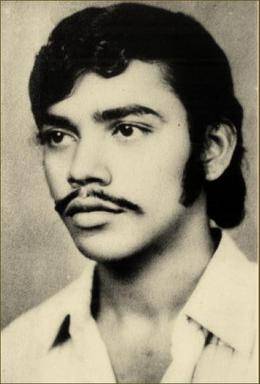
P. Rajan was a student at the Regional Engineering College, Calicut (now the National Institute of Technology Calicut) during the nationwide Emergency in India (1975–1977), a period in which fundamental rights were suspended and the Kerala Police conducted intensive operations against the Naxal movement. Police in Kerala used the label "Naxal" broadly to target individuals against whom they held grievances, amid a climate of police activism.
On 1 March 1976, Rajan was arrested by the Kerala Police along with fellow student Joseph Chaaly. As later established through a petition in the High Court of Kerala, Rajan was held in police custody at Kakkayam and subjected to torture during interrogation, including a practice known as "uruttal," in which a heavy wooden log is rolled over a victim's body. Rajan died as a result of this torture. His body was disposed of by police and has never been recovered.
Rajan's father, T. V. Eachara Warrier, began an extensive search after his son's disappearance. His mother became mentally unstable and was hospitalised. Warrier lost his savings while pursuing enquiries, initially without knowing why his son had been arrested. He learned that Rajan had been arrested under directions from the DIG of Police, Crime Branch, Thiruvananthapuram, and sought help from then Home Minister K. Karunakaran, sent multiple petitions to the Home Secretary without response, and appealed to the President of India, the Union Home Minister, the Prime Minister, and Kerala's Members of Parliament, again without effect. He searched Central Jails and police camps and met repeatedly with the Chief Minister, Sri Achutha Menon, who stated the matter was being handled by Karunakaran. Warrier also distributed a public pamphlet describing his grievance. During campaign speeches, Karunakaran reportedly stated that Rajan was an accused in a murder case, which was the stated reason for his detention. Rajan was never produced before a magistrate.
Warrier's habeas corpus petition — described as the first such case in Kerala's history — forced the police to confirm that Rajan had died in custody. Subsequent investigation confirmed Rajan had been taken into custody and had likely died there, though his body was never found, and many charges against those accused were dropped. Among the accused was DIG Jayaram Padikkal, chief of the Crime Branch wing of the Kerala Police, who was convicted but had the conviction overturned on appeal. K. Karunakaran, Home Minister during the Emergency, later resigned as Chief Minister of Kerala in 1978 following an adverse judgment connected to the case. Warrier later wrote a book, *Memories of a Father*, recounting his search for the truth about his son's death. The case has since been referenced in Malayalam cinema, theatre, and at least one Tamil film, and is commemorated annually at NIT Calicut.

 ONGOINGListen