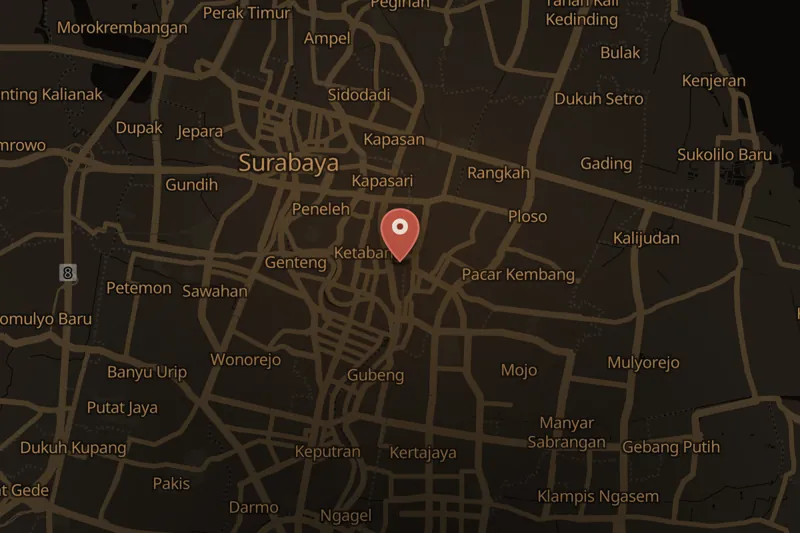
On the morning of 13 May 2018, coordinated suicide bombings struck three churches in Surabaya, Indonesia's second-largest city: Immaculate Saint Mary Catholic Church, Indonesia Christian Church (GKI), and Surabaya Central Pentecostal Church (GPPS). The first blast occurred at SMTB Church shortly after morning mass, killing a child and a security volunteer, Aloysius Bayu Rendra Wardhana, who had tried to stop the bomber. Minutes later, a woman wearing a niqab and carrying explosives, accompanied by her two daughters, detonated a bomb at GKI after security officer Yesaya Bayang attempted to block her entry; he was critically injured. At GPPS, a car bomb driven into the church compound caused the most destructive blast of the day, destroying vehicles and injuring many. Authorities said 28 people were killed across the day's attacks, including the bombers, and about 50 were injured.
That evening, a fourth explosion occurred at an apartment complex in Wonocolo, Sidoarjo, when police arrived to raid a unit; the bombs inside detonated, killing three adults while three children in the same family survived. Police said the family may have been preparing further church attacks. The next day, 14 May, two suicide bombers attacked a checkpoint at Surabaya Police headquarters, killing four bombers and wounding several police officers and civilians; an eight-year-old girl, believed to be the bombers' daughter, was found alive amid the aftermath.
Indonesian police identified three families as responsible for the attacks: the family of Dita Supriyanto and Puji Kuswati (church bombings), the family of Anton Febryanto and Puspita Sari (Sidoarjo apartment), and the family of Tri Murtono and Tri Ernawati (police headquarters). Police said children as young as nine participated, marking what authorities described as the first time in Indonesian history that entire families, including young children, were used in suicide attacks. Some surviving children later said they had resisted their parents' attempts to involve them.
The Indonesian National Police attributed the bombings to Jamaah Ansharut Daulah (JAD), a local Islamic State-linked network, with Amaq News Agency claiming responsibility on behalf of ISIL. Officials said the attacks were ordered in retaliation for the imprisonment of JAD leader Aman Abdurrahman and followed the deadly Mako Brimob prison standoff days earlier. Nationwide raids and arrests followed, with dozens of suspects killed or detained over the following weeks. A related attack, in which men wielding swords assaulted the Riau Regional Police headquarters in Pekanbaru on 16 May, was described by police as potentially linked to and funded by the Surabaya cell.
The Indonesian government responded by tightening security nationwide, raising terror alert levels, and passing a strengthened anti-terrorism law on 25 May 2018. The attacks were widely condemned domestically and internationally, and were described as the deadliest terror attack in Indonesia since the 2002 Bali bombings.