
Solved case
Kanjuruhan Stadium Disaster
A tear-gas-triggered crowd crush after an Indonesian football match at Kanjuruhan Stadium killed 135 people and injured 583 others on 1 October 2022, making it the second-deadliest stadium disaster in the history of association football.

On 1 October 2022, a fatal crowd crush occurred at Kanjuruhan Stadium in Malang Regency, East Java, Indonesia, following a Liga 1 football match between home side Arema and rival Persebaya Surabaya. Persebaya won 3-2, its first-ever away win over Arema, and roughly 3,000 Arema supporters, known as Aremania, invaded the pitch afterward; police said the invading supporters attacked players and team officials. Police and the Indonesian Army moved to disperse the crowd, and officers began firing tear gas into the stands and onto the pitch, affecting rioting supporters and other spectators alike and triggering a mass rush for the exits. Police said 11 rounds of tear gas were fired, while other contemporaneous reporting cited in the source put the figure at 40 or more within ten minutes. Most gates were locked except gate 14, and a crush formed at gates 13 and 14, asphyxiating many of those trying to flee.
By 24 October 2022, the confirmed death toll reached 135, with 583 others injured, making the event the second-deadliest stadium disaster in the history of association football, after the 1964 Estadio Nacional disaster in Peru. Death-toll reporting varied in the disaster's immediate aftermath: the Indonesian National Police and the Malang Regency Office of Health each reported 131 deaths, while a crisis center established by the Malang Regency government reported 133; Aremania disputed the official figures, alleging that more than 200 people may have died and that some bodies were returned directly to families rather than counted at hospitals. Reports on child victims also varied, citing either 39 children aged 3 to 17 or 38 victims under 17 among the dead; the youngest victim was 3 years old and the oldest was 45.
Indonesia's national police chief, Listyo Sigit Prabowo, announced on 6 October 2022 that six people had been placed under suspicion: the director of the match's organizer, two Arema officials, and three police officers, over negligence and the use of tear gas. A first trial opened in Surabaya on 16 January 2023. Of the six people prosecuted, three received prison sentences and one was released for insufficient evidence, while two police officers, Wahyu Setyo Pranoto and Bambang Sidik Achmadi, were initially acquitted after the presiding judge stated that 'the wind is guilty for the fatalities'. On 23 August 2023, Indonesia's Supreme Court annulled those acquittals, sentencing Pranoto to two years and six months in prison and Achmadi to two years.
An independent forensic team exhumed and re-autopsied two victims, aged 13 and 16, in November 2022 at the request of their father, Devi Athok, who alleged police intimidation and disputed the official cause of death; the team concluded the deaths were caused by bleeding and rib and chest fractures, with no tear gas residue found in the lungs, though the bodies had decomposed before sampling. On 31 December 2024, the Surabaya District Court ordered restitution of IDR 1.02 billion to 71 petitioners, well below the IDR 17.2 billion requested, and the petitioners said they intended to appeal. Kanjuruhan Stadium was subsequently demolished and rebuilt, with reconstruction completed in January 2025 at a cost of Rp 350 billion. Contemporaneous coverage of the disaster was also published by the Associated Press and BBC News.
Key facts
- Victims
- 135 people killed in the crush (not individually named in source)
- Date
- 2022
- Location
- Kanjuruhan Stadium
- Case status
- solved
Case timeline
2018
A riot at Kanjuruhan Stadium following a match between Arema and Persib Bandung resulted in a fatality after riot police used tear gas to disperse the crowd.
2022-10-01
After home side Arema lost 2-3 to rival Persebaya Surabaya, roughly 3,000 Arema supporters (Aremania) invaded the pitch. Police fired tear gas into the stands and onto the pitch; a crush formed at exit gates that were locked except for one, asphyxiating many spectators trying to flee.
2022-10-03
A joint independent fact-finding team led by government ministers was formed to investigate the disaster; separately, national police chief Listyo Sigit Prabowo removed Malang police chief Ferli Hidayat and nine East Java Mobile Brigade officers from their posts.
2022-10-05
The Indonesian National Police confirmed 131 deaths, matching an earlier count from the Malang Regency Office of Health, while a government-established crisis center reported 133; Aremania disputed the official figures and alleged that more than 200 people had died.
2022-10-06
National police chief Listyo Sigit Prabowo announced that six individuals -- the match organiser's director, two Arema officials, and three police officers -- had been placed under suspicion over the disaster.
2022-10-12
Indonesia's National Commission on Human Rights (KOMNAS HAM) published its findings on the disaster and the police's use of tear gas.
2022-10-14
The joint fact-finding team submitted a 124-page final report on the disaster to the president.
2022-10-24
A 135th victim died of injuries from the disaster, bringing the confirmed death toll to 135.
2022-10-28
Indonesian police issued a decree banning tear gas, smoke grenades, and guns from use in securing sporting events, effective 4 November 2022.
2022-11-05
An independent forensic team exhumed and re-autopsied two victims, aged 16 and 13, at the request of their father, Devi Athok, who alleged police intimidation and questioned the official cause of death.
2022-11-30
The Indonesian Forensic Doctors Association concluded that the two exhumed victims died of bleeding and rib and chest fractures, with no tear gas residue found in their lungs, though the bodies had decomposed before sampling.
2023-01-16
The first trial over the disaster opened in Surabaya, East Java, after being relocated from Malang for security reasons.
2023-08-23
Indonesia's Supreme Court annulled the acquittals of police officers Wahyu Setyo Pranoto and Bambang Sidik Achmadi and sentenced them to two years six months and two years in prison, respectively.
2024-12-31
The Surabaya District Court ordered restitution of IDR 1.02 billion to 71 petitioners, well below the IDR 17.2 billion requested; the petitioners said they intended to appeal.
2025-01-21
Reconstruction of Kanjuruhan Stadium was completed at a cost of Rp 350 billion, making it the most expensive stadium ever built in Indonesia.
Best coverage
No coverage has been attached to this file yet.
People
135 people killed in the crush (not individually named in source)
VICTIM135 spectators died from asphyxiation and related injuries after a crowd crush formed at locked exit gates during a tear-gas-triggered panic; 583 others were injured. Reports vary on the exact death toll (131-135+) and the number of child victims (38-39 minors among the dead); the youngest victim was 3 years old and the oldest was 45.
Wahyu Setyo Pranoto
CONVICTEDChief of Operations of Malang Regency Police. Charged on 6 October 2022 for not prohibiting the use of tear gas despite being aware of its prohibition under FIFA regulations. Initially acquitted at the first trial (the presiding judge stated 'the wind is guilty for the fatalities'), but Indonesia's Supreme Court annulled the acquittal on 23 August 2023 and sentenced him to two years and six months in prison.
Abdul Haris
CONVICTEDArema FC organizing committee chair, convicted of negligence over the disaster in March 2023 and sentenced to 18 months in prison.
Suko Sutrisno
CONVICTEDMatch security officer, convicted of negligence over the disaster in March 2023 and sentenced to 12 months in prison.
Listyo Sigit Prabowo
LAW ENFORCEMENTHead of the Indonesian police (Police-General). Announced on 6 October 2022 that six individuals had been placed under suspicion over the disaster, removed the Malang police chief from duty, and stated that 11 tear-gas rounds were fired by police -- a figure the source notes was disputed by other contemporaneous reporting, which put it at 40 or more.
Bambang Sidik Achmadi
CONVICTEDHead of the Prevention Unit of Malang Regency Police. Charged on 6 October 2022 for ordering subordinates to use tear gas. Initially acquitted at the first trial, but Indonesia's Supreme Court annulled the acquittal on 23 August 2023 and sentenced him to two years in prison.
Ahmad Hadi Lukita
CHARGEDDirector of match organizer PT Liga Indonesia Baru (LIB). Charged on 6 October 2022 over negligence in stadium verification, under Articles 359 and 360 of the Indonesian Criminal Code and Article 103 juncto Article 52 of Law No. 11/2022 on Sports. The source does not specify his individual trial verdict by name.
Hasdarman
CHARGEDCommander of the 3rd Mobile Brigade Company of East Java Police. Charged on 6 October 2022 for ordering subordinates to use tear gas. The source does not specify his individual trial verdict by name.
Ferli Hidayat
LAW ENFORCEMENTHead of Police of Malang (Police Adjunct Chief Commissioner). Removed from his duties on 3 October 2022, two days after the disaster, by the national police chief.
Roles reflect public records and court outcomes at the time of writing — supporting citations are on file under Sources.
Archival records
archival location
Condolence wreaths at Arema’s "Singo Edan" mascot statue outside Kanjuruhan Stadium, October 2022
Credit: ANT channel 1 · CC BY 3.0 · Source

archival location
Kanjuruhan Stadium, Malang
Credit: Nur Cholis · CC BY-SA 3.0 · Source

other document
Memorial banner in Malang after the Kanjuruhan disaster
Credit: BurningHill · CC BY-SA 4.0 · Source

other document
"Justice for Kanjuruhan" memorial banner, Yogyakarta
Credit: Bennylin · CC BY-SA 4.0 · Source

archival location
Candlelight vigil for the Kanjuruhan victims, Tuban, East Java
Credit: blokTuban TV · CC BY 3.0 · Source

archival location
Aremania supporters demand accountability outside Malang City Hall
Credit: BurningHill · CC BY-SA 4.0 · Source

archival location
View over Malang, East Java, Indonesia
Credit: consigliere ivan from Bontang, Indonesia · CC BY 2.0 · Source

archival location
Alun-alun (central square) street, Malang
Credit: Medanbased · CC BY 4.0 · Source

archival location
Malang railway station, East Java
Credit: Rizal Febri Ardiansyah https://id.wikipedia.org/wiki/Pengguna:Rizal_Febri · CC BY-SA 4.0 · Source
Places
Common questions
- What happened to the victim?
- A tear-gas-triggered crowd crush after an Indonesian football match at Kanjuruhan Stadium killed 135 people and injured 583 others on 1 October 2022, making it the second-deadliest stadium disaster in the history of association football.
- Where did the crime happen?
- Kanjuruhan Stadium.
- Who was convicted?
- Wahyu Setyo Pranoto (Chief of Operations of Malang Regency Police. Charged on 6 October 2022 for not prohibiting the use of tear gas despite being aware of its prohibition under FIFA regulations. Initially acquitted at the first trial (the presiding judge stated 'the wind is guilty for the fatalities'), but Indonesia's Supreme Court annulled the acquittal on 23 August 2023 and sentenced him to two years and six months in prison.), Abdul Haris (Arema FC organizing committee chair, convicted of negligence over the disaster in March 2023 and sentenced to 18 months in prison.), Suko Sutrisno (Match security officer, convicted of negligence over the disaster in March 2023 and sentenced to 12 months in prison.), and Bambang Sidik Achmadi (Head of the Prevention Unit of Malang Regency Police. Charged on 6 October 2022 for ordering subordinates to use tear gas. Initially acquitted at the first trial, but Indonesia's Supreme Court annulled the acquittal on 23 August 2023 and sentenced him to two years in prison.).
- What is the current status of the case?
- Status: solved.
Related cases
View all cases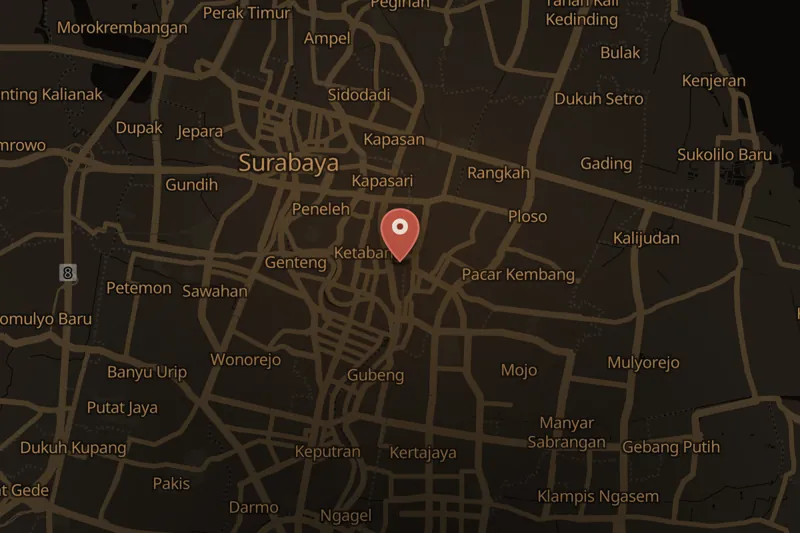
Surabaya bombings
Surabaya, East Java, Indonesia
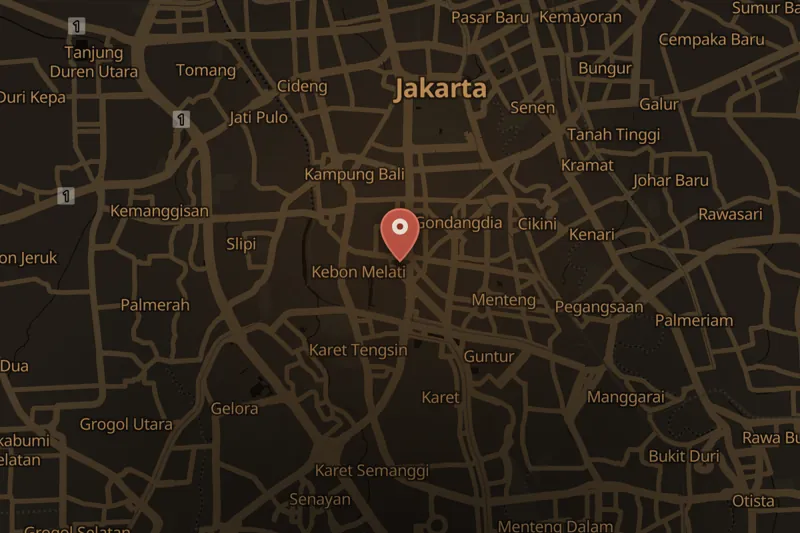
Murder of Wayan Mirna Salihin
Olivier Cafe, Grand Indonesia shopping mall, Jakarta

2002 Bali Bombings
Kuta, Bali, Indonesia

Australian Embassy bombing in Jakarta
Kuningan District, South Jakarta, near the Australian Embassy

Indonesian mass killings of 1965–66
Indonesia (nationwide, beginning in Jakarta)

Nisero Incident
West coast of Aceh, Sumatra (near Tenom)
Sources
- ENCYCLOPEDICKanjuruhan Stadium disasterWikipedia · 2026-07-16
- PRESSContemporaneous coverage -- Associated PressAssociated Press · 2026-07-16
- PRESSContemporaneous coverage -- BBC NewsBBC News · 2026-07-16
Record history
- First published
- JUL 18, 2026
When a file you follow changes — a new development, a correction, fresh coverage — the Dispatch is how you hear about it.
The Casepin Dispatch
A calm weekly briefing from the archive — one case worth understanding, meaningful updates to files you follow, and the best new coverage. You’ll also get the one-time note when the apps land. No gore, no rumor, no drip.