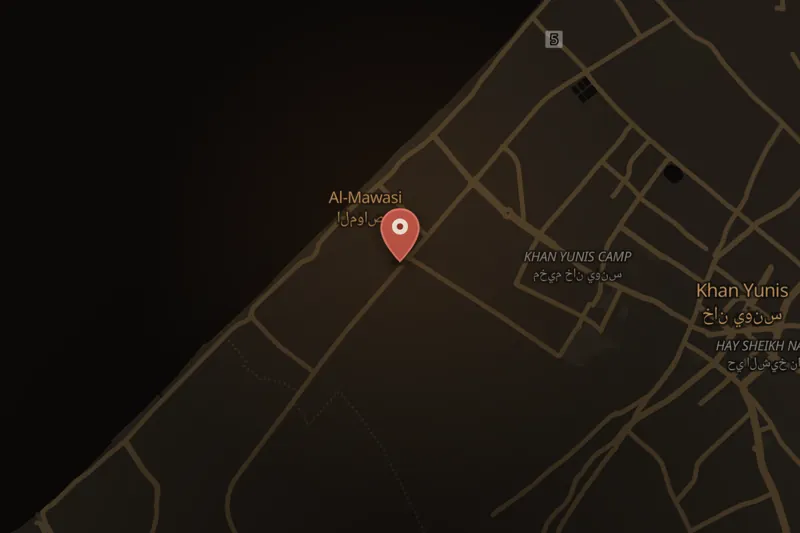
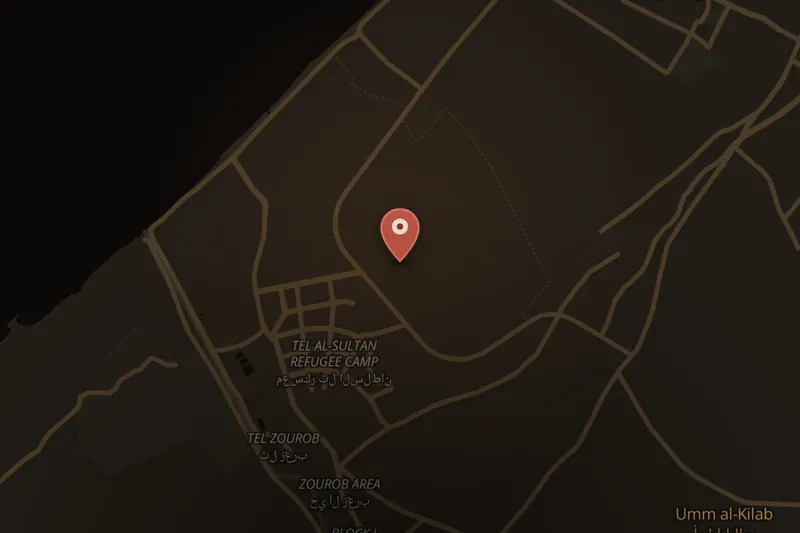
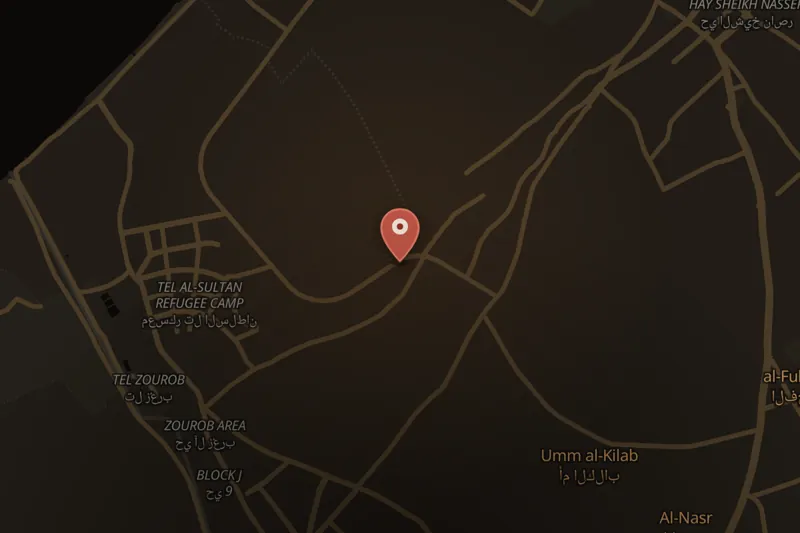
On the night of 26 May 2024, the Israeli Air Force struck a displacement camp in the Tel al-Sultan neighborhood of Rafah, Gaza. The camp had been designated by Israel roughly a week earlier as a "safe zone," with leaflets instructing Palestinians to relocate there from areas under evacuation order. The strike used two U.S.-made GBU-39 glide bombs and hit the "Kuwaiti Peace" tent camp, located about 200 metres from the largest UNRWA aid warehouse in Gaza. The bombing ignited a fire that trapped and burned many civilians alive, destroying an entire block of tents. The Gaza Health Ministry reported at least 45 deaths, including at least 12 women, eight children, and three elderly people; ActionAid UK put the death toll at 50. Injuries were initially reported at 65 and later raised to over 200. Local hospitals, including the only hospital in Rafah with eight beds and no intensive care unit, were reported to lack resources to treat the wounded.
Israel stated it had targeted an outer "Hamas compound" and killed two senior Hamas officials, identified as Yassin Rabia and Khaled Nagar, saying it believed no civilians were present at the target and that the resulting fire was "unexpected." However, satellite imagery and video analyses by multiple outlets, including a New York Times investigation, concluded that the strike hit structures inside the civilian camp intended for civilian use. Munitions and military analysts, including a U.S. Air Force sergeant and a U.S. Army explosives technician, said the GBU-39's fragmentation radius made its use in a densely populated civilian area inconsistent with an intent to limit casualties. An investigation by Amnesty International found that Hamas and Islamic Jihad fighters had been located in the camp and had knowingly endangered civilians by their presence, while also finding that Israel used munitions with a wide kill radius in a densely populated setting and likely failed to take feasible precautions to protect civilians. Amnesty determined the fire was likely caused by cooking fuel stored in the camp, contradicting Israeli suggestions that a militant ammunition warehouse was responsible. A panel of UN experts said Israel bore responsibility for the strike, describing it as both indiscriminate and disproportionate.
The attack occurred two days after the International Court of Justice ordered Israel to halt its Rafah offensive, an order Israel said it interpreted differently and did not treat as requiring a stop to operations. It drew widespread international condemnation from numerous governments, the UN Secretary-General, the African Union, the European Union, humanitarian organizations, and public figures, with several officials describing it as a violation of international law. Israeli Prime Minister Benjamin Netanyahu characterized the incident as a "tragic mishap." Some Israeli commentators drew comparisons between the fire and a Jewish holiday tradition involving bonfires, prompting public criticism; the posts were later removed. The event was widely covered internationally and images from the attack were described by aid workers as among the most severe documented during the war.


 UNSOLVEDListen