
Start here
A Church vs. The Feds: Who Shot First?? The WACO Siege
Bailey Sarian's 73-minute breakdown, the fullest single telling on file.
Watch on YouTubeBefore you continue
This case involves sexual violence and crimes against children. Casepin presents the record in neutral, non-graphic language. Choose whether to continue.
Unsolved case · 1993
Also known as 1993 Mt. Carmel fire · Waco massacre
 Branch Davidian Compound Near WacoCredit: the Federal Bureau of Investigation·Public domain·Source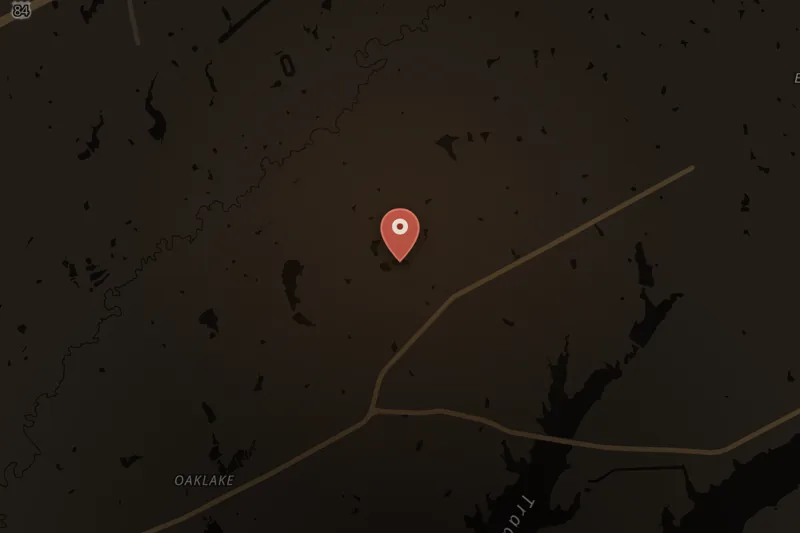
The short answer
A 51-day standoff between federal law enforcement and the Branch Davidians at Mount Carmel Center near Waco, Texas, that began with a fatal ATF raid on February 28, 1993, and ended in a fire that killed 76 people on April 19, 1993.
Start hereA Church vs. The Feds: Who Shot First?? The WACO SiegeBailey Sarian · 1 hr 13 minThe coverage index
2 pieces from 1 creator: ranked, with duplicates removed and short clips set aside.
Start here
Video · YouTube · 1 hr 13 min · 2021
Bailey Sarian's 73-minute breakdown, the fullest single telling on file.
Watch on YouTubeRuby Ridge, Waco, & the bombing that TERRIFIED America | Dark History
 Bailey SarianVideo · YouTube · 49 min · 2024
Titles and descriptions are the creators’ own and may not reflect current legal status. The sourced facts are in the file below. Players load only when you press play. Suggest coverage we’re missing.
The case file
The Branch Davidians were a religious group headquartered at Mount Carmel Center, a compound in unincorporated McLennan County, Texas, about 13 miles northeast of Waco. The group traced its origins to a 1955 schism within the Shepherd's Rod (Davidians) movement. By the late 1980s, leadership had passed to Vernon Wayne Howell, who legally changed his name to David Koresh in 1990.
In 1992, local authorities received reports raising concern about weapons at the compound, including a UPS driver's report of grenades found in a damaged package and a farmer's report of suspected automatic-weapons fire. The Bureau of Alcohol, Tobacco and Firearms (ATF) opened a formal investigation on June 9, 1992. An affidavit filed by ATF Special Agent David Aguilera on February 25, 1993, became the basis for search and arrest warrants against Koresh and other group members on federal weapons charges. On February 27, 1993, the Waco Tribune-Herald began publishing "The Sinful Messiah," a series alleging Koresh had physically and sexually abused children in the compound and taken multiple underage brides.
The ATF attempted to execute the warrants on February 28, 1993. A reporter tipped off about the raid inadvertently alerted a mail carrier who was Koresh's brother-in-law, tipping off the Branch Davidians before agents arrived. A gunfight broke out that killed four ATF agents — Steve Willis, Robert Williams, Todd McKeehan, and Conway Charles LeBleu — and five Branch Davidians: Winston Blake, Peter Gent, Peter Hipsman, Perry Jones, and Jaydean Wendell. Koresh was shot in the hand and stomach. About six hours after a ceasefire was negotiated, ATF agents shot and killed Michael Schroeder, a Branch Davidian who allegedly fired on agents as he tried to re-enter the compound.
The FBI took command of the standoff, led on-site by Jeff Jamar with the Hostage Rescue Team under Commander Richard Rogers. Over the next 51 days, negotiators kept telephone contact with those inside; 19 children were released without their parents early on, though 98 people remained in the compound. Negotiations stalled as Koresh repeatedly delayed, citing religious writings he said he needed to finish, and the FBI applied increasingly aggressive pressure, including sleep-disrupting broadcasts and armored vehicles that breached perimeter fencing. Koresh at one point ordered a group of followers to leave; eleven departed and were arrested as material witnesses, one of them on a charge of conspiracy to murder.
Attorney General Janet Reno approved an FBI plan to pump CS gas into the buildings, citing deteriorating conditions and reports of child abuse inside the compound. On April 19, 1993, the FBI's Hostage Rescue Team used armored vehicles to breach the buildings' walls and insert the gas. By around noon, fires broke out simultaneously in multiple parts of the building and spread quickly. Nine people escaped; 76 Branch Davidians died, including 20 to 28 children and Koresh, who according to the FBI was shot by an aide before the aide killed himself. Autopsies found that at least 20 of the dead, including Koresh, had been shot.
The origin of the fire remains disputed. Department of Justice reports from October 1993 and July 2000 concluded the Branch Davidians started the fire, citing surveillance audio of discussions about spreading fuel on hay and aerial footage showing multiple simultaneous ignition points. The FBI has stated none of its agents fired live rounds that day; critics dispute this and suggest gunfire combined with flammable CS gas may have caused or contributed to the blaze. An independent university investigation concluded occupants had sufficient time to escape the fire had they chosen to.
13 dated entries · 1955–2000
The Branch Davidians formed from a schism within the Shepherd's Rod (Davidians) after the death of founder Victor Houteff.
Vernon Wayne Howell's petition to legally change his name to David Koresh, filed that May in a California court, was granted.
McLennan County's Sheriff's Department was notified of a UPS driver's report that a damaged package addressed to the Branch Davidians contained grenades.
The ATF opened a formal investigation into the Branch Davidians.
A local farmer reported hearing what he believed was automatic-weapons and machine-gun fire from the compound.
ATF Special Agent David Aguilera's affidavit was filed, forming the basis for search and arrest warrants against Koresh and other group members.
The Waco Tribune-Herald began publishing "The Sinful Messiah," alleging Koresh had abused children in the compound.
The ATF's raid on Mount Carmel Center led to a gunfight that killed four ATF agents and five Branch Davidians; the FBI began a siege that lasted 51 days.
Branch Davidians sent the FBI a videotape intended to show there were no hostages inside the compound.
Koresh sent his lawyer his last communication with the outside world, a letter about religious writings he said he needed to finish.
The FBI's CS gas assault was followed by fires that engulfed Mount Carmel Center, killing 76 Branch Davidians including Koresh and 20 to 28 children.
A US Department of Justice report concluded the Branch Davidians had started the fire.
A second US Department of Justice report reaffirmed that the Branch Davidians had started the fire.
15 named in this file
Victims first. Every legal label is set from public records and court outcomes, not from the prose.
ATF special agent killed during the February 28, 1993 raid on Mount Carmel Center.[3]
Branch Davidian killed during the February 28, 1993 ATF raid on Mount Carmel Center.[3]
Branch Davidian shot dead by ATF agents on February 28, 1993, roughly six hours after the raid's ceasefire, while allegedly attempting to re-enter the compound armed.[3]
Branch Davidian killed during the February 28, 1993 ATF raid on Mount Carmel Center.[3]
Branch Davidian killed during the February 28, 1993 ATF raid on Mount Carmel Center.[3]
Branch Davidian killed during the February 28, 1993 ATF raid on Mount Carmel Center.[3]
ATF special agent killed during the February 28, 1993 raid on Mount Carmel Center.[3]
ATF special agent killed during the February 28, 1993 raid on Mount Carmel Center.[3]
ATF special agent killed during the February 28, 1993 raid on Mount Carmel Center.[3]
Branch Davidian killed during the February 28, 1993 ATF raid on Mount Carmel Center.[3]
Charged with federal weapons offenses, per ATF search and arrest warrants, over the Branch Davidians' weapons stockpile; died on 19 April 1993 in the fire that ended the 51-day Waco siege, so was never prosecuted.[3]
ATF Special Agent whose affidavit, filed February 25, 1993, formed the basis for the search and arrest warrants executed in the raid.[3]
US Attorney General who approved the FBI's plan for the April 19, 1993 CS gas assault on the compound.[3]
FBI Site Commander, head of the Bureau's San Antonio field office; took charge of the siege after the February 28 raid.[3]
Commander of the FBI Hostage Rescue Team during the siege and the April 19 assault; previously criticized for his actions at the Ruby Ridge standoff.[3]
3 cited
Coverage is not a source: every fact in this file rests on the records below.
Official / agencyUS Department of JusticeAccessed Jul 7, 2026
PressCNNAccessed Jul 7, 2026
EncyclopedicWikipediaAccessed Jul 7, 2026
Trust
Are you family of someone named in this file? Corrections and removal requests from victims’ families are prioritized.
Near this case
 Credit: Miscellaneous Items in High Demand, PPOC, Library of Congress·Public domain·SourceSOLVEDListen
Waco, Texas (city hall site of the lynching) · 1910s
In 1916, 17-year-old Jesse Washington, an African American farmhand convicted in a one-hour trial of murdering Lucy Fryer, was seized by a mob of thousands, tortured, and burned to death in front of Waco, Texas's city hall, an event later called the "Waco Horror."
 Image record·Public domain·SourceSOLVEDListen
Waco, McLennan County, Texas · 1920s
Jesse Thomas, a 23-year-old Black man in Waco, Texas, was shot to death by Sam Harris on May 26, 1922, after being wrongly identified as the man who carjacked and killed W. Harry Bolton and assaulted Maggie Hays. A mob of thousands then seized his body and burned it in Waco's public square. Thomas was later shown to be innocent; the actual perpetrator was serial killer Roy Mitchell.
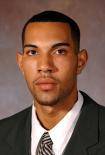 Credit: Baylor University·Editorial use·SourceSOLVEDListen
Waco, Texas (surrounding area, gravel pit where remains were found) · 2000s
Baylor University basketball player Patrick Dennehy was shot and killed by teammate Carlton Dotson on June 12, 2003, near Waco, Texas, in a case that also triggered a major NCAA investigation into the Baylor basketball program.
 Credit: Woodlawn High School·Editorial use·SourceSOLVEDListen
Leakin Park, Baltimore, Maryland · 1999
Hae Min Lee, an 18-year-old Baltimore County high school student, was strangled and found buried in Leakin Park in February 1999. Her ex-boyfriend Adnan Syed was convicted of first-degree murder in 2000; the case gained international attention after the 2014 podcast Serial, and Syed's conviction underwent multiple vacaturs, appeals, and reinstatements through 2025.
 Image record·Editorial use·SourceSOLVEDListen
California Polytechnic State University (Cal Poly), San Luis Obispo, California · 1996
Kristin Smart, a 19-year-old Cal Poly San Luis Obispo student, disappeared in the early hours of May 25, 1996, after leaving an off-campus party with fellow student Paul Flores, the last person known to have seen her. Flores was convicted of her murder in 2022 and his conviction was upheld on appeal; Smart's remains have never been recovered.
 Credit: Via Wikipedia·Editorial use·SourceUNSOLVEDListen
Fulham, London · 1990s
English television presenter Jill Dando was shot dead outside her London home in 1999, and the case remains unsolved.
Also covered by
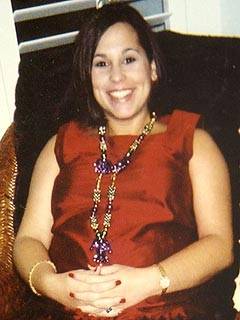 Credit: English Wikipedia·Editorial use·SourceSOLVEDListen
Modesto, California · 2002
Laci Peterson, 27 and eight months pregnant, disappeared from her Modesto, California home on December 24, 2002; her body and that of her unborn son Conner were found in San Francisco Bay in April 2003, and her husband Scott Peterson was convicted in 2004 of murdering both.
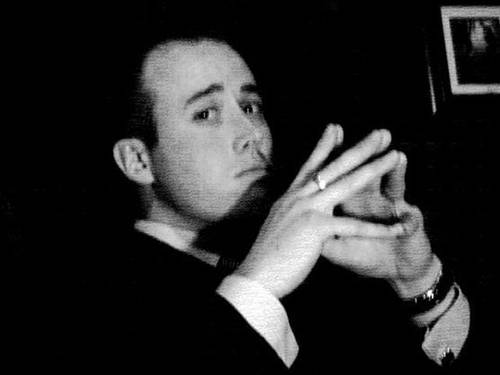 Credit: CBS News / Travis Alexander (personal photo)·Editorial use·SourceSOLVEDListen
Mesa, Arizona, United States · 2000s
Travis Alexander, 30, was stabbed, slashed, and shot to death in his Mesa, Arizona home on June 4, 2008. His ex-girlfriend, Jodi Arias, was convicted of first-degree murder in 2013 and sentenced to life without parole in 2015 after two juries deadlocked on the death penalty.
 COLDListen
Cumming, Georgia · 2018
Tamla Horsford, a 40-year-old mother of five, died from a fall at a home in Cumming, Georgia, during a gathering on November 3-4, 2018; two separate investigations ruled her death accidental, though her family has disputed that finding and pushed for further inquiry.
 Credit: Los Angeles Police Department·Public domain·SourceUNSOLVEDListen
Leimert Park, Los Angeles, California, USA · 1940s
Elizabeth Short, known posthumously as the Black Dahlia, was found murdered in Los Angeles in January 1947 in a case that remains unsolved.
 Credit: Ted Van Zyl·Editorial use·SourceSOLVEDListen
Albuquerque, New Mexico, United States · 1993
Girly Chew Hossencofft, a Malaysian-born bank teller living in Albuquerque, New Mexico, disappeared on September 9, 1999, shortly after filing for divorce from her husband Diazien Hossencofft. He and his girlfriend Linda Henning were later convicted of her murder. Her body has never been found.
 Credit: Argonne National Laboratory / Wikimedia Commons, c.1922–23·Public domain·SourceSOLVEDListen
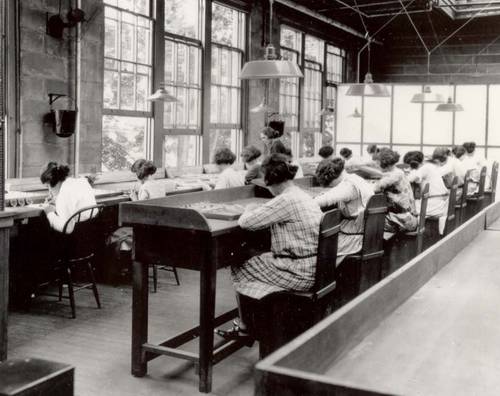
Orange, New Jersey · 1917
Beginning in 1917, factory workers who came to be known as the Radium Girls were poisoned after being instructed to shape radium-paint brushes with their lips; the resulting illnesses, deaths, and lawsuits against the United States Radium Corporation and the Radium Dial Company reshaped U.S. occupational health and labor law.