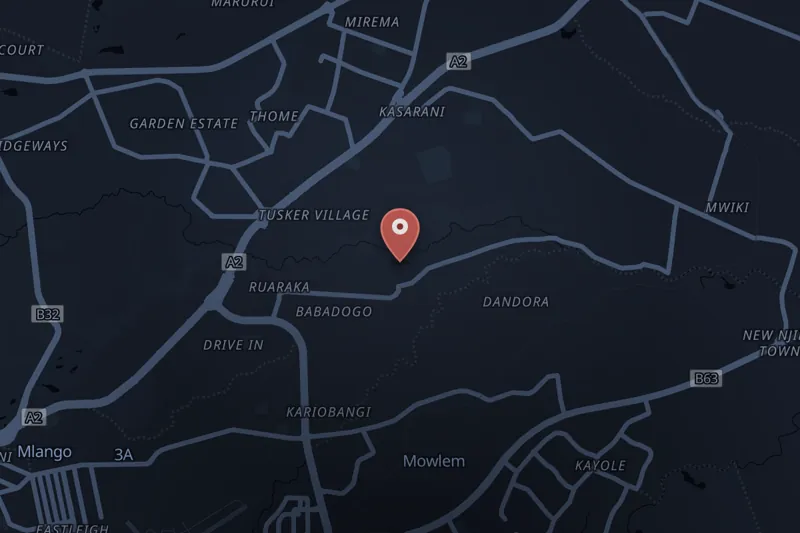
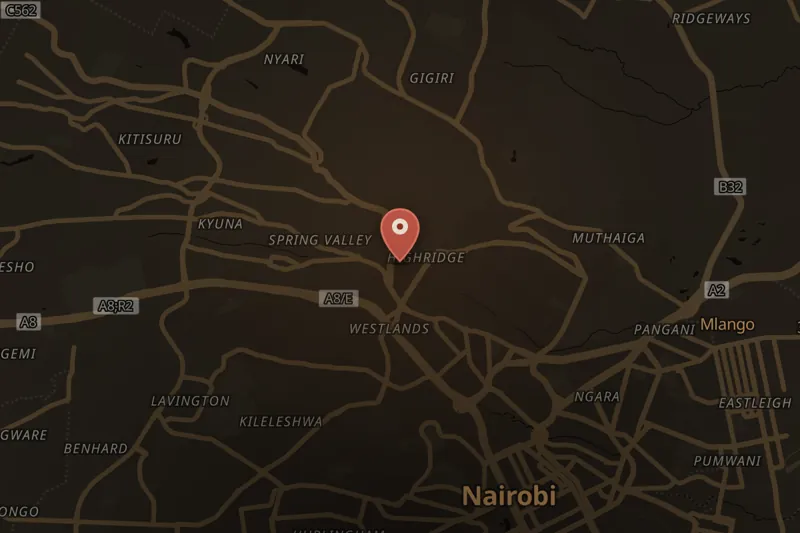
On 21 September 2013, at about 12:25 p.m., four masked gunmen emerged from a Mitsubishi Lancer near the entrance of the Westgate shopping mall in the Westlands district of Nairobi, Kenya. The attackers threw grenades toward a coffee shop and a security booth before splitting into pairs, with two heading toward the pedestrian entrance and two toward the vehicle entrance and upstairs parking lot, where a children's cooking competition was underway. Gunmen opened fire indiscriminately on shoppers, including at the Urban Burgers restaurant, and separated people according to religion, asking some to recite the shahadah or name the mother of the Prophet Muhammad; at least two people were killed for incorrectly stating the shahada. The militant group al-Shabaab claimed responsibility, describing the attack as retribution for Kenya's military deployment in Somalia under Operation Linda Nchi.
The siege lasted several hours, with most victims killed in the first hour, though the mall was not declared secured until 24 September. Kenyan security forces began their operation around 4:00 p.m., roughly four hours after the attack began. A friendly-fire incident occurred between the Recce Company of the General Service Unit and Kenya Defence Force soldiers, who mistakenly engaged each other on the first floor; Recce commander Martin Munene was killed and two officers injured. Part of the mall later collapsed due to a fire that started during the siege, complicating the death toll count. In total, 71 people died, including 62 civilians, five Kenyan soldiers, and all four gunmen; approximately 200 people were wounded. Notable victims included journalist Ruhila Adatia-Sood, President Uhuru Kenyatta's nephew Mbugua Mwangi and his fiancée Rosemary Wahito, Ghanaian poet and diplomat Kofi Awoonor, and Canadian diplomat Annemarie Desloges. Civilian and off-duty security personnel, including Abdul Yusuf Haji, Taff Groves, Lorcan Byrne, Peter Bach, and Dominic Troulan, took part in rescue efforts under fire; Troulan was later awarded the George Cross. Soldiers were subsequently seen on camera looting stores in the mall, and two were arrested and jailed for looting.
The four gunmen were identified via investigation as Hassan Abdi Mohamed (Abu Baara al-Sudani), Ahmed Hassan Abukar (Khattab al-Kene), Mohammed Abdinur Said (Umayr al-Mogadish), and Yahye Osman Ahmed (Omar Nabhan); all reportedly died of smoke inhalation according to autopsy results, though a separate NYPD-led review suggested they may have escaped alive, a conclusion disputed by Kenyan and US State Department findings. On 4 November 2013, a Kenyan court charged four Somali nationals — Mohammed Ahmed Abdi, Liban Abdullah, Adnan Ibrahim, and Hussein Hassan — with harbouring the gunmen and related offences; all pleaded not guilty. On 7 October 2020, following a trial with more than 140 witnesses, a Nairobi court convicted Hussein Hassan Mustafa and Mohammed Ahmed Abdi of conspiracy to commit a terrorist act, while a third defendant was acquitted for insufficient evidence; a further defendant had been acquitted in January 2019. Human Rights Watch noted that neither the attackers nor the attack's masterminds were brought to justice, with the convicted described as bystanders in the plot.


 Credit: FBIPublic domainSourceSOLVEDListen