Casepin
Back to cases

Case file

1998 United States Embassy Bombings

SOLVED1998United States Embassy, Nairobi, Kenya3 SOURCESUPDATED JUL 2026

Documents violence · ongoing investigation — written to inform, not to shock.

Illustrative

On August 7, 1998, suicide bombers detonated truck bombs outside the United States embassies in Nairobi, Kenya, and Dar es Salaam, Tanzania, within minutes of one another. The attacks killed more than 220 people and wounded thousands. In Nairobi, 213 people were killed and an estimated 4,000 were wounded; in Dar es Salaam, 11 people were killed and 85 wounded. The vast majority of casualties were local citizens of the two African countries rather than Americans, although twelve Americans were killed, including two CIA employees, a U.S. Marine Security Guard, and a U.S. Army staff sergeant.

In Nairobi, a truck driven toward the embassy was met by a security guard who was fired upon after refusing to open the gate; a stun grenade was thrown before the truck bomb detonated, damaging the embassy and collapsing the neighboring Ufundi Building, where most victims died, including students and staff of a secretarial college. In Dar es Salaam, the truck bomb caused fewer casualties in part because the embassy was located away from the city center and a water truck blocked the bombers from getting closer to the building.

According to the Wikipedia article, planning and orchestration of the bombings were attributed to Fazul Abdullah Mohammed and Abdullah Ahmed Abdullah. American sources cited in the article concluded the bombings were carried out in retaliation for U.S. involvement in the rendition of members of Egyptian Islamic Jihad from Albania to Egypt, though the 9/11 Commission Report is cited as attributing preparations to beginning after a February 1998 fatwa issued by Osama bin Laden. A group calling itself the "Liberation Army for Holy Sites" claimed responsibility, which U.S. investigators believed was a cover name used by Egyptian Islamic Jihad.

In response, President Bill Clinton ordered Operation Infinite Reach on August 20, 1998, launching cruise missile strikes on targets in Sudan and Afghanistan. The United Nations Security Council passed Resolution 1189 condemning the attacks. Both embassies were heavily damaged, and the Nairobi embassy was later rebuilt at a new, more secure location. A memorial park was later constructed at the former Nairobi embassy site.

A subsequent civil lawsuit, Owens v. Republic of Sudan (later Opati v. Republic of Sudan), was filed in 2001 by victims' families against Sudan under the Foreign Sovereign Immunities Act, alleging Sudan provided sanctuary to the bombers. After more than a decade of litigation and legislative amendments, a district court awarded plaintiffs over $10 billion in 2014, and in May 2020 the U.S. Supreme Court ruled that punitive damages of $4.3 billion could be applied retroactively. In October 2020, the United States announced it would remove Sudan from the State Sponsors of Terrorism list after Sudan agreed to pay $335 million in compensation to victims' families.

Following investigation, an indictment charged 21 people with various alleged roles in the bombings; according to the Wikipedia article, all of the cases arising from that indictment have been resolved.

Key facts

Victims
Kenneth Ray Hobson II, Molly Huckaby Hardy, Jesse Nathan Aliganga, Benson Okuku Bwaku, Tom Shah
Date
1998
Location
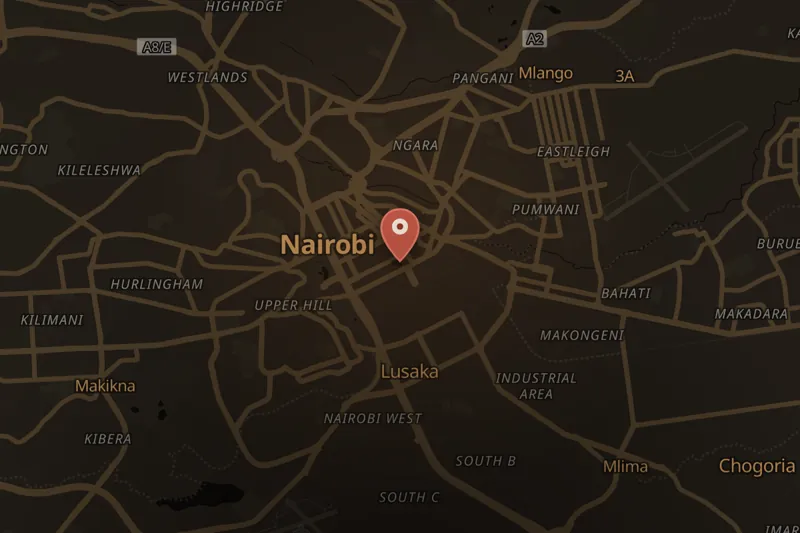
United States Embassy, Nairobi, Kenya
Case status
solved

Case timeline

  1. 1998-08-07

    Near-simultaneous truck bomb explosions occur at the U.S. embassies in Nairobi, Kenya, and Dar es Salaam, Tanzania, killing more than 220 people.

  2. 1998-08-20

    President Bill Clinton orders Operation Infinite Reach, cruise missile strikes on targets in Sudan and Afghanistan, in retaliation for the bombings.

  3. 2001

    James Owens and other victims file a civil lawsuit against Sudan under the Foreign Sovereign Immunities Act over its alleged role in the attacks.

  4. 2004

    A court ruling finds foreign nations have sovereign immunity from civil lawsuits under the then-current language of the Foreign Sovereign Immunities Act, hampering the lawsuit.

  5. 2008

    Congress amends the Foreign Sovereign Immunities Act, allowing retroactive application to existing lawsuits including the Owens case.

  6. 2014

    A district court awards plaintiffs in the civil suit over $10 billion; Sudan appeals the judgment.

  7. 2015-02

    An Egyptian defendant is sentenced to 25 years for the bombings, per contemporaneous New York Times coverage.

  8. 2020-05

    The U.S. Supreme Court rules in Opati v. Republic of Sudan that punitive damages of $4.3 billion may be applied retroactively.

  9. 2020-10

    President Donald Trump announces the U.S. will remove Sudan from the State Sponsors of Terrorism list after Sudan agrees to pay $335 million in compensation to victims' families.

Best coverage

No approved coverage links are attached yet.

People

  • Kenneth Ray Hobson II

    VICTIM

    U.S. Army Staff Sergeant killed in the Nairobi embassy bombing.

    citation on file

  • Molly Huckaby Hardy

    VICTIM

    CIA employee killed in the Nairobi embassy bombing.

    citation on file

  • Jesse Nathan Aliganga

    VICTIM

    U.S. Marine Sergeant and Marine Security Guard killed at the Nairobi embassy.

    citation on file

  • Benson Okuku Bwaku

    VICTIM

    Local security guard at the Nairobi embassy who was fired upon and survived the initial confrontation before the truck bomb detonated.

    citation on file

  • Tom Shah

    VICTIM

    CIA employee killed in the Nairobi embassy bombing.

    citation on file

Places

Common questions

What happened to the victim?
On August 7, 1998, near-simultaneous truck bombs detonated outside the U.S. embassies in Nairobi, Kenya, and Dar es Salaam, Tanzania, killing more than 220 people, mostly local citizens, and wounding thousands more.
Where did the crime happen?
United States Embassy, Nairobi, Kenya.
What is the current status of the case?
Status: solved.

Sources

  1. 1998 United States embassy bombingswikipedia · Wikipedia · 2026-07-07
  2. Contemporaneous coverage — bop.govnews · bop.gov · 2026-07-07
  3. Contemporaneous coverage — The New York Timesnews · The New York Times · 2026-07-07