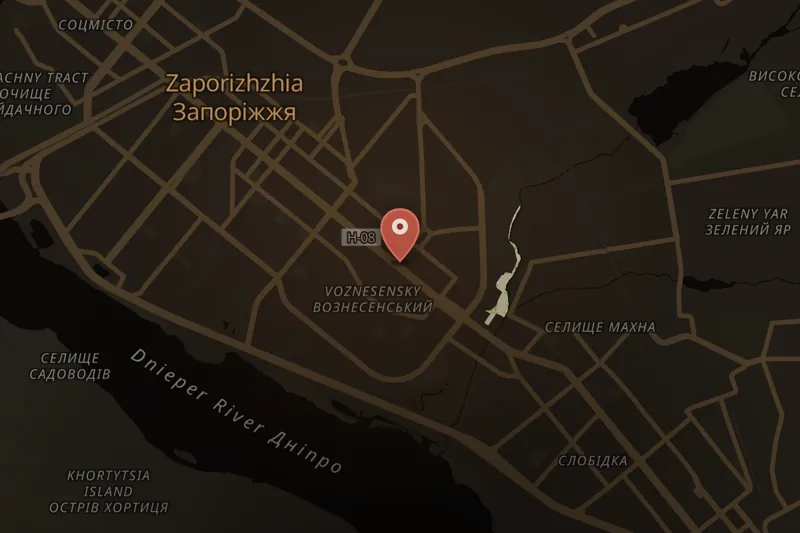
On the morning of 30 September 2022, the Russian Armed Forces reportedly launched sixteen S-300 missiles toward a civilian convoy on the outskirts of Zaporizhzhia, Ukraine, during the ongoing Russian invasion of Ukraine. According to the account, 32 people—both adults and children—were killed, and 86 others were injured. Four of the missiles struck an area next to an automotive market on the southeast side of Zaporizhzhia, where a humanitarian convoy of roughly 60 vehicles was assembling before setting out for the Russian-controlled checkpoint at Vasylivka, where occupants intended to pick up relatives. The strike occurred hours before Russia formally proceeded with the annexation of four Ukrainian regions, including Zaporizhzhia Oblast.
The attack drew swift international and Ukrainian condemnation. European Commission Vice-President Josep Borrell described it as "another heinous attack by Russia on civilians," characterizing the convoy as one bringing humanitarian assistance to people in non-government-controlled areas of Zaporizhzhia. He later added that the EU condemned the attack and stated those responsible would be brought to justice. Ukrainian President Volodymyr Zelenskyy labeled Russia a "state-terrorist," stating that a "terrorist state is firing missiles at the civilian population" and that occupying forces had fired sixteen missiles into the Zaporizhzhia area in a single morning. He further stated the attack was an act of "complete terrorists" and pledged accountability. Russian authorities, for their part, claimed to have struck a "strategic target."
In response to the attack, the Zaporizhzhia regional prosecutor's office opened a criminal case examining alleged violations of the laws and customs of war, later reported to include charges related to intentional homicide. Ukrainian authorities in the Zaporizhzhia region declared 1 October 2022 a day of mourning for those killed. Travel to the temporarily occupied territory was reported to have been suspended indefinitely as a result of the attack.
The UK Ministry of Defence assessed that Russia's use of a missile from an air-defense system (the S-300) to strike a ground target might indicate a shortage of high-precision, long-range missiles in the Russian arsenal.

 Credit: Половко Сергей НиколаевичCC BY-SA 4.0SourceSOLVEDListen


