Solved case
1972 Aldershot bombing
A car bomb planted by the Official IRA exploded outside the officers' mess at the 16th Parachute Brigade headquarters in Aldershot, England, on 22 February 1972, killing six civilian staff and a Catholic army chaplain and wounding 19 others.

On 22 February 1972, a car bomb exploded at the headquarters of the British Army's 16th Parachute Brigade in Aldershot, England. The Official Irish Republican Army (Official IRA) claimed the attack as revenge for Bloody Sunday, which had occurred on 30 January 1972 when soldiers of the 1st Battalion, Parachute Regiment shot 28 unarmed civilians during a civil rights march in Derry, killing fourteen. Elements of the 16th Parachute Brigade had been involved in the Bloody Sunday shootings, and the brigade's headquarters was targeted in response.
A hired Ford Cortina containing a 280-pound (130 kg) time bomb was left in the car park, positioned outside the officers' mess. Despite prior warnings, the base had no security or controlled access. The bomb detonated at 12:40 pm, destroying the officers' mess and damaging nearby office buildings. The soldiers who were the intended targets were not present, as the regiment was stationed abroad and most staff officers were in their offices rather than the mess at the time.
Six civilian staff and one army chaplain were killed: five female staff members leaving the premises, a gardener, and Father Gerard Weston, a Roman Catholic priest with the Royal Army Chaplains' Department. Those who died were identified as Weston (38), gardener John Haslar (58), Jill Mansfield (34), Thelma Bosley (44), Margaret Grant (32), Sheri Munton (20), and Joan Lunn (39). Nineteen people were wounded.
On 23 February, the Official IRA issued a statement claiming responsibility, saying civilian casualties were regretted as the intended target was officers responsible for events in Derry, and warning of further attacks on British Army regimental headquarters.
The bombing drew widespread criticism because it had mostly killed civilians, and this was believed to be among the factors that led the Official IRA's leadership to declare a ceasefire on 29 May 1972, stating it would only act in self-defence thereafter. It was the Official IRA's largest attack in Great Britain during the Troubles and one of its last major actions before that ceasefire.
In November 1972, following a 21-day trial at Winchester Crown Court, Noel Jenkinson, a 42-year-old transport manager and Official IRA member, was convicted for his part in the bombing and sentenced to life imprisonment, with the presiding judge recommending he serve at least 30 years. Finbar Kissane and Michael Duignan were convicted of complicity and sentenced to prison terms of 2 years and 2.5 years respectively. Evidence against Jenkinson was linked to his fraudulent hire, with Kissane, of the Ford Cortina used in the bombing, and to a case of gelignite found in his garden shed. Jenkinson died in HMP Leicester in 1976 of heart failure, having recently expressed support for the Provisional IRA, and was buried in Dublin.

Key facts
- Victims
- Margaret Grant, Sheri Munton, Joan Lunn, Gerard Weston, Jill Mansfield, John Haslar, Thelma Bosley
- Date
- 1972
- Location
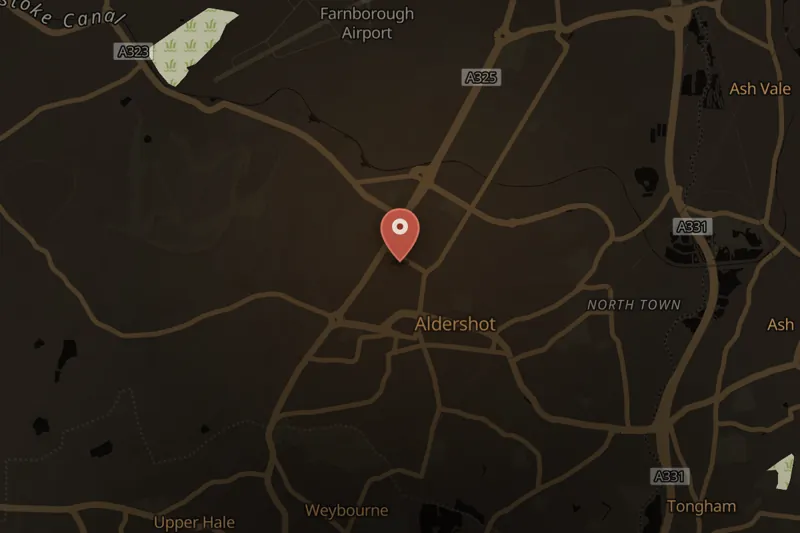
- 16th Parachute Brigade headquarters, Aldershot, England
- Case status
- solved
Case timeline
1969-12
The Irish Republican Army splits into the Official IRA and Provisional IRA.
1972-01-30
Bloody Sunday: soldiers of the 1st Battalion, Parachute Regiment shoot 28 unarmed civilians in Derry; 14 die.
1972-02-22
A car bomb explodes outside the officers' mess at 16th Parachute Brigade headquarters in Aldershot, killing seven and wounding 19.
1972-02-23
The Official IRA issues a statement claiming responsibility for the bombing.
1972-05-29
The Official IRA's leadership declares a ceasefire, stating future attacks would only be in self-defence.
1972-11
Noel Jenkinson is convicted at Winchester Crown Court and sentenced to life imprisonment; Finbar Kissane and Michael Duignan are convicted of complicity.
1976
Noel Jenkinson dies in HMP Leicester of heart failure.
Best coverage
No coverage has been attached to this file yet.
People
Margaret Grant
VICTIMCivilian staff member killed in the bombing
Finbar Kissane
CONVICTEDConvicted of complicity in the bombing; sentenced to 2 years
Michael Duignan
CONVICTEDConvicted of complicity in the bombing; sentenced to 2.5 years
Sheri Munton
VICTIMCivilian staff member killed in the bombing
Noel Jenkinson
CONVICTEDOfficial IRA member convicted of the bombing and sentenced to life imprisonment
Joan Lunn
VICTIMCivilian staff member killed in the bombing
Gerard Weston
VICTIMRoman Catholic army chaplain killed in the bombing
Jill Mansfield
VICTIMCivilian staff member killed in the bombing
John Haslar
VICTIMGardener killed in the bombing
Thelma Bosley
VICTIMCivilian staff member killed in the bombing
Roles reflect public records and court outcomes at the time of writing — supporting citations are on file under Sources.
Places
Common questions
- What happened to the victim?
- A car bomb planted by the Official IRA exploded outside the officers' mess at the 16th Parachute Brigade headquarters in Aldershot, England, on 22 February 1972, killing six civilian staff and a Catholic army chaplain and wounding 19 others.
- Where did the bombing happen?
- 16th Parachute Brigade headquarters, Aldershot, England.
- Who was convicted?
- Finbar Kissane (Convicted of complicity in the bombing; sentenced to 2 years), Michael Duignan (Convicted of complicity in the bombing; sentenced to 2.5 years), and Noel Jenkinson (Official IRA member convicted of the bombing and sentenced to life imprisonment).
- What is the current status of the case?
- Status: solved. Last verified July 2026.
Sources
- ENCYCLOPEDIC1972 Aldershot bombingWikipedia · 2026-07-07
- PRESSContemporaneous coverage — The GuardianThe Guardian · 2026-07-07
- PRESSContemporaneous coverage — BBC NewsBBC News · 2026-07-07
Record history
- First published
- JUL 07, 2026
- Last verified against sources
- JUL 07, 2026
When a file you follow changes — a new development, a correction, fresh coverage — the Dispatch is how you hear about it.
The Casepin Dispatch
A calm weekly briefing from the archive — one case worth understanding, meaningful updates to files you follow, and the best new coverage. You’ll also get the one-time note when the apps land. No gore, no rumor, no drip.