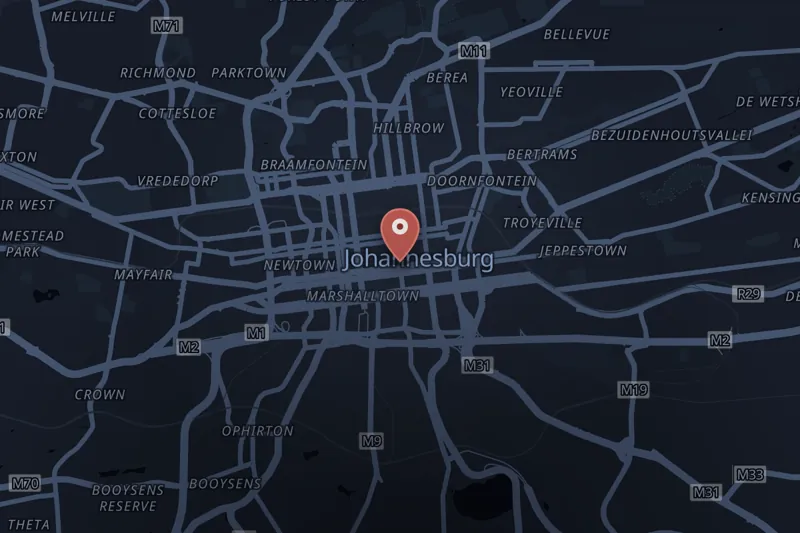
On the morning of Monday, 28 April 1975, David Protter, an assistant security official at the Israeli consulate in Johannesburg, South Africa, took control of the consulate's offices, located on the fifth floor of the Hershleigh building on Fox Street. His brother Charles, also employed at the consulate, staffed the lobby and admitted staff into the building, believing David's claim that a security exercise was underway. Twenty-one hostages were eventually taken. The consulate's head of security, Giora Raviv, was killed shortly after arriving when he struggled with David upon realizing what was happening.
Through the morning, several people, including vice-consul Shemi Tsur and a visitor named Maurice Kaplan, became aware something was wrong, and police were alerted by messages from the Israeli embassy in Pretoria and in Jerusalem. Officers who visited the consulate twice were told by Charles Protter that everything was normal, and these accounts were confirmed by David over an intercom. Around 1:15 pm, David began firing an Uzi from the consulate windows into Fox Street, wounding pedestrians and motorists and prompting police to return fire into the building. An El Al security official, Solly Sacks, took over communications with the consulate on behalf of police, during which false claims were made that foreign terrorists had seized the building. In the late afternoon, Charles Protter left the building and was detained by police, admitting there were no foreign terrorists and that he suspected his brother was responsible.
Command of the security response passed to Bureau of State Security head Hendrik van den Berg on the orders of Prime Minister John Vorster. Late in the evening, a doctor who had entered the building convinced David Protter to release the doctor, Raviv's body, and two wounded hostages, Evelyn Dakin and Edwin Molopo. After further gunfire near midnight and a standoff over a 5 am deadline, Van den Berg negotiated Protter's surrender by around 4:30 am on 29 April, and all remaining hostages were released. In total, four people died during the siege: two hostages and two bystanders.
Following his arrest, David Protter attempted suicide twice while in custody and was committed for psychiatric assessment. He was charged with murder, kidnapping, and unlawful possession of firearms; Charles Protter was charged with kidnapping and unlawful possession of firearms. At trial, David Protter pleaded not guilty to murdering Raviv, claiming culpable homicide during a struggle, but a second autopsy showing multiple gunshot wounds contradicted this account. On 12 November 1975, he was convicted of murder and sentenced to 25 years in prison; Charles was sentenced to five years, with 30 months commuted. David Protter was released from prison in July 1991. In response to the siege, South African police formed a Special Task Force in 1976 to handle hostage situations and urban terrorism.

 SOLVEDListen