Skip to content
Casepin

Solved case · 1993

Assassination of Chris Hani

Also known as Murder of Chris Hani · Killing of Chris Hani

SOLVEDCONVICTEDACQUITTED
Updated
Updated Jul 7, 2026
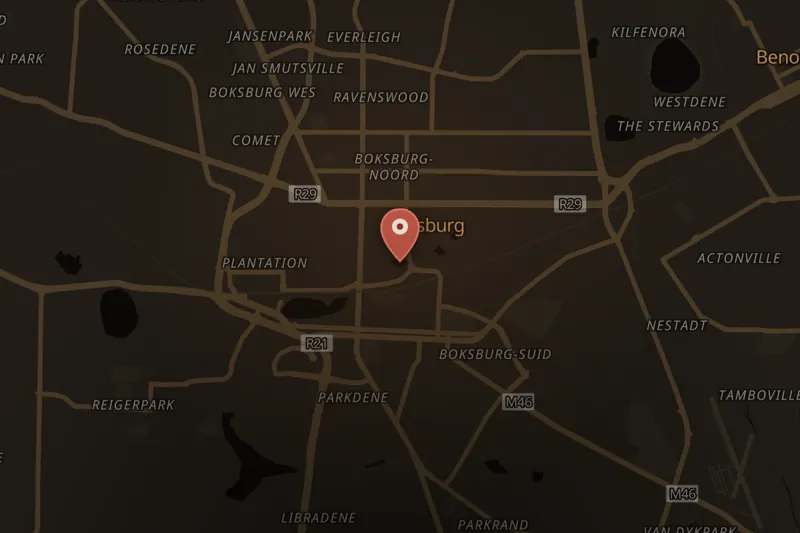
Dawn Park, Boksburg, South AfricaView on the map

The short answer

Assassination of Chris Hani in brief

Chris Hani, General-Secretary of the South African Communist Party, was shot dead outside his home in Dawn Park, Boksburg, on 10 April 1993 by right-wing extremist Janusz Waluś. Waluś and accomplice Clive Derby-Lewis, who supplied the weapon, were convicted and sentenced to death, later commuted to life imprisonment; the killing intensified political unrest ahead of South Africa's first democratic elections in 1994.

Key facts

Year
1993
Place
Dawn Park, Boksburg, South Africa
Status
SOLVEDSolved
Victim
Chris Hani
Outcome
Convicted: Janusz Waluś and Clive Derby-Lewis; Acquitted: Gaye Derby-Lewis

The coverage index

Where to watch & listen

No one's coverage is attached to this file yet.

Know great coverage of this case?

A documentary, a podcast episode, a careful long-form video. Suggest it and an editor will review it before it appears here.

Suggest coverage for Assassination of Chris Hani

The case file

What happened

Chris Hani, General-Secretary of the South African Communist Party (SACP) and a senior figure in the African National Congress's military wing, Umkhonto we Sizwe, was shot and killed outside his home in Dawn Park, Boksburg, on the morning of 10 April 1993. Hani had joined the ANC Youth League as a teenager, studied at the University of Fort Hare and Rhodes University, and became a prominent anti-apartheid military and political leader after returning to South Africa following the ANC's unbanning in 1990. He had previously survived a 1981 assassination attempt and had led a march at Bisho Stadium in September 1992 during which 28 people were killed by gunfire, an event known as the Bisho Massacre.

The assassination occurred as Hani stepped out of his car; he was shot at approximately 10:20am and died at the scene from two bullets to the chest and two additional bullets to the head. His fifteen-year-old daughter, Nomakhwezi, was present. A neighbor, Margaretha Harmse, identified the shooter and his vehicle and alerted police, leading to the arrest of Janusz Waluś, a Polish-born South African immigrant associated with far-right groups including the National Party and the Afrikaner Weerstandsbeweging. Waluś was interrogated by police the same day.

Clive Derby-Lewis, at the time Shadow Minister for Economic Affairs for the Conservative Party of South Africa, was subsequently arrested for his role in supplying the modified pistol used in the killing, which had been stolen from the military. Derby-Lewis's wife, Gaye Derby-Lewis, was tried in connection with the case but was acquitted. Investigators recovered a list of assassination targets compiled by Waluś and Derby-Lewis that included other prominent anti-apartheid figures.

Waluś and Derby-Lewis were convicted and initially sentenced to death; following a constitutional ruling in 1995, their sentences were commuted to life imprisonment. In 1997 both applied for amnesty before the Truth and Reconciliation Commission, arguing the killing was politically motivated and carried out on orders from the Conservative Party; the commission rejected their claims after inconsistencies emerged in their testimony.

The assassination triggered riots in Cape Town, Durban and Port Elizabeth, resulting in seven deaths, including three from police gunfire, and an estimated six million workers took part in a one-day strike on 15 April 1993 in commemoration of Hani. Nelson Mandela addressed the nation on 14 April 1993 calling for calm. The unrest is widely cited as accelerating negotiations toward South Africa's first fully democratic election, held in April 1994. Derby-Lewis was granted parole in 2015 due to terminal lung cancer and died on 3 November 2016. Waluś was repeatedly denied parole over the following years before being granted parole in December 2022 and was reportedly scheduled for deportation to Poland in December 2024. Various conspiracy theories regarding wider political involvement in the assassination have circulated but have not been formally investigated or substantiated.

18 dated entries · 1963–2024

Timeline

  1. Chris Hani, arrested under the Suppression of Communism Act, is exiled to Lesotho and changes his name from Thembisile to Chris.

  2. Hani survives a car bomb assassination attempt.

  3. Hani returns permanently to South Africa following the unbanning of the ANC.

  4. Hani leads a procession of 80,000 people at Bisho Stadium; the crowd comes under gunfire, killing 28 people in what becomes known as the Bisho Massacre.

  5. Chris Hani is shot and killed outside his home in Dawn Park, Boksburg, by Janusz Waluś; he is arrested the same day.

  6. Nelson Mandela addresses the nation calling for peace following Hani's killing.

  7. An estimated six million black workers take part in a one-day strike to commemorate Hani.

  8. South Africa holds its first fully inclusive democratic election, won by the ANC.

  9. A constitutional ruling leads to the commutation of Waluś's and Derby-Lewis's death sentences to life imprisonment.

  10. Amnesty hearing before the Truth and Reconciliation Commission for Waluś and Derby-Lewis begins, lasting until 27 November 1997.

  11. Clive Derby-Lewis is granted parole due to terminal lung cancer.

  12. Clive Derby-Lewis dies of cancer.

  13. Janusz Waluś's parole is rejected by the Supreme Court of Appeal following an earlier North Gauteng High Court decision.

  14. The North Gauteng High Court orders Waluś released on parole under bail conditions.

  15. The Supreme Court of Appeal in Bloemfontein overturns Waluś's parole.

  16. Waluś is again denied parole, this time by Justice Minister Ronald Lamola.

  17. Waluś is granted parole under strict conditions by Justice Minister Ronald Lamola.

  18. Waluś is reportedly scheduled to be deported to Poland.

4 named in this file

People

Victims first. Every legal label is set from public records and court outcomes, not from the prose.

  • Chris Hani

    VICTIM

    General-Secretary of the South African Communist Party and senior ANC/Umkhonto we Sizwe figure, killed outside his home on 10 April 1993.[3]

  • Clive Derby-Lewis

    CONVICTED

    Convicted for supplying the weapon and conspiring in Hani's assassination; sentenced to death, later commuted to life imprisonment; granted medical parole in 2015 and died in 2016.[3]

  • Janusz Waluś

    CONVICTED

    Convicted of the assassination of Chris Hani; sentenced to death, later commuted to life imprisonment; granted parole in December 2022.[3]

  • Gaye Derby-Lewis

    ACQUITTED

    Tried by the Supreme Court in Johannesburg in connection with the case but acquitted.[3]

From the record

Quick answers

Who were convicted?
Janusz Waluś: Convicted of the assassination of Chris Hani; sentenced to death, later commuted to life imprisonment; granted parole in December 2022. Clive Derby-Lewis: Convicted for supplying the weapon and conspiring in Hani's assassination; sentenced to death, later commuted to life imprisonment; granted medical parole in 2015 and died in 2016.

3 cited

Sources

Coverage is not a source: every fact in this file rests on the records below.

  • 2 Press
  • 1 Encyclopedic
  1. Contemporaneous coverage — History

    PressHistoryAccessed Jul 7, 2026

  2. Contemporaneous coverage — BBC News

    PressBBC NewsAccessed Jul 7, 2026

  3. Assassination of Chris Hani

    EncyclopedicWikipediaAccessed Jul 7, 2026

Trust

Record history

First published
Jul 7, 2026
Corrections
None

Are you family of someone named in this file? Corrections and removal requests from victims’ families are prioritized.