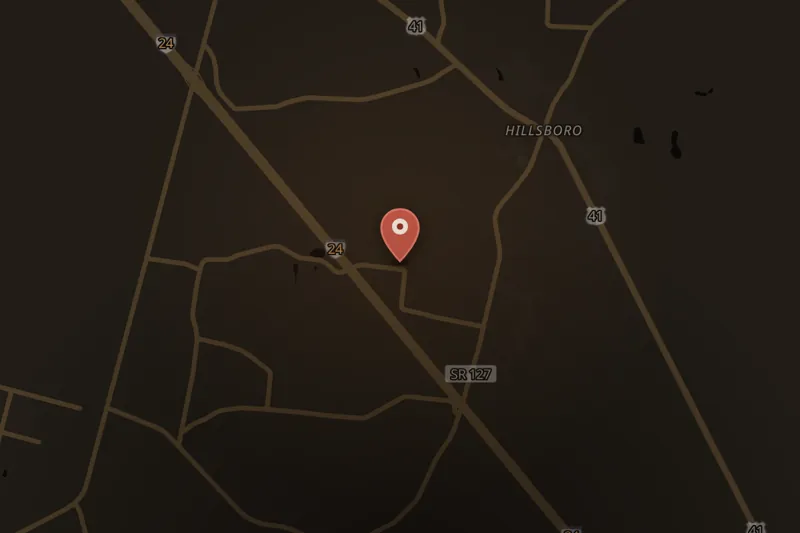
On October 3, 2001, a Greyhound Lines bus traveling from Chicago to Orlando, Florida, crashed on Interstate 24 near Manchester, Tennessee, about 50 miles southeast of Nashville, after a passenger attacked the driver. The Federal Bureau of Investigation established that the attacker, identified as Damir Igrić, a Croatian citizen, had boarded the bus in Chicago. The bus was carrying 39 passengers at the time.
At approximately 4 a.m., Igrić lunged at driver Garfield Sands, of Marietta, Georgia, and slashed his throat with a sharp object before grabbing the steering wheel and attempting to steer the bus into oncoming traffic. Witness accounts indicate Igrić had approached Sands multiple times earlier, asking about the route and timing of the next stop, and had also interacted with a passenger seated behind the driver, Carly Rinearson, in the hours before the attack. Sands survived the attack and the resulting crash; he crawled out of the vehicle and walked roughly 200 yards up the highway to seek help.
The bus rolled over onto its driver's side. Igrić was ejected through the windshield and died on impact. Six other people died in the crash. Five of the deceased were identified as Matthew Hawkins, 29, of Pierceton, Indiana; Tommy Montgomery, 52, of Huntsville, Alabama; Marian Nalls, 75, of Euclid, Ohio; Amelia Nerio, 73, of Lake Wales, Florida; and Fannie Jones, 68, of Stone Mountain, Georgia. Of the 39 passengers, all were injured; 21 were treated at hospitals and released, nine were hospitalized in stable condition, and three were in critical condition.
The incident drew intense media attention and speculation about a possible terrorist motive, occurring less than a month after the September 11 attacks. Greyhound temporarily shut down its nationwide bus service in response. No immediate security changes followed this specific incident, though after a similar attack on a Greyhound bus nearly a year later, the company installed partitions on many of its newer coaches intended to prevent direct access to the driver.
According to available biographical information, Igrić was born in 1972 in Slavonski Brod, in what was then Yugoslavia and is now Croatia. He trained as a locksmith, joined the Croatian army in 1991, and was discharged in 1993 for reasons described by Croatia's ambassador, Ivan Grdešić, as involving "violent behavior and substance abuse" and connections to crimes in Croatia. He later participated in Croatia's war of independence. Igrić entered the United States through Miami in March 1999 on a 30-day transit visa, which he overstayed by two years, and worked in a New York City restaurant before the attack. He had a documented history of mental illness.

 SOLVEDListen