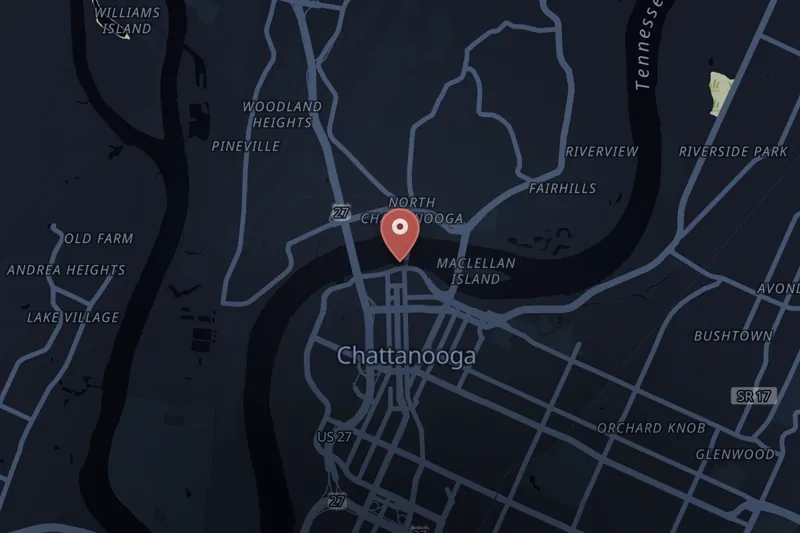
On February 9, 1893, Alfred Blount, an African American man and native of Chattanooga, Tennessee, was taken from his cell in the county jail and killed by a mob. Blount had been charged with assaulting a woman identified as Mrs. M. A. Moore, a 51-year-old widow. Moore stated she was cleaning her house when a man entered through her back door asking for food. Believing he was a neighbor, she invited him in and called for her African-American house boy, Sam, to bring food; upon finding Sam absent, she went to prepare the food herself and reported being grabbed and attacked. She said she struck the man and then fainted, later recounting the incident to her neighbor, Mrs. DeRochement.
Sheriff Skillern organized a search for the suspect based on a physical description Moore provided within about half an hour of the reported attack. Blount was arrested soon after and held in the county jail.
On the night Blount died, a local theater was staging a tribute to the performer known as the Spanish Carmencita. During the performance, a group of Chattanooga citizens surrounded the county jail and forced their way in despite resistance from guarding officers. The mob broke open Blount's cell and removed him. He was then repeatedly assaulted — stabbed, beaten, and shot — on the Walnut Street Bridge before being hanged. Blount was the second recorded African American lynched in Chattanooga, and subsequent inquiries found a lack of sufficient evidence to support his conviction.
Shortly afterward, Attorney General Brown sought to prosecute members of the mob, working alongside Sheriff Skillern, who had led the original search for Moore's attacker. The investigation ultimately ended when local Judge Moon declined to convene a jury. Blount's wife later filed a lawsuit against the city of Chattanooga in an effort to prevent further lynchings in the South.
Thirteen years later, Ed Johnson was hanged from the same Walnut Street Bridge following an alleged attack on a woman, under circumstances similar to Blount's case — forcibly removed from his cell, beaten, and killed. Johnson was granted a stay of execution by U.S. Supreme Court Associate Justice John Marshall Harlan shortly before his death, and was formally cleared of the conviction more than a century later by Chattanooga District Attorney Bill Cox, with later research also finding insufficient evidence in his case. Some Chattanooga residents have called for the city to install plaques memorializing both Blount and Johnson on the Walnut Street Bridge, noting that Blount was lynched from one half of the bridge and Johnson from the other.

 Credit: terrell, mary churchPublic domainSourceSOLVEDListen


