
Start here
SOLVED: Japan School Murders

Brooke Makenna's 32-minute breakdown, the fullest single telling on file.
Watch on YouTubeBefore you continue
This case involves crimes against children. Casepin presents the record in neutral, non-graphic language. Choose whether to continue.
Solved case · 1997
Also known as Kobe child murders · Kobe serial child murders
 School gate in junior high school where boy A put boy's neckCredit: 山井書店·CC BY-SA 3.0·Source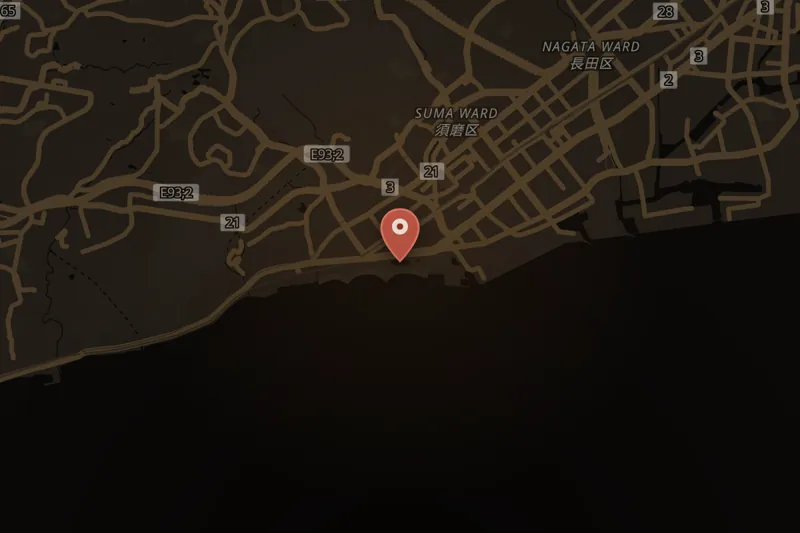
The short answer
In 1997, two elementary-school children, 11-year-old Jun Hase and 10-year-old Ayaka Yamashita, were killed and three other children were injured in a series of attacks in Suma Ward, Kobe, Japan; a 14-year-old boy was identified as the perpetrator, in a case that reshaped Japanese juvenile-justice law.
Start hereSOLVED: Japan School MurdersBrooke Makenna · 32 minThe coverage index
1 piece from 1 creator: ranked, with duplicates removed and short clips set aside.
Start here
Video · YouTube · 32 min · 2020
Brooke Makenna's 32-minute breakdown, the fullest single telling on file.
Watch on YouTubeTitles and descriptions are the creators’ own and may not reflect current legal status. The sourced facts are in the file below. Players load only when you press play. Suggest coverage we’re missing.
The case file
Between February and May 1997, a series of violent attacks against children took place in the Suma ward of Kobe, Japan. On 10 February 1997, two twelve-year-old schoolgirls were struck from behind near an apartment complex. On 16 March 1997, ten-year-old Ayaka Yamashita, a fourth-grade student, was bludgeoned near a residential building in Ryugadai; she died the following week. Minutes after that attack, a nine-year-old girl was stabbed outside a nearby park. On 24 May 1997, eleven-year-old Jun Hase, a pupil at Tainohata Elementary School, was lured to a hillside area known as Tank Mountain and strangled with his own shoelaces. His body was hidden in an abandoned television relay station, and the following day his head was severed and mutilated. On 27 May, the head was left in front of the gate of Tomogaoka Junior High School with a handwritten note taunting police and signed with a name read as "Sakakibara Seito."
A follow-up letter, postmarked 3 June and received by the newspaper Kobe Shinbun on 6 June, claimed responsibility for Hase's killing and mutilation, criticized the Japanese educational system and police investigation, and threatened further killings. Investigators initially believed the writer to be an adult male due to the formal language used, and pursued several since-dismissed leads, including reports of unidentified men and vehicles near the crime scenes.
The perpetrator, fourteen-year-old Shinichiro Azuma, was questioned by police on 28 June 1997 and confessed after officers said his handwriting had been matched to the letters. He admitted to killing both Hase and Yamashita, as well as carrying out three additional non-fatal attacks on schoolgirls. He was arrested for murder and abandonment of a corpse, and weapons linked to the crimes were recovered from a pond on 7 July. He was indicted for the assaults on 16 July 1997.
As a juvenile, Azuma was tried at Kobe Family Court beginning 4 August 1997 under the designation "Boy A," since Japanese law bars publication of a minor offender's identity. Psychiatric evaluation found no significant impairment of responsibility, though it identified conduct disorder and traits including sexual sadism and a lack of empathy. On 13 October 1997, Judge Igaki Yasuhiro ordered Azuma's indefinite detention at the Kanto Medical Juvenile Training School. A 1999 civil settlement saw Yamashita's family awarded 80,000,000 yen in compensation. Azuma was transferred to another juvenile facility in 2001 and, following a period of good rehabilitative assessment, was granted a provisional release announced by the Ministry of Justice on 11 March 2004, with full release following on 1 January 2005.
The case prompted public debate in Japan over youth crime, media restrictions, and juvenile justice, including a 2000 legislative change lowering the age of criminal responsibility from 16 to 14. In June 2015, Azuma published an autobiography, Zekka, describing the killings in detail and stating regret, prompting renewed controversy and objections from Hase's family.
17 dated entries · 1997–2015
Two twelve-year-old schoolgirls are struck from behind near an apartment complex in Nakaochiai district, Kobe.
Ayaka Yamashita is bludgeoned near a residential building in Ryugadai; a second girl is stabbed shortly afterward near Tatsugaoka Park.
Ayaka Yamashita is declared brain dead and dies from her injuries.
Jun Hase is abducted and strangled at Tank Mountain, Taihata, Kobe.
Hase's body is decapitated and further mutilated at an abandoned relay station.
Hase's severed head is left in front of Tomogaoka Junior High School with a taunting note.
A letter claiming responsibility for the murders, signed 'Sakakibara Seito,' is received by the newspaper Kobe Shinbun.
Shinichiro Azuma is questioned by police and confesses to the murders of Hase and Yamashita and three other attacks; he is arrested.
Weapons used in the murders and assaults are recovered from Mukaihata pond.
Azuma is officially indicted for the assaults.
Azuma's trial begins at Kobe Family Court.
Judge Igaki Yasuhiro orders Azuma's indefinite detention at the Kanto Medical Juvenile Training School.
An out-of-court settlement is reached in a civil suit by Yamashita's family, awarding 80,000,000 yen in compensation.
Azuma is transferred to Tohoku Juvenile Training School.
The Ministry of Justice announces Azuma's provisional release.
Azuma's full release from juvenile detention takes effect.
Azuma publishes an autobiography, Zekka, describing the murders.
3 named in this file
Victims first. Every legal label is set from public records and court outcomes, not from the prose.
10-year-old girl; elementary-school pupil in Suma Ward, Kobe; fatally assaulted on 16 March 1997 and died days later.[5]
11-year-old boy; pupil at Tainohata Elementary School in Suma Ward, Kobe; abducted and killed on 24 May 1997.[5]
Prosecuted as a juvenile ('Boy A') and found responsible by Kobe Family Court for the murders of Ayaka Yamashita and Jun Hase and additional assaults on schoolgirls; ordered into indefinite juvenile detention on 13 October 1997.[3]
From the record
5 cited
Coverage is not a source: every fact in this file rests on the records below.
PressThe Japan TimesAccessed Jul 7, 2026
PressThe Japan TimesAccessed Jul 7, 2026
PressThe Japan TimesAccessed Jul 5, 2026
PressSouth China Morning PostAccessed Jul 5, 2026
EncyclopedicWikipediaAccessed Jul 5, 2026
Trust
Jul 13, 2026Correction
Catalog QA: Corrected scope to all five attacks and set the full attack range.
Jul 13, 2026Correction
Catalog QA: consolidated duplicate /cases/kobe-child-murders-1997 into this canonical dossier.
Are you family of someone named in this file? Corrections and removal requests from victims’ families are prioritized.
Near this case
 SOLVEDListen
Amagasaki City, Hyogo Prefecture, Japan · 2000s
A pseudo-family led by Miyoko Sumida in Amagasaki, Japan, is alleged to have coerced relatives and cohabitants into confining, abusing, and killing at least eight people between 1987 and 2011 for financial gain; Sumida died by suicide in detention before trial, while ten co-defendants were tried.
Dojima Kita Building, Kita-ku, Osaka, Japan · 2020s
On 17 December 2021, a fire believed to be deliberately set killed 26 people and injured one other at a psychiatric clinic on the fourth floor of the Dojima Kita Building in Kita-ku, Osaka, Japan.
 Credit: MASA (talk)·CC BY-SA 3.0·SourceSOLVEDListen
Nanba, Osaka, Japan · 2000s
On 1 October 2008, a man deliberately set fire to an adult video arcade in Nanba, Osaka, killing 16 people and injuring nine others; he was convicted of arson resulting in death and sentenced to death.
Robin Hood Hills, West Memphis, Arkansas · 1990s
Three eight-year-old boys were found murdered in West Memphis, Arkansas, in 1993; three teenagers were convicted the following year in a case marked by disputed evidence, allegations of coerced confession, and claims of a Satanic motive, and were released in 2011 after entering Alford pleas.
 Credit: Photo by Calvin Beale, as an employee of the Economic Research Service, part of the…·Public domain·SourceSOLVEDListen
Madison, Jefferson County, Indiana · 1992
In January 1992, twelve-year-old Shanda Sharer was abducted and killed in southern Indiana by four teenage girls, all charged as adults; each pleaded guilty and received prison sentences.
 Credit: en:User:Paul.h·Public domain·SourceSOLVEDListen
Petaluma, California, United States · 1993
Polly Hannah Klaas, a 12-year-old girl, was abducted at knifepoint from her home in Petaluma, California, on October 1, 1993, and later found murdered. Richard Allen Davis was convicted of first-degree murder in 1996 and sentenced to death.
Also covered by
 Credit: Wikipedia/Wikimedia Commons (Hall–Mills murder case), c.1920·Public domain·SourceUNSOLVEDListen
Franklin Township, Somerset County, New Jersey · 1920s
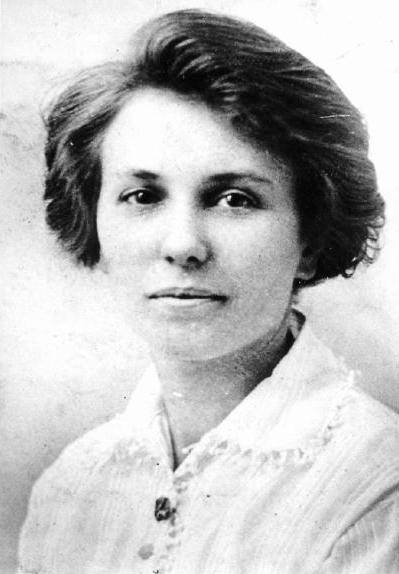
Episcopal priest Edward Wheeler Hall and choir member Eleanor Mills, with whom he was having an affair, were found shot to death in a New Jersey field in September 1922. Hall's wife and her two brothers were tried in 1926 and acquitted; the case remains legally unsolved.
 Credit: Contemporary newspaper via Wikipedia (Green Bicycle Case)·Public domain·SourceSOLVEDListen
Gartree Road, near Little Stretton, Leicestershire, England · 1919
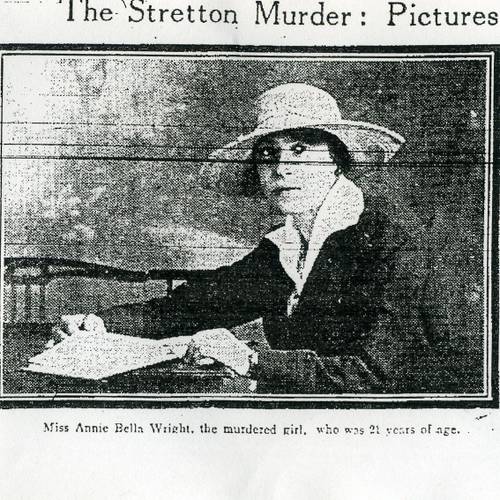
Bella Wright, a 21-year-old factory worker, was shot dead near Little Stretton, Leicestershire, on 5 July 1919 while cycling home. Ronald Light, seen riding with her shortly before her death on a distinctive green bicycle, was tried for her murder in 1920 and acquitted.
Fish Head Beach, Jenner, California · 2004
A young engaged couple, Lindsay Cutshall and Jason Allen, were shot to death while sleeping on a Sonoma County beach in August 2004. The case went unsolved for nearly 13 years until Shaun Gallon confessed following his arrest for another murder; he was convicted and sentenced to life without parole in 2019.
 Credit: English Wikipedia·Editorial use·SourceSOLVEDListen
Washington Township, Macomb County, Michigan · 2007
Tara Lynn Grant, a 34-year-old Michigan mother of two, was strangled by her husband Stephen Grant in February 2007 after an argument; he later dismembered her body, briefly fled, and confessed to police. He was convicted of second-degree murder in December 2007 and sentenced to 50 years in prison.
Clutter family home, Holcomb, Kansas · 1959
In November 1959, four members of the Clutter family were murdered in their rural home near Holcomb, Kansas, in a robbery that yielded almost no money. Two ex-convicts were convicted and executed for the crime, later chronicled in Truman Capote's In Cold Blood.


