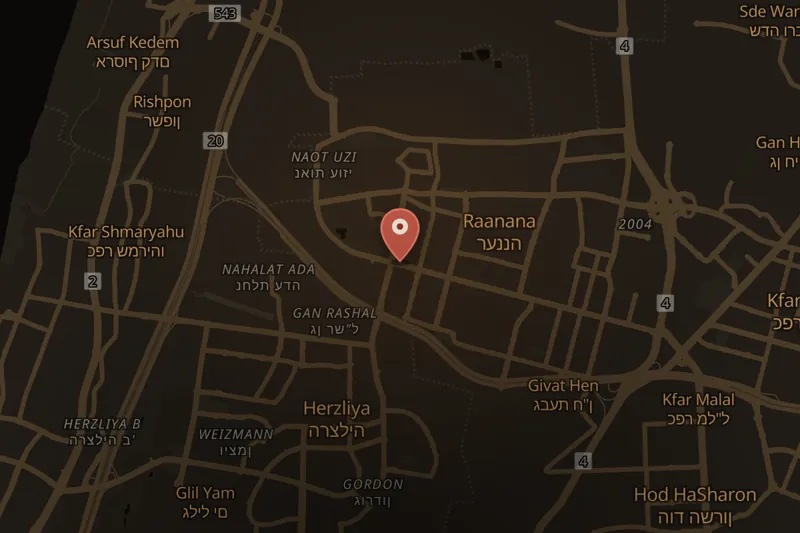
On the evening of June 11, 2002, at approximately 7:30 pm, a Palestinian suicide bomber detonated a pipe bomb inside the "Mifgash Ha'Sharon" shawarma restaurant, also known as "Jamil," in the Israeli coastal suburb of Herzliya. Around 30 people were present in the restaurant at the time of the attack. According to Israeli sources, the explosive device used was "relatively small," though it had been packed with nails and ball bearings. A rescue worker reported that one of the explosive devices worn by the bomber failed to detonate.
The attack resulted in the death of a 14-year-old girl, Hadar Hershkowitz, and left 15 other people injured. Israeli sources noted that earlier the same day, three Israeli high school students were injured when Palestinian militants attacked their school bus, with one student seriously hurt, and a Palestinian militant stabbed an Israeli policeman in Jerusalem.
The Al-Aqsa Martyrs Brigades, described as a military wing of Fatah, claimed responsibility for the bombing, stating it was carried out "in retaliation for the daily incursions by the occupation forces against the cities, towns, villages and refugee camps." A spokesman for the group identified the bomber as Omar Zayadeh, a 30-year-old Palestinian from the village of Ma'adama in the West Bank.
In the aftermath, Israeli troops demolished the bomber's home in 2003. Palestinian Media Watch, an Israel-based media watchdog organization, reported that in 2010 the Palestinian Authority built a pyramid-shaped monument in the town square of Madama in the West Bank honoring the bomber, featuring portraits of Yasser Arafat and the bomber alongside text referring to him as a "Martyrdom-Seeker" who carried out the "heroic Herzliya operation."
The attack drew official reactions from multiple parties. David Baker, an official in Israeli Prime Minister Ariel Sharon's office, condemned the bombing as "another example of the Palestinians' intention to commit murder for the sake of murder." Palestinian National Authority officials condemned the attack, stating it was wrong to target innocent civilians and pledging to do their "utmost" to prevent future attacks. Senior Hamas officials, by contrast, characterized the attack as "a natural response to Israel's crimes in the territories." Israel subsequently lodged a formal complaint with the United Nations Security Council, citing the bombing as evidence of a "campaign of Palestinian terrorism" against Israeli civilians.


 SOLVEDListen