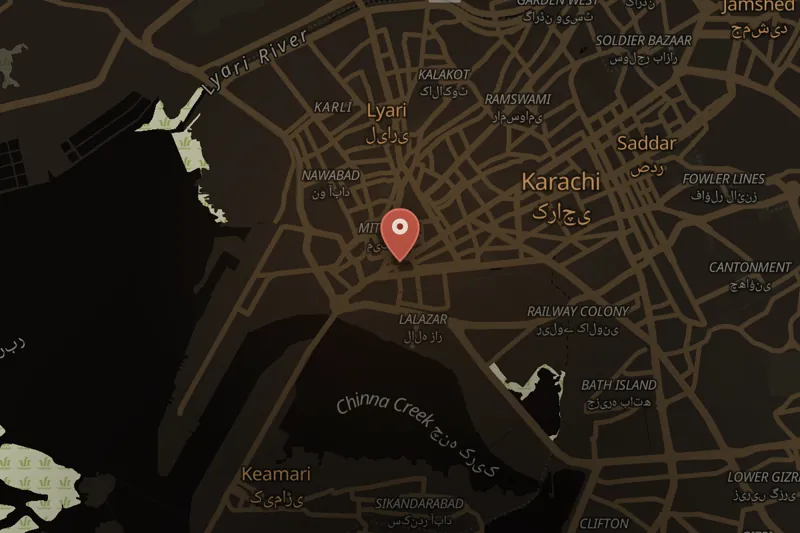
On 8 May 2002, a man driving a car bomb pulled up beside a bus outside the Sheraton Hotel in Karachi, Sindh, Pakistan, and detonated the device. The explosion killed the bomber, 11 French nationals, and two Pakistanis, bringing the total death toll to 14. Approximately 40 other people were wounded in the blast. The French victims were engineers working with Pakistan on the design of an Agosta 90B-class submarine for the Pakistani Navy, and contemporary reporting described French nationals as the attack's specific targets.
The bombing took place near the Pearl-Continental Hotel, where the New Zealand national cricket team was staying during its 2002 tour of Pakistan. The team's physiotherapist, Dayle Shackel, sustained a minor cut to his forearm from flying glass. In response to the attack, the New Zealand team abandoned the tour and returned home on the first available flight.
In the immediate aftermath, Al-Qaeda was blamed for the bombing by Pakistani and French authorities. In 2003, two men, Mohammad Sharib and Mufti Zubair, were arrested and subsequently sentenced to life imprisonment by a Karachi court for their role in the attack. A suspected bombmaker was arrested in Karachi on 8 September 2005. Several convictions followed in the case, though Pakistani courts acquitted three other defendants by 2009.
Years later, the official narrative attributing the attack to Al-Qaeda came into question. In 2007, French anti-terrorism judge Jean-Louis Bruguière, who had been leading the investigation, was replaced by two investigating magistrates, Marc Trévidic and Renaud Van Ruymbeke. One of them opened a new line of inquiry suggesting the attack may have been connected to the halting of kickback payments related to earlier French arms sales to Pakistan, rather than to Al-Qaeda. This alternative theory and the resulting political scandal became known as "Karachigate."
A separate investigation was opened in France to examine the extent to which former French Prime Minister Édouard Balladur and former French President Nicolas Sarkozy may have been implicated in a kickback scheme tied to the sale of submarines to Pakistan. Allegations centered on the claim that Sarkozy was involved in accepting kickbacks from Pakistan to help fund Balladur's 1995 presidential campaign, and that when Jacques Chirac later came to power, he cancelled the kickback arrangements to Pakistani officials. Under this alternative theory, the cancellation angered parties in Pakistan. The Karachigate affair remains linked in public discussion to the question of what ultimately motivated the 2002 bombing, though the criminal convictions obtained in Pakistan were based on the original investigation into the attack itself.



 UNSOLVEDListen


