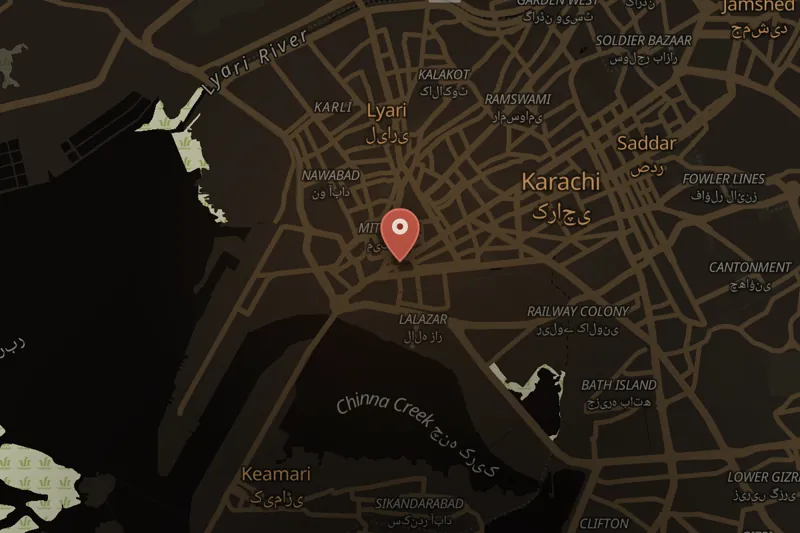
On 18 October 2007, a bombing attack targeted a motorcade carrying former Prime Minister Benazir Bhutto in Karachi, Pakistan, as she returned from an eight-year self-imposed exile in Dubai and London. Two explosions occurred at approximately 00:52 PKT in front of the truck from which Bhutto was greeting supporters, along the route from the airport toward the tomb of Muhammad Ali Jinnah, shortly after the truck had crossed a bridge. Police vehicles absorbed much of the blast, with three police vans destroyed and at least 20 police officers among the dead. Bhutto herself was not injured; accounts differ as to whether she was on top of the truck or had just entered its compartment when the explosions occurred. She was escorted to her residence, Bilawal House, while the injured were taken to Jinnah Hospital, Liaquat National Hospital, Civil Hospital, and Abbasi Shaheed Hospital.
The attack resulted in at least 180 deaths and roughly 500 injuries, with most of the dead being members of the Pakistan Peoples Party (PPP). Former Pakistan national football team player Abdul Khaliq was among those killed. In a press conference the following day, Bhutto said her security detail had been unable to prevent the attack because street lighting along the route had been switched off, and she called for an inquiry into that circumstance.
On 20 October 2007, authorities released a photograph of a suspect believed responsible for the suicide attack. On 23 October, then-Prime Minister Shaukat Aziz rejected a demand from the Pakistan Peoples Party for an investigation involving foreign experts, expressing confidence in Pakistani law-enforcement agencies to conduct an objective probe.
Following the attack, Bhutto wrote to President Pervez Musharraf naming individuals she suspected of engineering the bombing, including Punjab's then chief minister Chaudhry Pervaiz Elahi, former Inter-Services Intelligence director Hamid Gul, and Intelligence Bureau director general Ijaz Shah; Musharraf's government instead blamed terrorist organizations, including Al-Qaeda and elements of the Taliban in Pakistan. Al-Qaeda's Pakistan operations chief, Fahid Mohammed Ally Msalam, was believed by some accounts to be behind the attack; he was killed in a drone strike in Pakistan on 1 January 2009 along with a lieutenant, Sheikh Ahmed Salim Swedan. Tehrik-i-Taliban Pakistan leader Baitullah Mehsud was also implicated; he was killed in a drone strike in August 2009.
The bombing drew condemnation from Pakistani leaders, including President Musharraf, who called it a "conspiracy against democracy," as well as from foreign governments including Australia, Canada, France, India, the United Kingdom, and the United States, and from international bodies such as the Commonwealth of Nations and the United Nations. Bhutto was assassinated approximately two months later, in December 2007.

 Credit: Baptiste MarcelCC BY-SA 2.5SourceSOLVEDListen


