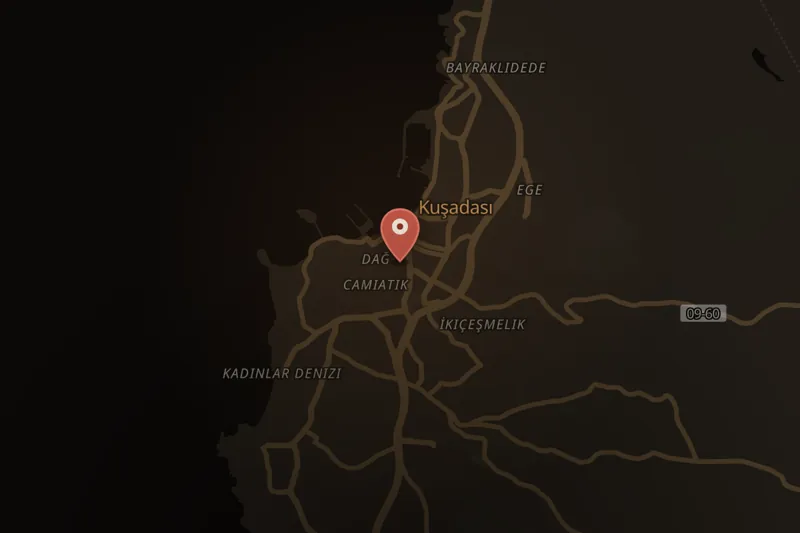
On July 16, 2005, a minibus transporting locals and tourists to the popular "Ladies Beach" in Kuşadası, Turkey, exploded. The blast killed five people — four women and one man — and injured fourteen others, including eight Turkish nationals and six British tourists. Seven of the injured, including all but one of the British citizens, were considered to be in serious enough condition to be transported to Ege University hospital in İzmir.
The victims killed in the bombing included three Turkish nationals: Deniz Tutum, 21, a resident of Kuşadası who was on her way to work at the time; and Eda Okyay and Ufuk Yücedeniz, both 23, who were fiancées traveling on a weekend excursion from İzmir. Two foreign tourists were also killed: Helyn Bennett, 21, of County Durham, England, and Tara Whelan, 17, of Waterford, Ireland.
In the aftermath, Deniz Tutum's funeral in Kuşadası became a large public gathering that received extensive coverage. Tara Whelan's funeral in her hometown, along with the broader impact of the bombing, was covered prominently by national media in Ireland. A commemoration service was held for Helyn Bennett in Southwark Cathedral, alongside other British victims of terrorism attacks that occurred in 2005.
The Kurdistan Workers' Party (PKK) was initially suspected of carrying out the bombing, but the group denied involvement. A suspect was arrested in Istanbul on April 8, 2006, in connection with the attack.
The case of Helyn Bennett and members of her family — several of whom were also wounded in the same attack — was later cited as an example during discussions in the United Kingdom that led to the 2007 establishment of a statutory fund, administered through the Red Cross, to support overseas victims of terrorism. This addressed a gap left by an existing scheme managed by the Criminal Injuries Compensation Authority, which had provided criminal injuries payments only for attacks occurring within the UK.

 Credit: Soner Kızılkaya (VOA)Public domainSourceSOLVEDListen


