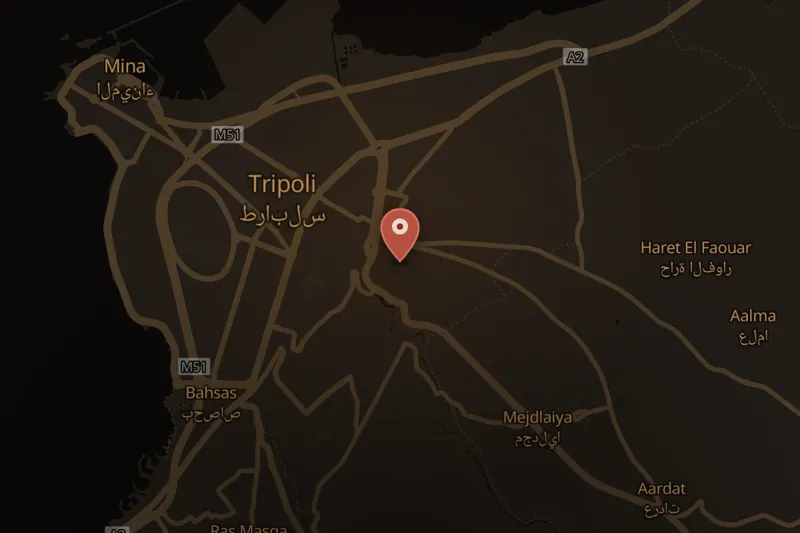
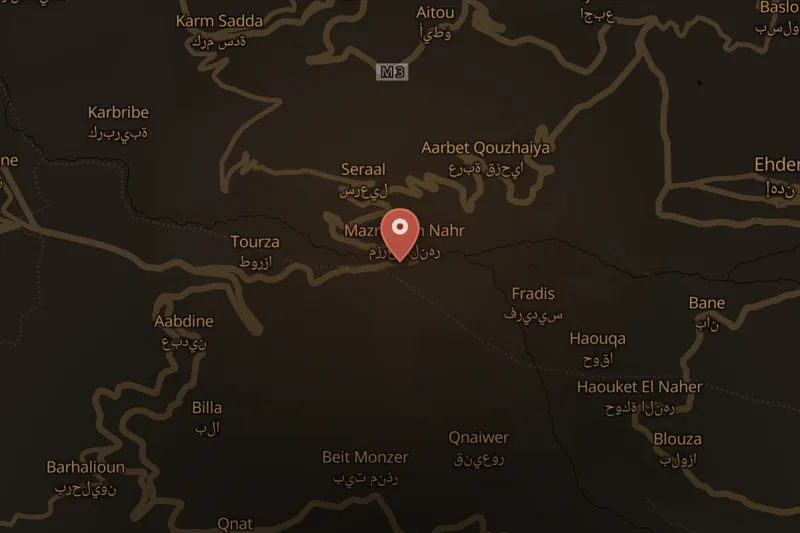
On 4 August 2006, during the 2006 Lebanon War, the Israel Air Force (IAF) struck a building in the area of al-Qaa, roughly 10 kilometers (six miles) from Hermel in Lebanon's Bekaa Valley. The building stood on the outskirts of a village near a Lebanese customs office, in an area close to the border with Syria. Thirty-three farm workers, mostly Syrian and Lebanese Kurds, were killed in the strike, and twenty others were wounded.
According to workers present at the scene, they had been loading farm produce—primarily peaches and plums intended for export—from a walk-in cooler into a refrigerated truck when the attack occurred. A wounded farmworker, Mohammad Rashed, described picking peaches when three bombs hit, and said others who had been having lunch were killed. Preliminary reports indicated that three IAF missiles struck the farm and that an initial estimate of 23 to 27 civilians had been killed; within hours the toll was revised to 33 dead and 20 wounded.
The IAF offered a different account of events leading to the strike. An IAF spokesman, Capt. Jacob Dallal, stated that the air force had spotted a truck suspected of being loaded with weapons crossing from Syria into Lebanon along a route routinely used for weapons transport. According to this account, the truck entered the building and remained inside for about an hour before leaving and returning to Syria. The IAF said the building was attacked only after the truck had departed the area.
In the aftermath, a bulldozer was brought to the site to clear rubble and search for survivors. The dead and wounded were transported to nearby Syria, where they were treated at al-Qusair National Hospital on the Lebanese-Syrian border and at the National Hospital in Homs. Early reports from the Syrian official news agency SANA said the Syrian dead included eighteen men, two elderly women, and three young girls. Later reports revised the total Syrian death toll to twenty-three, comprising eighteen men, five women, and three girls, with the remaining ten fatalities being Lebanese nationals. Ten Syrian workers were also reported wounded in the attack.
The strike prompted a strong public reaction in Syria. Syria's Information Minister, Dr. Muhsen Bilal, described the attack as "an Israeli racial and fascist act that has been carried out by US-made weapons and rockets," and said the action had achieved no military gains but had resulted in the deaths of "defenseless children, women and old aged," which he said contradicted moral and religious principles.


 UNSOLVEDListen