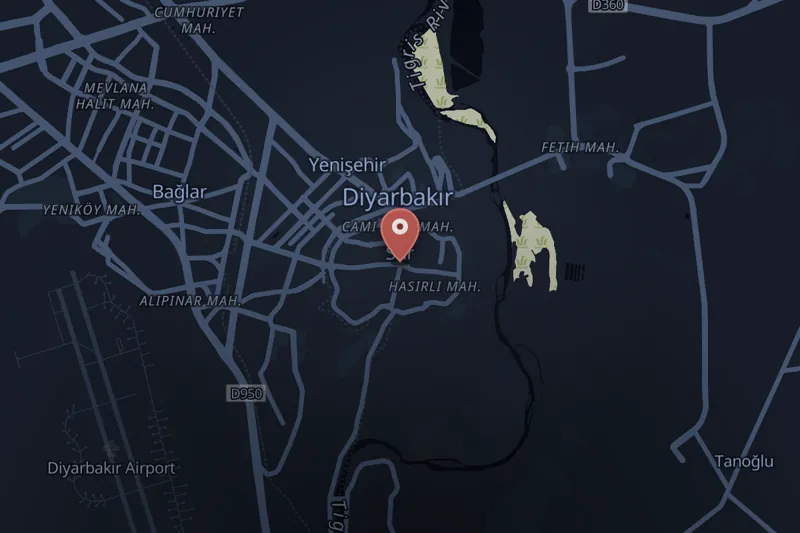
On 3 January 2008, at approximately 16:50 local time (14:50 UTC), a car bomb detonated in the Dağkapı neighborhood of Diyarbakır, a city in south-eastern Turkey. The explosion occurred during evening rush hour and was reportedly audible up to 3 km (two miles) away.
Initial reports indicated the bomb targeted a military service vehicle carrying 46 army personnel as it passed near a school. Dağkapı is noted for a heavy Turkish military presence, including a military helicopter base, hospitals, and military housing in the area.
According to Bianet, seven people died in the attack, five of them children who attended the school located beside the bombing site. Approximately 110 other people were wounded, eight of them seriously.
No group claimed responsibility for the bombing. Turkish authorities blamed militants of the outlawed Kurdistan Workers' Party (PKK), an organization Turkish security forces have been fighting both domestically and in northern Iraq. The state-run Anatolian news agency quoted prosecutors as saying four people had been detained in connection with the blast, though security sources earlier reported that 12 people had been detained.
During a public demonstration following the attack, Sezgin Tanrıkulu, president of the Diyarbakır Bar Association, read a statement on behalf of several worker unions condemning the violence.
Turkish Prime Minister Recep Tayyip Erdoğan responded to the bombing, stating it was "an attack against our people, especially our people in the southeast, in Diyarbakır," and adding that "the terrorist organisation has never been the representative of our Kurdish citizens." Erdoğan announced plans to visit Diyarbakır two days after the bombing. General Yaşar Büyükanıt, head of Turkey's military General Staff, was scheduled to visit the city the day after the attack.
The United States also responded to the bombing. Chase Beamer, a spokesman for the U.S. State Department's Bureau of European and Eurasian Affairs, said the incident "once more showed the necessity of cooperation in fight against terrorism" and affirmed that Washington stood beside Ankara in its fight against terrorism.
As of the available record, no individuals have been publicly identified as convicted or formally charged in connection with the bombing, and no group has claimed responsibility.


 SOLVEDListen