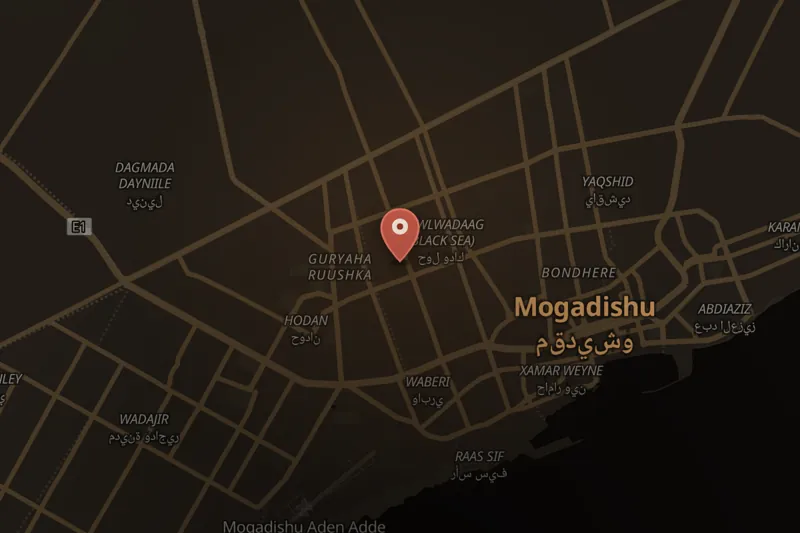
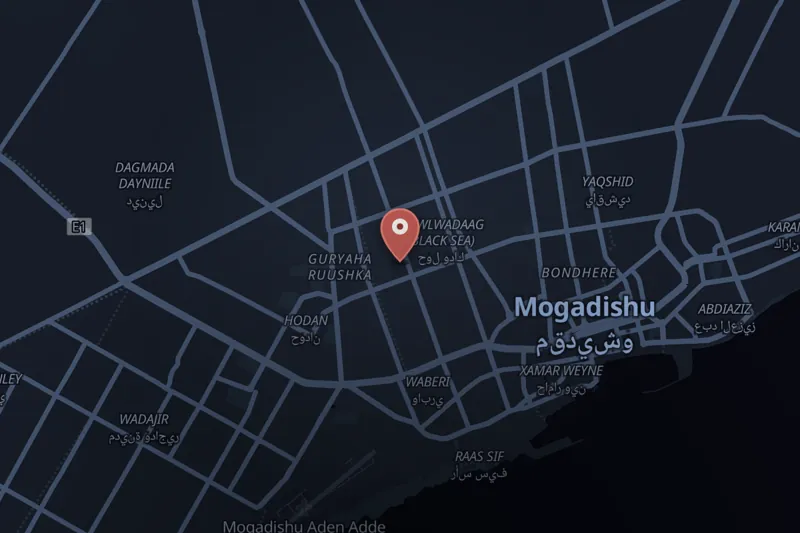
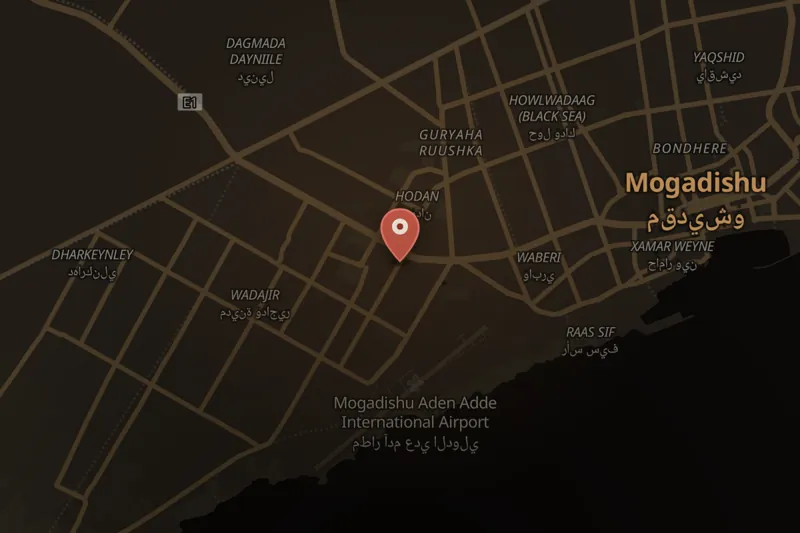
On 3 December 2009, a suicide bomber detonated an explosive device inside the meeting hall of the Hotel Shamo in Mogadishu, Somalia, during a commencement ceremony for medical students of Benadir University. The event, only the second graduation ceremony held since the university's founding in 2002, had drawn hundreds of attendees, including graduates and their families, university officials, and five ministers of the Transitional Federal Government (TFG). Security inside the hall was light, with the ministers' bodyguards stationed outside.
The bombing killed 24 people and injured 60 others. Among the dead were three TFG ministers: Minister of Education Ahmed Abdulahi Waayeel, Minister of Health Qamar Aden Ali, and Minister of Higher Education Ibrahim Hassan Addow. Minister of Sports Saleban Olad Roble was critically injured and later died on 13 February 2010 after being flown to Saudi Arabia for treatment. Most of those killed were students, but two doctors and three journalists were also among the dead: Mohamed Amiin Abdullah of Shabelle Media Network, freelance photographer Yasir Mairo, and a cameraman identified in different reports as freelancer Hassan Ahmed Hagi or as Al Arabiya cameraman Hassan Zubeyr/Hasan al-Zubair. Their deaths brought the total number of journalists killed in Somalia during 2009 to nine. Six other journalists were injured, including Reuters photographer Omar Faruk and Universal TV reporter Abdulkadir Omar Abdulle, both hospitalized in critical condition. The dean of Benadir University's medical college was also among the wounded.
Reports on the perpetrator were inconsistent. The Danish newspaper Berlingske Tidende reported the bomber was a 24-year-old Danish citizen; Denmark's intelligence service (PET) said the man was born in Somalia and had lived in Denmark for 20 years. Police did not release the suspect's name, though a 2014 documentary identified him as "Abdirahman Mohamed," citing an acquaintance who described his radicalization. Initial reports suggested the bomber had entered disguised as a woman in an abaya; President Sheikh Sharif Sheikh Ahmed displayed what he described as the bomber's remains and an explosive belt with a hijab at a post-attack news conference, but the bomber was later found to have been wearing a white shirt and carrying a camera near the stage.
No group immediately claimed responsibility, but President Ahmed blamed the Islamist group al-Shabaab. Somali diplomat Idd Mohamed said the attack aimed to spread terror and undermine the TFG's legitimacy, a view echoed by AMISOM's acting head Wafula Wamunyini. The attack was condemned by the African Union, European Union, Arab League, UN Security Council, and the National Union of Somali Journalists, among others. The Committee to Protect Journalists noted the attack reinforced Somalia's standing as the deadliest country in Africa for journalists. The bombing was described as the deadliest attack in Somalia since the Beledweyne bombing of 18 June 2009.

 Credit: Ludwig WegmannCC BY-SA 3.0 DESourceSOLVEDListen