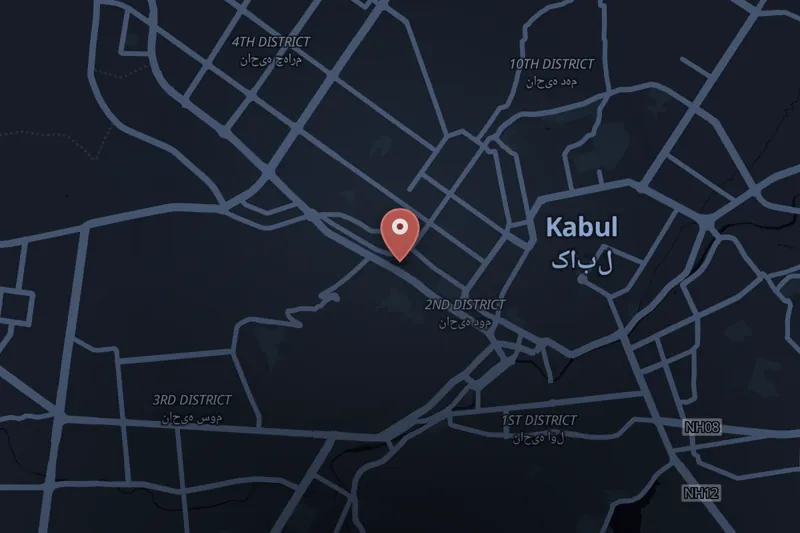
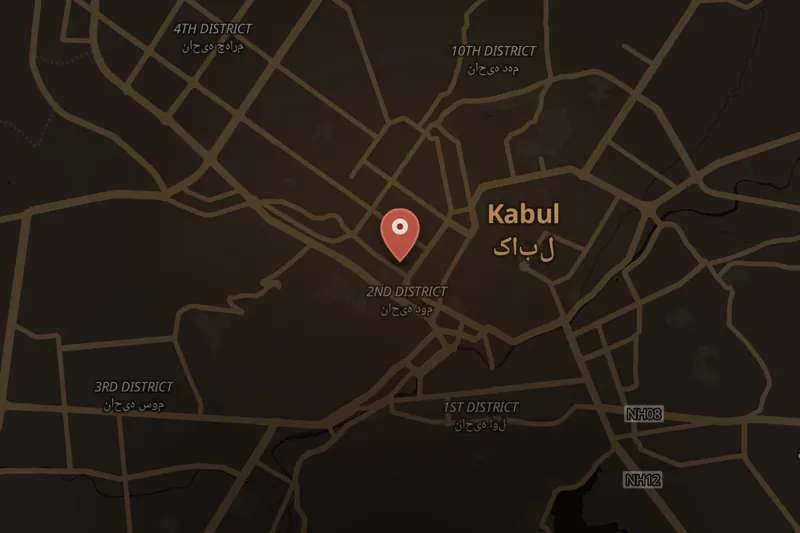
On the evening of August 7, 2015, police trainees were returning to the Kabul Police Academy in western Kabul after the weekly Friday prayer. The academy was in Police District 5 near Bagh-e-Bala. A suicide bomber wearing a police uniform joined or approached the line of cadets waiting to be searched at the entrance and detonated explosives among them. Afghan officials initially reported at least 20 trainees killed and approximately 24 to 27 wounded.
The attack was directed at a security institution, but it occurred at an entry queue where the trainees were concentrated and undergoing routine screening. The attacker died in the explosion. The Taliban claimed responsibility for the academy bombing, according to the Guardian, Washington Post, CBS News, and Al Jazeera. That attribution distinguishes it from some of the other attacks in Kabul during the same period, for which responsibility was not immediately established.
The police-academy bombing was the second major blast in Kabul within roughly twenty-four hours and part of a wider sequence of violence. Earlier on August 7, a truck bomb devastated a residential area near a military installation, killing civilians and wounding hundreds. Later, militants attacked Camp Integrity, a base used by international forces. Contemporary reports therefore sometimes combined the fatalities from all three attacks.
Reporting after the academy attack reflected the uncertainty common to a mass-casualty scene. The Guardian and CBS placed the death toll at at least 20 and the wounded at 25; the Washington Post reported at least 20 killed and 24 wounded; later Afghan reporting gave higher figures. The stable account is that no fewer than 20 police cadets died and roughly two dozen were injured. The Turkish Foreign Ministry issued a formal condemnation on August 9 and expressed condolences to Afghanistan.
The case is classified as solved in the limited attribution sense: the assailant died carrying out the bombing and the Taliban publicly claimed responsibility.

 UNSOLVEDListen