
 UNSOLVEDListen
Muraidi Market, Sadr City · 2000s
June 2009 Muraidi Market bombing
On 24 June 2009, a bomb hidden in a market cart or motorcycle exploded in the Muraidi Market in Sadr City, Baghdad, killing at least 69 people and injuring 150 others.
Before you continue
This case involves crimes against children. Casepin presents the record in neutral, non-graphic language. Choose whether to continue.
The short answer
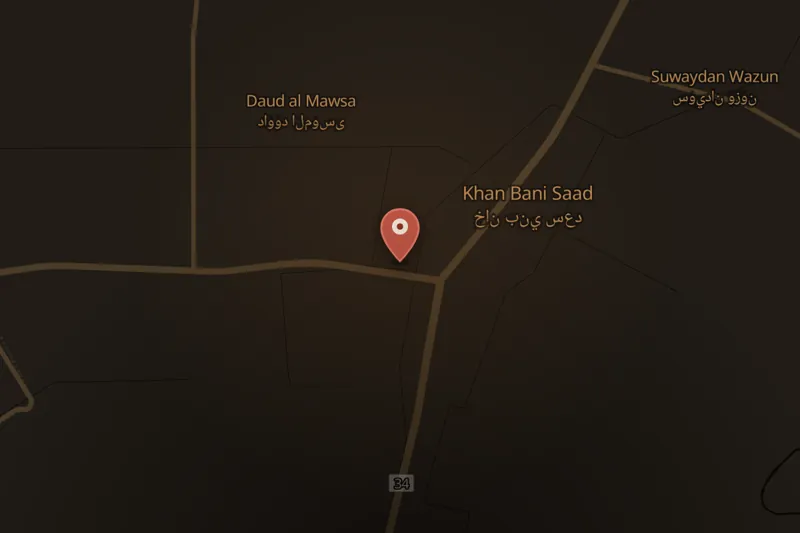
A suicide car bombing at a marketplace in Khan Bani Saad, Iraq, on 17 July 2015 killed approximately 130 people and injured a similar number, in an attack claimed by the Islamic State.
The coverage index
No one's coverage is attached to this file yet.
Know great coverage of this case?
A documentary, a podcast episode, a careful long-form video. Suggest it and an editor will review it before it appears here.
Suggest coverage for 2015 Khan Bani Saad bombingThe case file
On 17 July 2015, a suicide car bombing occurred in the Iraqi city of Khan Bani Saad, in Diyala Governorate, targeting a local marketplace during the Eid al-Fitr holiday. As of 19 July 2015, approximately 130 people were reported killed, with a similar number injured. Fifteen children were among the dead, and 20 people were reported missing in the aftermath. Several victims were killed when nearby buildings collapsed from the force of the blast.
According to two local police officials, the attacker disguised the bomb by hiding it under an ice truck and announced he was selling ice at a discount because of the Eid al-Fitr holiday. With air temperatures around 35°C (95°F), this ploy attracted a crowd before the bomber detonated the device, killing himself along with the other victims. The Islamic State (IS) claimed responsibility for the attack in a statement posted on Twitter, saying it was conducted in response to the killing of Sunni Muslims in Hawija and that three tonnes of explosives had been used.
The bombing came after Iraqi officials had declared victory over IS in Diyala Governorate, following operations by local forces and Shiite paramilitaries that drove IS members out of towns and villages in the area. Despite this, insurgents remained active in the governorate, and the Khan Bani Saad attack underscored the continuing threat.
In the aftermath, police major Ahmed al-Tamimi described the damage as "devastating." The authorities of Diyala Governorate declared three days of mourning and cancelled Eid al-Fitr festivities in response to the attack.
The bombing drew condemnation from multiple governments and international bodies. Iraqi Speaker of Parliament Salim al-Jabouri said the attack had "struck an 'ugly sectarian chord.'" In the United States, White House National Security Council spokesman Ned Price called the attack "abhorrent" and denounced IS for having "purposefully and viciously targeted Iraqi civilians." In the United Kingdom, Foreign Office Minister of State Tobias Ellwood said he was "appalled" by the attack, which he said killed over 115 people, calling it a "heinous act" committed during a time when families and friends had gathered to mark the end of Ramadan. UN Secretary-General Ban Ki-moon called the attack "heinous and devastating."
3 dated entries · 2015
A suicide car bomb hidden under an ice truck detonated at a marketplace in Khan Bani Saad, Iraq, killing the bomber and civilians gathered to buy ice during Eid al-Fitr.
White House National Security Council spokesman Ned Price and UN Secretary-General Ban Ki-moon condemned the attack; UK Foreign Office Minister Tobias Ellwood also issued a statement condemning the bombing.
Death toll reported at approximately 130 killed, with a similar number injured; 20 people reported missing.
1 named in this file
Victims first. Every legal label is set from public records and court outcomes, not from the prose.
Police major who assessed the bombing's damage as "devastating" in the aftermath of the attack.[3]
3 cited
Coverage is not a source: every fact in this file rests on the records below.
Official / agencyUK GovernmentAccessed Jul 7, 2026
PressThe Washington PostAccessed Jul 7, 2026
EncyclopedicWikipediaAccessed Jul 7, 2026
Trust
Are you family of someone named in this file? Corrections and removal requests from victims’ families are prioritized.
Near this case
UNSOLVEDListenMuraidi Market, Sadr City · 2000s
On 24 June 2009, a bomb hidden in a market cart or motorcycle exploded in the Muraidi Market in Sadr City, Baghdad, killing at least 69 people and injuring 150 others.
 UNSOLVEDListen
Sadr City, Baghdad, Iraq · 2010s
On 13 August 2015, a truck bomb detonated at a busy wholesale food market in Sadr City, Baghdad, killing at least 76 people and injuring at least 212 more. The Islamic State claimed responsibility.
 Credit: Al Jazeera English·CC BY-SA 2.0·SourceUNSOLVEDListen
Baqubah, Diyala Governorate, Iraq · 2010s
On 3 March 2010, three bombings struck Baqubah, Iraq, days before national elections, killing at least 33 people and injuring 55 others, including ten policemen and a local health official.
 Credit: Pax Ahimsa Gethen·CC BY-SA 4.0·SourceSOLVEDListen
Pulse nightclub, Orlando, Florida, United States · 2016
On June 12, 2016, Omar Mateen, identified by police as the gunman, shot and killed 49 people and wounded 58 others at Pulse, a gay nightclub in Orlando, Florida, during a Latin Night event, before being fatally shot by police after a three-hour standoff.
 Credit: uploader and the RNAO·CC BY-SA 3.0·SourceSOLVEDListen
Yonge Street, North York City Centre, Toronto, Ontario, Canada · 2018
On April 23, 2018, a man drove a rented van into pedestrians along Yonge Street in Toronto's North York City Centre, killing 11 people and injuring 15 others before being arrested; he was later convicted on all counts and sentenced to life in prison.
Birstall, West Yorkshire, England · 2016
On 16 June 2016, British Labour MP Jo Cox was shot and stabbed to death in Birstall, West Yorkshire, by Thomas Alexander Mair. He was convicted in November 2016 of murder and related offences, with the judge finding the killing was an act of terrorism motivated by white supremacist and neo-Nazi ideology. Mair received a whole life order.
