

Start here
Survivor of London Bridge Attack shares horrifying experience | 'It was like a horror movie'

7NEWS Spotlight's 14-minute overview: the quickest complete way into the case.
Watch on YouTubeSolved case · 2017
Also known as London Bridge attack · 2017 London attack
 File:London Bridge (9691084663).jpgCredit: Digital-DesignsCC BY 2.0Source
The short answer
On 3 June 2017, three attackers drove a van into pedestrians on London Bridge and then stabbed people in Borough Market, killing eight civilians and injuring 48 before being shot dead by armed police.
Survivor of London Bridge Attack shares horrifying experience | 'It was like a horror movie'7NEWS Spotlight · 14 min1 piece from 1 creator: ranked, with duplicates removed and short clips set aside.
Start here
7NEWS Spotlight's 14-minute overview: the quickest complete way into the case.
Watch on YouTubeTitles and descriptions are the creators’ own and may not reflect current legal status. The sourced facts are in the file below. Players load only when you press play. Suggest coverage we’re missing.
On the evening of 3 June 2017, a van was deliberately driven into pedestrians on London Bridge before crashing on Borough High Street, just south of the River Thames, in London, England. The van had been hired earlier that evening in Harold Hill, Havering, by Khuram Butt. Its three occupants then ran to the nearby Borough Market area, where they used 12-inch kitchen knives with ceramic blades to stab people in and around restaurants and pubs, while wearing fake explosive vests made from water bottles wrapped in tape. Witnesses reported the attackers shouting "This is for Allah."
The attack occurred amid a heightened threat environment: in March 2017, five people had been killed in a vehicle-and-knife attack at Westminster, and in late May a suicide bomber had killed 22 people at Manchester Arena, prompting a temporary rise in the UK's terror threat level to "critical."
During the assault, members of the public and off-duty and on-duty police officers intervened to confront the attackers or assist victims, several sustaining serious injuries, including stab wounds. The three attackers were shot dead by Metropolitan Police and City of London Police firearms officers roughly eight minutes after the first emergency call, following a 46-round exchange by eight officers. Their fake explosive vests were later destroyed in controlled explosions.
Eight civilians were killed—citizens of Spain, the United Kingdom, Australia (two), Canada, and France (three)—and 48 people were injured, including additional foreign nationals and four police officers. Two of the deaths resulted from the vehicle-ramming; the remaining six were fatal stabbings. One victim's body was recovered from the Thames near Limehouse several days later.
The three attackers were identified as Khuram Shazad Butt, a British citizen known to police and previously linked to the banned extremist group Al-Muhajiroun; Rachid Redouane, a failed asylum seeker not previously known to UK police; and Youssef Zaghba, a dual Moroccan-Italian national who had been flagged by Italian authorities in 2016 for possessing ISIS-related material. The Islamic State claimed responsibility for the attack, and then-Home Secretary Amber Rudd described the attackers as "radical Islamic terrorists."
In the aftermath, police made 12 arrests in raids in Barking and Newham; all arrested individuals were later released without charge by 16 June. An inquest opened at the Old Bailey on 7 May 2019, presided over by Chief Coroner Judge Mark Lucraft QC, which concluded that the victims had been unlawfully killed and that the attackers had been lawfully killed by police. Several civilians and police officers were later honoured for their actions, including posthumous and living recipients of the George Medal, British Empire Medal, Queen's Gallantry Medal, and other commendations.
A combined vehicle and knife attack at Westminster killed five people.
A suicide bombing at Manchester Arena killed 22 people, prompting a temporary rise in the UK terror threat level to 'critical'.
UK terror threat level lowered from 'critical' to 'severe'.
A van was driven into pedestrians on London Bridge before crashing on Borough High Street; the three occupants then stabbed people in Borough Market.
Police made 12 arrests in raids in Barking; controlled explosions of the attackers' fake bomb vests were carried out; an emergency COBR meeting was held.
Two of the attackers were publicly identified as Khuram Shazad Butt and Rachid Redouane; London Bridge station reopened.
The third attacker was identified as Youssef Zaghba.
Borough Market reopened to the public.
All persons arrested in connection with the attack had been released without charge.
An inquest into the deaths opened at the Old Bailey, presided over by Chief Coroner Judge Mark Lucraft QC.
Victims first. Every legal label is set from public records and court outcomes, not from the prose.
Civilian killed while intervening against the attackers using a skateboard; posthumously awarded the George Medal.[3]
Civilian killed in the attack; posthumously awarded the Queen's Commendation for Bravery.[3]
Civilian injured; stabbed eight times while fighting the attackers with his fists in the Black and Blue steakhouse.[3]
Identified by police as one of the three attackers who drove a van into pedestrians and stabbed victims in the 2017 London Bridge attack; shot dead by armed officers at the scene, so was never prosecuted.[3]
Identified by police as one of the three attackers who drove a van into pedestrians and stabbed victims in the 2017 London Bridge attack; shot dead by armed officers at the scene, so was never prosecuted.[3]
Identified by police as one of the three attackers who drove a van into pedestrians and stabbed victims in the 2017 London Bridge attack; shot dead by armed officers at the scene, so was never prosecuted.[3]
Coverage is not a source: every fact in this file rests on the records below.
Are you family of someone named in this file? Corrections and removal requests from victims’ families are prioritized.
 Credit: David Wulff (David Wulff)CC BY-SA 2.0SourceSOLVEDListen
London, England, United Kingdom · 2000s
On 7 July 2005, four suicide bombers detonated homemade explosives on three London Underground trains and a double-decker bus during morning rush hour, killing 52 victims and injuring hundreds in the UK's deadliest terrorist attack since 1988.
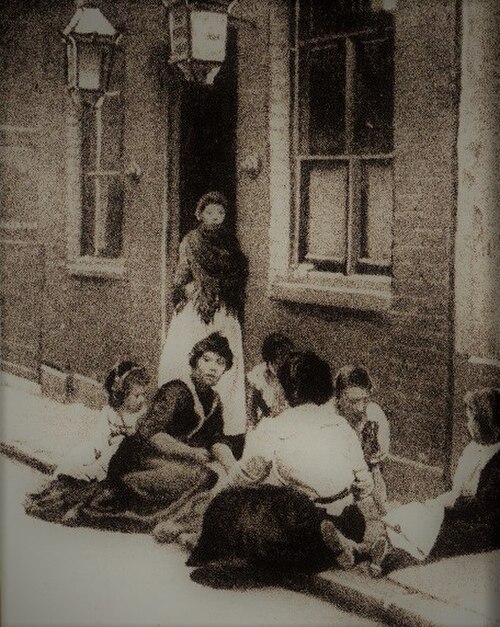 Credit: Unknown. Taken around 1890.Public domainSourceUNSOLVEDListen
Whitechapel and Spitalfields, London, England · 1880s
An unidentified serial killer, dubbed "Jack the Ripper" by the press, killed at least five women in the Whitechapel and Spitalfields districts of London in 1888. The killings, part of a wider set of eleven murders investigated by police as the "Whitechapel murders," were never solved.
 Credit: Vestry clerk John ClementPublic domainSourceSOLVEDListen
Ratcliffe Highway, Wapping, London · 1810s
In December 1811, seven people were killed in two separate nighttime attacks twelve days apart on Ratcliffe Highway in Wapping, East London — the Marr family and shop staff, then the Williamson family and their servant at a nearby tavern. The chief suspect, sailor John Williams, died by suicide in his cell before facing trial.
 Credit: Pax Ahimsa GethenCC BY-SA 4.0SourceSOLVEDListen
Pulse nightclub, Orlando, Florida, United States · 2016
On June 12, 2016, Omar Mateen, identified by police as the gunman, shot and killed 49 people and wounded 58 others at Pulse, a gay nightclub in Orlando, Florida, during a Latin Night event, before being fatally shot by police after a three-hour standoff.
 Credit: uploader and the RNAOCC BY-SA 3.0SourceSOLVEDListen
Yonge Street, North York City Centre, Toronto, Ontario, Canada · 2018
On April 23, 2018, a man drove a rented van into pedestrians along Yonge Street in Toronto's North York City Centre, killing 11 people and injuring 15 others before being arrested; he was later convicted on all counts and sentenced to life in prison.
Birstall, West Yorkshire, England · 2016
On 16 June 2016, British Labour MP Jo Cox was shot and stabbed to death in Birstall, West Yorkshire, by Thomas Alexander Mair. He was convicted in November 2016 of murder and related offences, with the judge finding the killing was an act of terrorism motivated by white supremacist and neo-Nazi ideology. Mair received a whole life order.
 SOLVEDListen
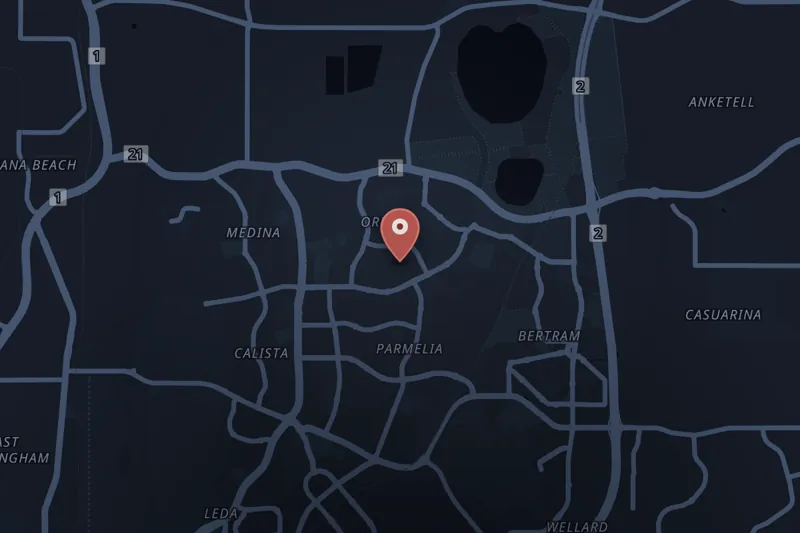
Orelia, Western Australia (body found); Rockingham, Western Australia (disappearance) · 2016
Aaron Pajich, an 18-year-old man with autism, disappeared from Rockingham, Western Australia on 13 June 2016 and was found buried in the backyard of a nearby house days later. Two women, Jemma Lilley and Trudi Lenon, were convicted of his murder and sentenced to life imprisonment.
