Start here
20 years on: 7/7 London bombings remembered by those the terror attack changed forever | ITV News
The creator's telling of the case, the strongest entry point on file.
Watch on YouTubeSolved case · 2005
Also known as July 7, 2005 London Bombings · July 7 London Bombings
 AvoidLondon77Credit: David Wulff (David Wulff)CC BY-SA 2.0Source
The short answer
On 7 July 2005, four suicide bombers detonated homemade explosives on three London Underground trains and a double-decker bus during morning rush hour, killing 52 victims and injuring hundreds in the UK's deadliest terrorist attack since 1988.
20 years on: 7/7 London bombings remembered by those the terror attack changed forever | ITV News1 piece from 1 creator: ranked, with duplicates removed and short clips set aside.
Start here
The creator's telling of the case, the strongest entry point on file.
Watch on YouTubeTitles and descriptions are the creators’ own and may not reflect current legal status. The sourced facts are in the file below. Players load only when you press play. Suggest coverage we’re missing.
On the morning of 7 July 2005, four Islamist suicide bombers carried out coordinated attacks on London's public transport network during rush hour. At 8:49 a.m., three bombs exploded within 50 seconds of one another aboard London Underground trains: on a Circle Line train between Liverpool Street and Aldgate, on a Circle Line train that had just left Edgware Road, and on a Piccadilly Line train travelling from King's Cross St Pancras toward Russell Square. Almost an hour later, at 9:47 a.m., a fourth bomb exploded on the top deck of a number 30 double-decker bus in Tavistock Square. All four devices were improvised explosives made from concentrated hydrogen peroxide and pepper, carried in backpacks.
Aside from the four bombers, 52 people were killed and nearly 800 were injured. Victims held 18 nationalities; most were British, and the rest came from countries including Afghanistan, France, Ghana, Grenada, India, Iran, Israel, Italy, Kenya, Mauritius, New Zealand, Nigeria, Poland, Romania, Sri Lanka, Turkey, Vietnam and Australia. Seven victims died in the Aldgate tunnel, six near Edgware Road, 26 near Russell Square, and 13 on the Tavistock Square bus. It was the United Kingdom's deadliest terrorist attack since the 1988 bombing of Pan Am Flight 103 over Lockerbie and its first Islamist suicide attack.
The four attackers were identified as Shehzad Tanweer, Mohammad Sidique Khan, Germaine Lindsay, and Hasib Hussain. Three were British-born sons of Pakistani immigrants living in the Leeds area; Lindsay was a convert to Islam born in Jamaica living in Aylesbury. Khan, who worked as a learning mentor, was described as the ringleader. Videotaped statements attributed to Khan and Tanweer, broadcast by Al Jazeera in 2005 and 2006, cited grievances over UK foreign policy in the Middle East as motivation. An al-Qaeda-linked video claimed responsibility, though a subsequent British government inquiry found the tape claiming responsibility had been edited after the attacks and that the bombers had not received direct assistance from al-Qaeda.
Investigations included searches of CCTV footage, forensic examination of blast sites, and police raids on properties in Leeds and Aylesbury, during which explosive materials were recovered. A related case concerned Mohammad Sidique Khan, who had been observed by MI5 in 2001 and 2004 in connection with other subjects of interest but was not made a priority for surveillance. Following years of public debate over calls for a full public inquiry, an independent coroner's inquest led by Lady Justice Hallett concluded in May 2011 that the 52 victims were unlawfully killed, that their deaths could not have been prevented, and that MI5 was not obliged to have given greater prior attention to Khan. The inquest issued nine recommendations regarding intelligence and emergency-response procedures and did not recommend a further public inquiry.
The attacks were followed by a sharp temporary rise in reported hate crimes directed largely at British Muslims, alongside public condemnation of the bombings by Muslim religious organizations in the UK and abroad. A day after a related failed bombing attempt two weeks later, police shot and killed Jean Charles de Menezes, a Brazilian man wrongly identified as a bombing suspect, at Stockwell tube station.
Three bombs detonate within seconds of each other on London Underground trains near Aldgate, Edgware Road, and Russell Square at approximately 8:49 a.m.
A fourth bomb explodes on a number 30 double-decker bus in Tavistock Square at approximately 9:47 a.m.
West Yorkshire Police raid six properties in the Leeds area; one man is arrested.
Police raid a residential property in Aylesbury, Buckinghamshire.
A videotaped statement by Mohammad Sidique Khan is broadcast by Al Jazeera, and al-Qaeda claims responsibility for the attacks in a broadcast video.
A videotaped statement by Shehzad Tanweer is broadcast by Al-Jazeera.
Three people are arrested in connection with the bombings, two at Manchester Airport and one in Beeston, Leeds.
Police make four further arrests, including the widow of Mohammad Sidique Khan, in connection with alleged acts of terrorism; three are later released and one is charged with an unrelated offence.
The independent coroner's inquest verdict, led by Lady Justice Hallett, is read in the Houses of Parliament, finding the 52 victims were unlawfully killed.
Victims first. Every legal label is set from public records and court outcomes, not from the prose.
A 27-year-old Brazilian man shot and killed by police at Stockwell tube station after being mis-identified as a suspect in a related failed bombing attempt; not a victim of the 7 July bombings themselves.[3]
Identified by investigators as one of the four suicide bombers; died in the Russell Square bombing he carried out. No living defendant was tried, as the bomber died in the attack.[3]
Identified by UK police as one of the four suicide bombers who carried out the 7 July 2005 London bombings; died detonating his device on a bus in Tavistock Square, so was never prosecuted.[3]
Arrested on 9 May 2007 and charged on 17 July 2007 with possessing an al-Qaeda training manual; the charge was stated to be unrelated to the 2005 London attacks.[3]
Identified by investigators as the ringleader of the four suicide bombers; died in the Edgware Road bombing he carried out. No living defendant was tried, as the bomber died in the attack.[3]
Identified by investigators as one of the four suicide bombers; died in the Aldgate tunnel bombing he carried out. No living defendant was tried, as the bomber died in the attack.[3]
Coverage is not a source: every fact in this file rests on the records below.
Are you family of someone named in this file? Corrections and removal requests from victims’ families are prioritized.
 Credit: Digital-DesignsCC BY 2.0SourceSOLVEDListen
London Bridge and Borough Market, London · 2010s
On 3 June 2017, three attackers drove a van into pedestrians on London Bridge and then stabbed people in Borough Market, killing eight civilians and injuring 48 before being shot dead by armed police.
 Credit: Vestry clerk John ClementPublic domainSourceSOLVEDListen
Ratcliffe Highway, Wapping, London · 1810s
In December 1811, seven people were killed in two separate nighttime attacks twelve days apart on Ratcliffe Highway in Wapping, East London — the Marr family and shop staff, then the Williamson family and their servant at a nearby tavern. The chief suspect, sailor John Williams, died by suicide in his cell before facing trial.
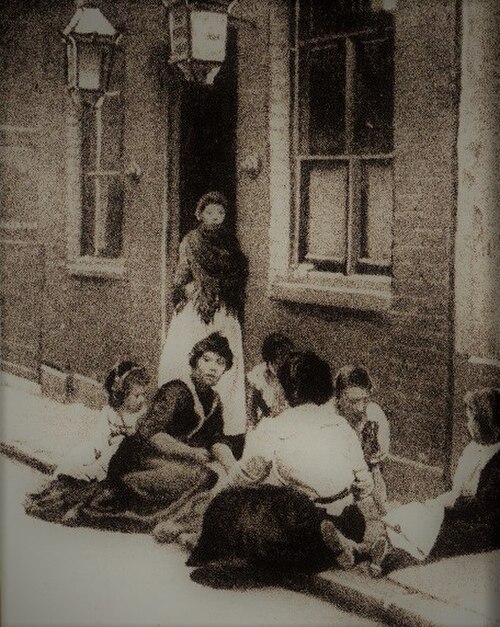 Credit: Unknown. Taken around 1890.Public domainSourceUNSOLVEDListen
Whitechapel and Spitalfields, London, England · 1880s
An unidentified serial killer, dubbed "Jack the Ripper" by the press, killed at least five women in the Whitechapel and Spitalfields districts of London in 1888. The killings, part of a wider set of eleven murders investigated by police as the "Whitechapel murders," were never solved.
Shanksville, Somerset County, Pennsylvania · 2001
On September 11, 2001, four hijackers affiliated with al-Qaeda took control of United Airlines Flight 93 en route from Newark to San Francisco, intending to crash it into a federal government building in Washington, D.C. After learning by phone of the day's other attacks, passengers and crew fought back, and the aircraft crashed into a field near Shanksville, Pennsylvania, killing all 44 people aboard.
 Credit: nrkbetaCC BY-SA 2.0SourceSOLVEDListen
Oslo and Utøya, Norway · 2011
On 22 July 2011, Anders Behring Breivik detonated a car bomb in Oslo's government quarter, killing 8, then carried out a mass shooting at a Workers' Youth League (AUF) summer camp on the island of Utøya, killing 69. He was convicted in 2012 and sentenced to 21 years of preventive detention, Norway's maximum sentence.
 Credit: Oliver MarkCC BY-SA 4.0SourceSOLVEDListen
Liaquat National Bagh, Rawalpindi, Pakistan · 2007
Former Pakistani Prime Minister Benazir Bhutto was killed on 27 December 2007 in Rawalpindi following a shooting and suicide bombing after a political rally, an attack that also killed 23 other people. A UN inquiry found her security had been fatally insufficient and the crime scene mishandled; two police officers were later convicted, five Taliban-linked suspects were acquitted, and Pervez Musharraf was indicted but declared a fugitive before being separately sentenced in absentia on unrelated treason charges.