
Start here
Who Was Jack the Ripper? Revealing The Most Famous Serial Killer | Mystery & Makeup | Bailey Sarian
Bailey Sarian's 52-minute breakdown, the fullest single telling on file.
Watch on YouTubeBefore you continue
This case involves sexual violence. Casepin presents the record in neutral, non-graphic language. Choose whether to continue.
Unsolved case · 1888
Also known as Whitechapel Murders · The Whitechapel Murderer
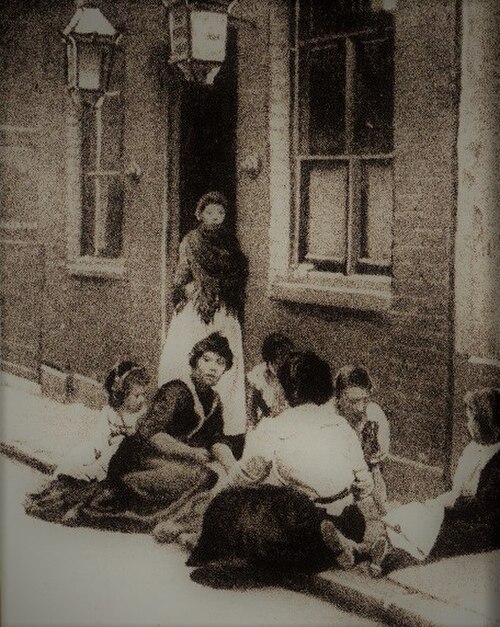 JacktheRipperWhitechapelcirca1890Credit: Unknown. Taken around 1890.·Public domain·Source
The short answer
An unidentified serial killer, dubbed "Jack the Ripper" by the press, killed at least five women in the Whitechapel and Spitalfields districts of London in 1888. The killings, part of a wider set of eleven murders investigated by police as the "Whitechapel murders," were never solved.
Start hereWho Was Jack the Ripper? Revealing The Most Famous Serial Killer | Mystery & Makeup | Bailey SarianBailey Sarian · 52 minThe coverage index
3 pieces from 2 creators: ranked, with duplicates removed and short clips set aside.
Start here
Video · YouTube · 52 min · 2023
Bailey Sarian's 52-minute breakdown, the fullest single telling on file.
Watch on YouTubeThe INFAMOUS Jack The Ripper Feat. Eleanor Neale | Part I
 Kendall RaeVideo · YouTube · 28 min · 2019
Jack the Ripper's crimes were SO GROSS 🤮
 Bailey SarianVideo · YouTube · 1 min · 2023
Titles and descriptions are the creators’ own and may not reflect current legal status. The sourced facts are in the file below. Players load only when you press play. Suggest coverage we’re missing.
The case file
Between 1888 and 1891, London's Metropolitan Police investigated eleven murders in and around the impoverished Whitechapel and Spitalfields districts of London's East End, collectively recorded in police files as the "Whitechapel murders." Five of these — Mary Ann Nichols, Annie Chapman, Elizabeth Stride, Catherine Eddowes, and Mary Jane Kelly, killed between 31 August and 9 November 1888 — are known as the "canonical five" and are widely considered the work of a single, unidentified perpetrator who became known as "Jack the Ripper." Two earlier cases in the police file, the killings of Emma Elizabeth Smith and Martha Tabram, are not part of the canonical five, and four later cases — Rose Mylett, Alice McKenzie, the unidentified "Pinchin Street torso," and Frances Coles — are also not consistently attributed to the same person by researchers.
The canonical five victims were working-class women, several of whom worked as prostitutes and lived in common lodging-houses in the East End slums. Each was killed at night, near a weekend, with her throat cut and, in most cases, extensive abdominal mutilation; organs were removed from at least three of the victims. The attribution of these five murders to one perpetrator largely derives from contemporaneous documents, including an 1894 memorandum by Assistant Chief Constable Sir Melville Macnaghten and a letter from police surgeon Thomas Bond to CID head Robert Anderson dated 10 November 1888. Some researchers and authors dispute whether all five, particularly Stride and Kelly, can be definitively linked to a single killer.
The investigation was led initially by Whitechapel's H Division CID under Detective Inspector Edmund Reid, later joined by Detective Inspectors Frederick Abberline, Henry Moore, and Walter Andrews from Scotland Yard, with the City of London Police involved after the Eddowes murder occurred within their jurisdiction. More than 2,000 people were interviewed and roughly 300 investigated, including butchers and slaughterers, none of whom were charged. A £500 reward was offered by the City Police Commissioner following the Stride and Eddowes murders, and the Whitechapel Vigilance Committee, a group of local volunteers, also offered a reward and hired private detectives.
Hundreds of letters purporting to be from the killer were sent to police and newspapers, most considered hoaxes; three — the "Dear Boss" letter, the "Saucy Jacky" postcard, and the "From Hell" letter (the latter accompanied by a preserved human kidney sent to Whitechapel Vigilance Committee leader George Lusk) — received particular attention and popularized the "Jack the Ripper" name. Extensive newspaper coverage of the murders created a media sensation and led to numerous individuals, including local resident John Pizer, being wrongly suspected before being cleared.
No suspect was ever charged in connection with the canonical five murders, and the case remains officially unsolved. Modern DNA-based claims linking specific individuals to the crimes have been subject to scientific criticism, including a published expression of concern from the Journal of Forensic Sciences regarding one such study. The case remains one of the most extensively written-about in the history of true crime, though the killer's identity has never been established with the evidentiary standard required for a criminal charge.
15 dated entries · 1888–1894
Emma Elizabeth Smith is attacked in Osborn Street, Whitechapel; she dies the following day. This case is included in the Whitechapel murders police file but is generally attributed by most authors to general violence rather than the same perpetrator as later killings.
Martha Tabram is found stabbed 39 times on a staircase in George Yard, Whitechapel. Police linked the killing to the later Ripper case, though many experts dispute the connection due to differing wound patterns.
Body of Mary Ann Nichols is discovered in Buck's Row, Whitechapel, with her throat severed and abdominal mutilations — the first of the canonical five murders.
Body of Annie Chapman is found near 29 Hanbury Street, Spitalfields, with her throat cut and abdominal organs removed.
The 'Dear Boss' letter, postmarked this date and received by the Central News Agency, is the source of the name 'Jack the Ripper.'
Elizabeth Stride is found killed in Dutfield's Yard off Berner Street, and Catherine Eddowes is found killed in Mitre Square within the City of London — the 'double event.'
The 'Saucy Jacky' postcard, referencing the 'double event,' is postmarked and received by the Central News Agency.
George Lusk of the Whitechapel Vigilance Committee receives the 'From Hell' letter along with half of a preserved human kidney.
Body of Mary Jane Kelly is discovered at 13 Miller's Court, Spitalfields, extensively mutilated — the last of the canonical five murders.
Rose Mylett is found strangled in Clarke's Yard, Poplar; an inquest jury returns a verdict of murder.
Alice McKenzie is murdered in Castle Alley, Whitechapel; opinions are divided over whether this is a Ripper murder.
The decomposing torso of an unidentified woman, known as the 'Pinchin Street torso,' is discovered under a railway arch in Whitechapel.
Frances Coles is found fatally injured under a railway arch at Swallow Gardens, Whitechapel; a stoker who had been seen with her is arrested and charged but later discharged for lack of evidence.
James Thomas Sadler, charged in the killing of Frances Coles, is discharged from court for lack of evidence.
Assistant Chief Constable Sir Melville Macnaghten writes a memorandum stating that the 'Whitechapel murderer had 5 victims — & 5 victims only,' underpinning the 'canonical five' framing of the case.
15 named in this file
Victims first. Every legal label is set from public records and court outcomes, not from the prose.
Killed 17 July 1889 in Castle Alley, Whitechapel; included in the later Whitechapel murders file, with disputed attribution to the same perpetrator.[3]
Killed 8 September 1888 near Hanbury Street, Spitalfields; considered one of the 'canonical five' Ripper victims.[3]
Killed 30 September 1888 in Mitre Square, City of London; considered one of the 'canonical five' Ripper victims.[3]
Killed 30 September 1888 in Dutfield's Yard, Whitechapel; considered one of the 'canonical five' Ripper victims, though some dispute whether her murder is linked to the others.[3]
Attacked 3 April 1888 in Osborn Street, Whitechapel; died the following day. Included in the police Whitechapel murders file but not part of the canonical five.[3]
Fatally injured 13 February 1891 under a railway arch at Swallow Gardens, Whitechapel; the final case in the Whitechapel murders police file.[3]
Killed 7 August 1888 in George Yard, Whitechapel; included in the police Whitechapel murders file but not part of the canonical five.[3]
Killed 31 August 1888 in Buck's Row, Whitechapel; considered one of the 'canonical five' Ripper victims.[3]
Killed 9 November 1888 at Miller's Court, Spitalfields; considered the last of the 'canonical five' Ripper victims.[3]
Found strangled 20 December 1888 in Poplar; included in the later Whitechapel murders file.[3]
Charged with the murder of Frances Coles; discharged from court for lack of evidence on 3 March 1891.[3]
Local resident known as 'Leather Apron' who was arrested on suspicion but released after his alibi was confirmed; no charges were sustained.[3]
Detective Inspector heading Whitechapel (H) Division CID, which initially led the investigation.[3]
Detective Inspector sent from Scotland Yard to assist the Whitechapel murders investigation.[3]
Assistant Commissioner and head of the Metropolitan Police CID during the investigation.[3]
3 cited
Coverage is not a source: every fact in this file rests on the records below.
Official / agencytrove.nla.gov.auAccessed Jul 5, 2026
PressThe IndependentAccessed Jul 5, 2026
EncyclopedicWikipediaAccessed Jul 5, 2026
Trust
Are you family of someone named in this file? Corrections and removal requests from victims’ families are prioritized.
Near this case
 Credit: Vestry clerk John Clement·Public domain·SourceSOLVEDListen
Ratcliffe Highway, Wapping, London · 1810s
In December 1811, seven people were killed in two separate nighttime attacks twelve days apart on Ratcliffe Highway in Wapping, East London — the Marr family and shop staff, then the Williamson family and their servant at a nearby tavern. The chief suspect, sailor John Williams, died by suicide in his cell before facing trial.
 SOLVEDListen
Minerva Estate, Bethnal Green, London · 1990s
Elderly siblings Anne Castle and William Bryan died during a violent home invasion in Bethnal Green, London, in 1993. The case went unsolved for nearly three decades until new DNA techniques led to the conviction of serial burglar Danville Neil in 2022.
 Credit: David Wulff (David Wulff)·CC BY-SA 2.0·SourceSOLVEDListen
London, England, United Kingdom · 2000s
On 7 July 2005, four suicide bombers detonated homemade explosives on three London Underground trains and a double-decker bus during morning rush hour, killing 52 victims and injuring hundreds in the UK's deadliest terrorist attack since 1988.
 Credit: Unknown author·Public domain·SourceSOLVEDListen
Site of the former Baltimore and Potomac Railroad Station, Washington, D.C. · 1881
On July 2, 1881, President James A. Garfield was shot twice at a Washington, D.C. railroad station by Charles J. Guiteau, a disappointed office seeker. Garfield died 79 days later on September 19, 1881; Guiteau was tried, convicted of murder, and executed by hanging on June 30, 1882.
 Credit: Grapher78·CC BY-SA 3.0·SourceSOLVEDListen
Frog Lake National Historic Site · 1885
On April 2, 1885, during the North-West Rebellion, Cree men led by war chief Wandering Spirit killed nine officials, clergy and settlers at the Frog Lake settlement in the North-West Territories (now Alberta), amid tensions over enforced starvation, treaty grievances, and rumors of impending violence from Canadian soldiers.
 Credit: Unknown author·Public domain·SourceSOLVEDListen
Bibb County, near Macon, Georgia · 1887
On August 6, 1887, nine members of the Woolfolk family were killed with an axe at their farmhouse near Macon, Georgia. Thomas G. "Tom" Woolfolk, the son and stepson of two victims, was convicted of murdering his father after three trials and was executed in 1890, though doubts about his guilt persist among some historians.
Also covered by
 Credit: English Wikipedia·Editorial use·SourceSOLVEDListen
Modesto, California · 2002
Laci Peterson, 27 and eight months pregnant, disappeared from her Modesto, California home on December 24, 2002; her body and that of her unborn son Conner were found in San Francisco Bay in April 2003, and her husband Scott Peterson was convicted in 2004 of murdering both.
 Credit: CBS News / Travis Alexander (personal photo)·Editorial use·SourceSOLVEDListen
Mesa, Arizona, United States · 2000s
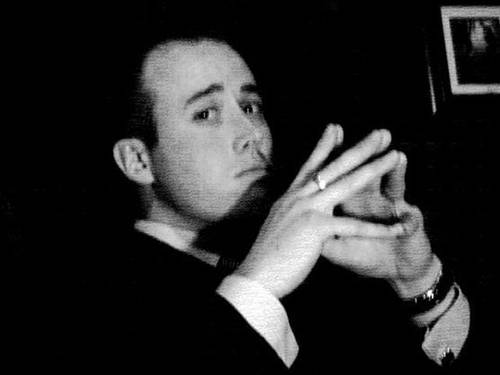
Travis Alexander, 30, was stabbed, slashed, and shot to death in his Mesa, Arizona home on June 4, 2008. His ex-girlfriend, Jodi Arias, was convicted of first-degree murder in 2013 and sentenced to life without parole in 2015 after two juries deadlocked on the death penalty.
 COLDListen
Cumming, Georgia · 2018
Tamla Horsford, a 40-year-old mother of five, died from a fall at a home in Cumming, Georgia, during a gathering on November 3-4, 2018; two separate investigations ruled her death accidental, though her family has disputed that finding and pushed for further inquiry.
 Credit: Los Angeles Police Department·Public domain·SourceUNSOLVEDListen
Leimert Park, Los Angeles, California, USA · 1940s
Elizabeth Short, known posthumously as the Black Dahlia, was found murdered in Los Angeles in January 1947 in a case that remains unsolved.
 Credit: Ted Van Zyl·Editorial use·SourceSOLVEDListen
Albuquerque, New Mexico, United States · 1993
Girly Chew Hossencofft, a Malaysian-born bank teller living in Albuquerque, New Mexico, disappeared on September 9, 1999, shortly after filing for divorce from her husband Diazien Hossencofft. He and his girlfriend Linda Henning were later convicted of her murder. Her body has never been found.
 Credit: Argonne National Laboratory / Wikimedia Commons, c.1922–23·Public domain·SourceSOLVEDListen
Orange, New Jersey · 1917
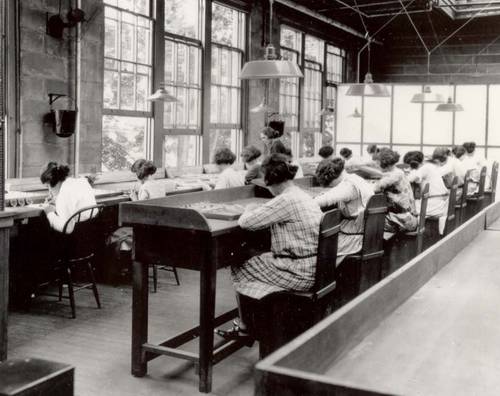
Beginning in 1917, factory workers who came to be known as the Radium Girls were poisoned after being instructed to shape radium-paint brushes with their lips; the resulting illnesses, deaths, and lawsuits against the United States Radium Corporation and the Radium Dial Company reshaped U.S. occupational health and labor law.