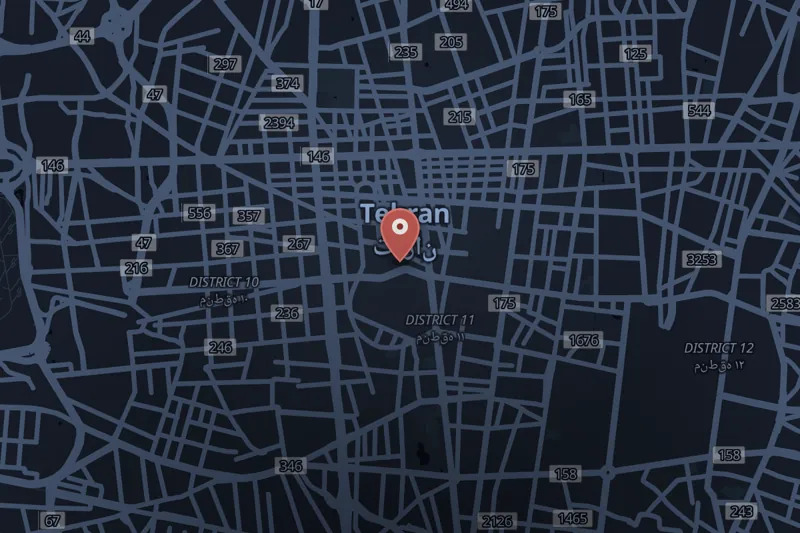
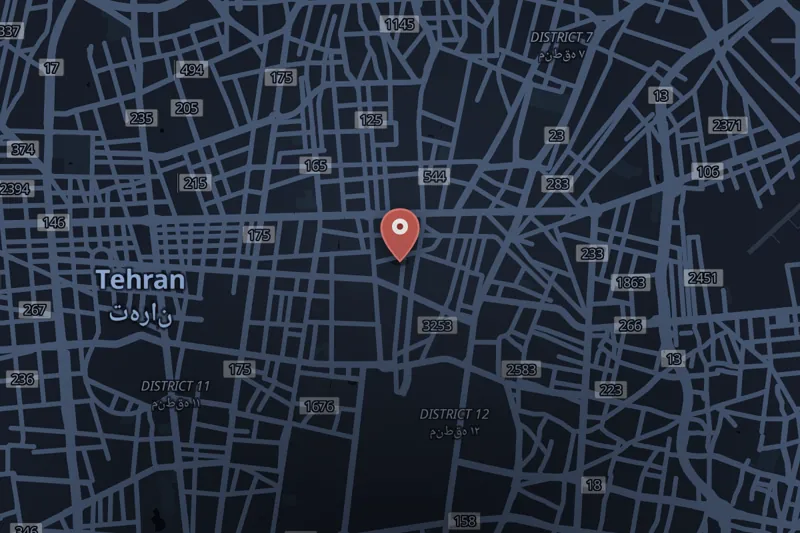
On 7 June 2017, two simultaneous terrorist attacks struck Tehran, Iran: one at the Iranian Parliament building and another at the Mausoleum of Ruhollah Khomeini. The attacks were carried out by militants belonging to the Islamic State of Iraq and the Levant (ISIL), and left 17 civilians dead and 43 wounded. This marked the first terrorist attack in Tehran in more than a decade and the first major terror attack in Iran since the 2010 Zahedan bombings. Iranian officials stated they also foiled a third planned attack that day.
At the Parliament, four militants disguised as women entered the administrative building and opened fire, injuring seven to eight people. Iranian state television reported that one attacker detonated a suicide vest inside the building during a legislative session, while parliament speaker Ali Larijani downplayed the incident as a "trivial matter" and continued proceedings. IRGC special forces, including the Saberin Unit under Brigadier General Mohammad Pakpour, entered the building and killed the remaining attackers, with the government stating four gunmen died at this location.
At the Mausoleum of Khomeini, a suicide bomber detonated explosives, and another attacker opened fire on civilians and police, resulting in one death and several injuries at that site. NAJA (Iran's police force) conducted the counter-terrorism operation there; a female militant was captured alive, and two attackers were killed. In total, of the seven assailants involved across the two sites, six were killed — four at the Parliament and two at the mausoleum — while one female militant was captured alive.
ISIL claimed responsibility through its Amaq News Agency, marking the group's first attack inside Iran. Iran's Intelligence Ministry identified the five attackers by first names only — Seriyas, Fereydoun, Qayyoum, Abu Jahad, and Ramin — describing them as ethnic Kurdish Iranians who had joined ISIL, fought in Mosul and Raqqa, and returned to Iran in August 2016 under the command of a figure known as "Abu Ayesheh."
Several senior Iranian officials, including IRGC chief Major General Mohammad Ali Jafari and Foreign Minister Javad Zarif, publicly accused Saudi Arabia — along with the United States and Israel — of directing or supporting the attacks, referencing prior threatening remarks by Saudi Deputy Crown Prince Mohammad bin Salman. Saudi Foreign Minister Adel al-Jubeir denied any Saudi involvement.
A state funeral was held on 9 June 2017, attended by President Hassan Rouhani, Ali Larijani, and Chief Justice Sadeq Larijani, among others. On the same date, Iranian authorities announced the arrest of 41 suspected ISIL militants across several provinces. On 10 June, security forces stated they had killed the operation's alleged mastermind. On 18 June 2017, Iran's Islamic Revolutionary Guard Corps launched medium-range missiles from Iranian territory at an ISIL headquarters in Dayr al-Zawr, Syria, describing the strikes as retaliation for the Tehran attacks.
International reactions included condemnation from the UN Secretary-General and the EU, alongside a statement from then-U.S. President Donald Trump referencing states that "sponsor terrorism," which Iranian officials called "repugnant."
 Credit: Photographer not creditedPublic domainSourceSOLVEDListen