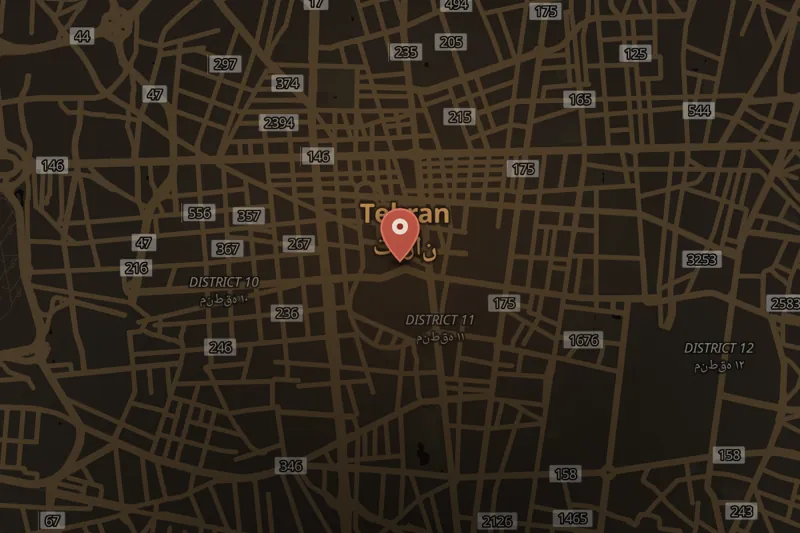
On 28 June 1981 (7 Tir 1360 in the Iranian calendar), a bomb exploded at the headquarters of the Islamic Republican Party (IRP) in Tehran while a meeting of party leaders was underway. The blast killed 74 leading officials of the Islamic Republic of Iran, including Chief Justice Ayatollah Mohammad Beheshti, described as the second most powerful figure in the Iranian Revolution after Ayatollah Ruhollah Khomeini. Also killed were four cabinet ministers (health, transport, telecommunications, and energy), twenty-seven members of the Majlis, and Mohammad Montazeri, son of deputy supreme leader Hussein-Ali Montazeri.
In the immediate aftermath, Iranian authorities first blamed SAVAK (the former shah-era intelligence agency) and the Iraqi government. Two days later, on 30 June, Khomeini publicly accused the People's Mujahedin of Iran (MEK/PMOI) of responsibility. According to BBC journalist Baqer Moin, the Mujahedin were "generally perceived as the culprits" for the bombing in Iran, though the group never publicly confirmed or denied responsibility, instead describing the attack as "a natural and necessary reaction to the regime's atrocities." The Iranian government also blamed the United States for the bombing.
On 6 July 1981, Iranian authorities identified the bomber as a 23-year-old man named Mohammad Reza Kolahi, who had reportedly secured a job in the building disguised as a sound engineer. Iran accused Kolahi of MEK membership, though one Iranian dissident stated the government had not established organizational links. Years later, a tribunal in Kermanshah sentenced four alleged "Iraqi agents" to death in connection with the bombing, and a separate Tehran tribunal executed a man named Mehdi Tafari on the same charges. However, by 1985 the head of Iranian military intelligence publicly stated that the operation had actually been carried out by pro-monarchy (royalist) army officers, contradicting the earlier official narratives.
Multiple scholarly sources cited in later accounts, including Anthony Cordesman, Ervand Abrahamian, and Kenneth Katzman, have discussed varying theories about responsibility, including the possibility that senior IRP leaders orchestrated the bombing to eliminate internal rivals. A 2006 U.S. State Department country report attributed the bombing to the MEK. The event, along with a related 1981 bombing of the Prime Minister's office, is described as having turned Iranian public opinion against the MEK and prompted an expanded government crackdown on the group.
Several public places in Iran, including major squares in Tehran and other cities, have since been named "Hafte Tir" to commemorate the event.
In December 2015, Mohammad-Reza Kolahi — who had been living in the Dutch town of Almere under the false identity "Ali Motamed" as a refugee — was killed in front of his home. Iran denied involvement in his killing.


 COLDListen