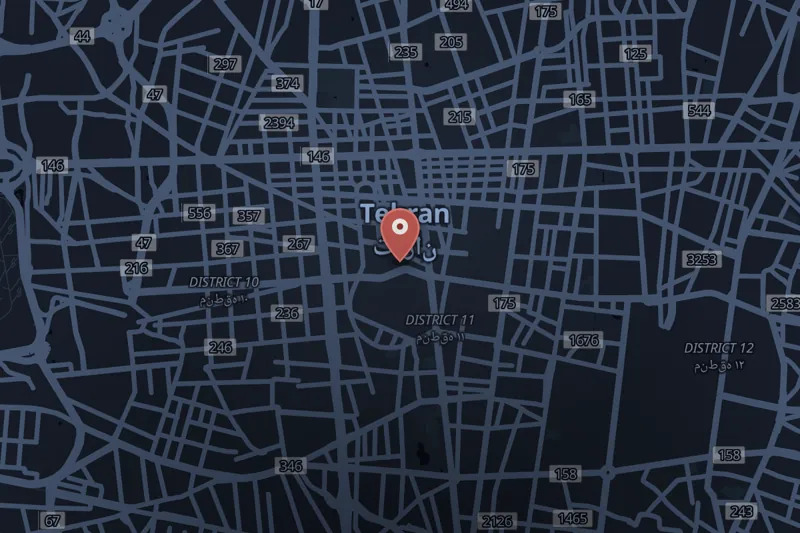
On 10 April 1999, at approximately 6:45 a.m. local time, Ali Sayyad Shirazi, deputy chief of staff of the Iranian Armed Forces, was assassinated while leaving his home in Tehran for work. He was shot by an assailant linked to the Mojahedin-e Khalq (MEK), an Iranian opposition group. The assailant was disguised as a municipal street sweeper and approached Shirazi's car to hand him a letter before opening fire.
In the months preceding the killing, several senior Iranian officials had been targeted in similar attacks, including a senior judge, Ali Razini, and Mohsen Rafighdoost, head of a large Iranian charity, both of whom survived assassination attempts. A spokesman for the MEK said units of the group operating in northern Tehran had carried out these killings. The MEK had also previously claimed responsibility for the August 1998 assassination of Asadollah Lajevardi, a former Iranian chief prosecutor and head of Iran's Prisons Organization.
Shirazi had commanded several of Iran's major offensives during the Iran–Iraq War and was known by the nickname "Iron Man." He was taken to Farhang hospital, where he was pronounced dead at age 54. Witnesses said he was struck by three bullets. His son, Mahdi, who was present at the scene while preparing to go to school with his brother, later described the attack in detail: a masked man wearing the orange clothing of a municipal street sweeper approached the car, handed Shirazi a letter, and when Shirazi began reading it, drew a hidden gun and fired four shots at his head. The assailant then fled on foot toward a nearby alley, after which Mahdi heard a motorbike, suggesting the attacker had an accomplice.
The assassination was carried out in retribution for Shirazi's role in Operation Mersad during the Iran–Iraq War, in which MEK forces were defeated by Iranian forces under his command. Rahim Safavi, speaking eleven years after Shirazi's death, stated that the operation had allegedly been carried out on the order of Saddam Hussein. A MEK spokesman said Shirazi had been targeted for "purging and executing military personnel and for the deaths of hundreds of thousands of child soldiers during the Iran-Iraq War," a period during which he commanded Iran's ground forces.
Shahin Gobadi, described as the MEK spokesman in Paris, told the Associated Press by telephone from Cairo that the group's units inside Iran were responsible for the killing. One individual was described by Iranian media as having been in charge of the assassination team.
Shirazi's funeral was held the day after the assassination and was attended by Iranian Supreme Leader Ali Khamenei. According to Shirazi's son Mahdi, the case was later prosecuted by a court in France, and he was summoned in 2009 to give an account of the incident.

 UNSOLVEDListen