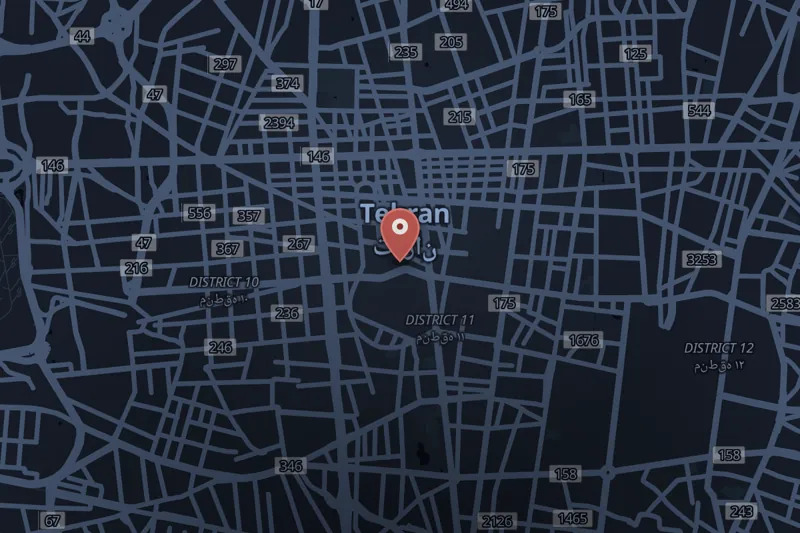
On 30 August 1981, a bomb exploded in the office of Mohammad Javad Bahonar, Prime Minister of Iran. The blast killed Bahonar and President Mohammad-Ali Rajai, along with six other Iranian government officials, including Col. Vahid Dastgerdi, chief of Iranian police, and Abdol Hossein Daftarian. The attack occurred roughly two months after the Hafte Tir bombing, which had killed more than seventy senior Iranian officials, including Chief Justice Mohammad Beheshti, then Iran's second-highest official.
The explosion destroyed the first floor of the building. Because the victims suffered severe burns, their bodies were not easily identified; Rajai and Bahonar were ultimately identified through dental records. At the time of the bombing, they had been in office for less than four weeks, having won election with 91 percent of the vote. A funeral held the following day drew nearly 500,000 attendees, and the interim presidential council declared five national days of mourning.
In the aftermath, uncertainty persisted over exactly who had been present in the room when the device detonated. Three individuals were initially unaccounted for: Masoud Keshmiri, President Rajai, and Prime Minister Bahonar. It was later confirmed that Rajai and Bahonar had died in the blast.
No group claimed responsibility for the bombing. The Islamic Republic attributed it to the People's Mujahedin of Iran (MEK), a position echoed by Ayatollah Khomeini, who charged the group with responsibility. However, academics and observers have speculated that the bombings may instead have been orchestrated by senior figures within the Islamic Republican Party (IRP), including future Iranian President Ali Akbar Hashemi-Rafsanjani, to eliminate internal rivals. Some sources describe the explosions as having been "set off by insiders," with the office bombing allegedly carried out by an accomplice working within the IRP's offices, and a related earlier bombing attributed to a security guard at Bahonar's headquarters. Scholar Mangol Bayat expressed skepticism that the MEK could have carried out the attack, noting that it would have required high-level infiltration of the regime.
The Islamic Republic later specifically claimed the attack was carried out by Masoud Keshmiri, described as an MEK agent serving as secretary of Bahonar's office and of the Supreme National Security Council, who allegedly used a fake passport to flee Iran afterward. More than twenty suspects were named in the subsequent investigation, but Keshmiri was the only one specifically and officially identified as a suspect by Iranian authorities; none of the others were charged or brought to trial in connection with this bombing.
Following the deaths of both the president and prime minister, Iran's Parliament elected Ayatollah Mohammad-Reza Mahdavi Kani as the new prime minister on 2 October 1981, by a vote of 178 in favor, 10 against, and 8 abstentions. Iranian state radio indicated that executions of those blamed for assassinating senior Islamic leadership figures would continue.


 UNSOLVEDListen