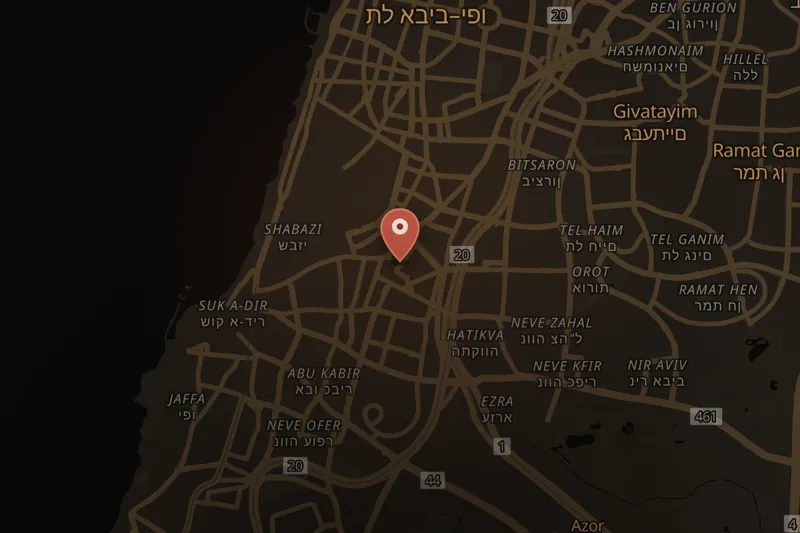
On 17 April 2006, a suicide bombing occurred at the Rosh Ha'ir shawarma restaurant near the Tel Aviv Central Bus Station in Israel. The attacker, identified as Sami Salim Mohammed Hammed, a Palestinian student from the Jenin area of the northern West Bank, detonated approximately 5 kilograms (11 lb) of explosives packed with nails and metal shards inside the restaurant while it was crowded with lunchtime patrons. The blast killed 11 civilians and injured more than 60 others, making it the deadliest attack in Israel in nearly two years at that time.
This was the second suicide bombing to target the Rosh Ha'ir restaurant within 2006; an earlier attack on 19 January 2006 had injured 31 people at the same location.
The Palestinian militant organization Palestinian Islamic Jihad claimed responsibility for the attack, identifying the bomber by name. According to reporting, an Islamic Jihad cell was said to have carried out six of the seven suicide bombings in Israel that had occurred since Palestinian factions agreed to a ceasefire in February 2005, making this the seventh such attack in that period.
Reactions to the bombing came from multiple parties. Israeli Foreign Ministry spokesman Gideon Meir stated that Israel held Hamas responsible for the attacks, accusing Hamas of supporting other militant organizations. Palestinian Authority President Mahmoud Abbas said the violence ran counter to Palestinian interests and called on the international community to encourage peace negotiations. A spokesman for the Hamas-led Interior Ministry, Khaled Abu Helal, characterized the attack as a direct consequence of what he described as the policies of occupation and aggression against Palestinians. The administration of U.S. President George W. Bush condemned the bombing as "a despicable act of terror for which there is no excuse or justification."
In subsequent developments, Islamic Jihad leader Elias Ashkar, whom Israel accused of orchestrating the attack, was killed by Israeli troops in the West Bank village of Qabatiya on 14 May 2006, along with four other Palestinians. Separately, in May 2012, the family of Daniel Wultz, one of the victims, won a civil judgment in a U.S. District Court against Iran and Syria for their alleged support of the militants behind the bombing. The judgment totaled $323,000,000 and was noted as the first time a U.S. court had issued a judgment against Syria specifically for terrorism-related activities.