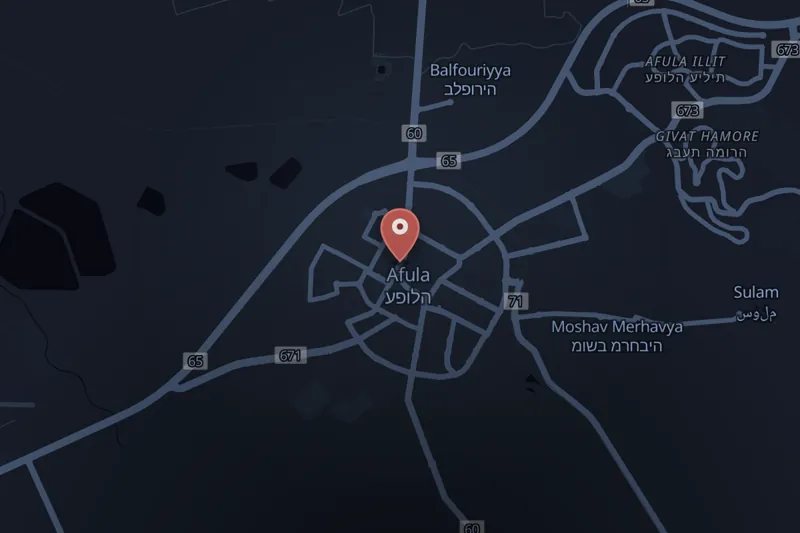
On 6 April 1994, at around 12:10 pm, a car bomb exploded next to an Egged commuter bus (line 348) at a crowded bus stop in downtown Afula, Israel. The bombing occurred on Holocaust Memorial Day, shortly after two nearby schools had ended classes, as young students were converging on the bus stop. Eight Israeli civilians were killed and 55 people were injured. Among the mostly Jewish victims were several Arabs, including one of the fatalities. This is described as the first Palestinian suicide bombing carried out by Palestinian militants against Israeli civilians within Israel itself, following an earlier suicide car bomb attack in the West Bank in 1993.
The attack is attributed to Hamas bomb-maker Yahya Ayyash, who according to later accounts had begun planning suicide bombings inside Israel around 1992. The vehicle used, a 1987 Opel Ascona, had been stolen in Tel Aviv on 23 March 1994 and fitted with false Israeli license plates. It was rigged with seven gas cylinders, five anti-personnel hand grenades, and packed with 1,100 carpenter nails; a caller to a Western news agency in Jerusalem said the car carried 385 pounds of explosives. Witnesses described the scene afterward as covered with oil, seared metal, and nails, with a firefighter among the first responders. Nearby structures, including a kindergarten, sustained damage from the blast.
Hamas issued a communique a few hours after the explosion identifying the bomber as a 19-year-old Palestinian from the West Bank village of Qabatya, described as a member of the Abdel el-Rahman Hamadan cell of the Izz ad-Din al-Qassam Brigades. Israeli media reported he had previously served prison time and was on an Israeli army list of fugitive Hamas militants. Police reportedly found a banner denouncing the Oslo peace process and a Koran near the wreckage of the car.
Hamas publicly stated the bombing was one of five attacks planned in retaliation for the Cave of the Patriarchs (Ibrahimi Mosque) massacre in Hebron on 25 February 1994, in which a Jewish settler killed 29 Muslims at prayer and wounded 125 others. Then-Shin Bet adviser on Palestinian affairs Matti Steinberg stated that Hamas had previously refrained from attacking civilian targets inside Israel, and that this policy shift followed the Hebron massacre. Hamas conducted a second retaliatory attack on 13 April 1994 (the Hadera bus station bombing) before halting further planned attacks after Israel accelerated its schedule for withdrawing military forces from the Gaza Strip. Hamas leader Rantissi was quoted stating that Hamas would stop attacking Israeli civilians when Israel stopped killing Palestinian civilians.

 SOLVEDListen