
 SOLVEDListen
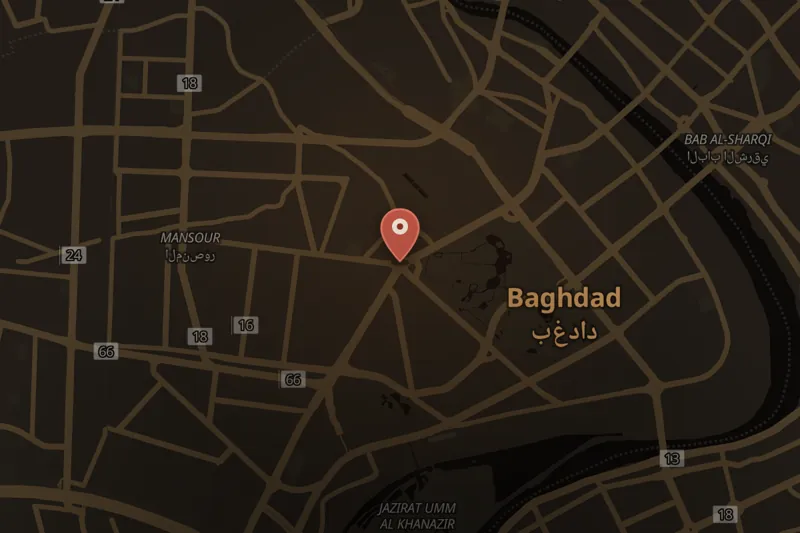
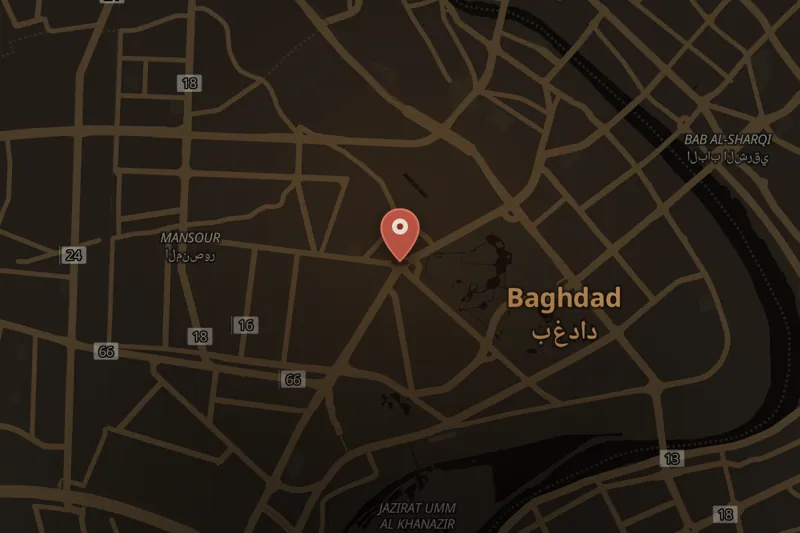
Baghdad, Iraq · 2000s
Abduction of Russian Diplomats in Iraq
In June 2006, insurgents ambushed a Russian Embassy car in Baghdad, killing one guard and abducting four staff who were later killed by their captors.
Unsolved case · 2003
The short answer
On April 8, 2003, U. S. forces struck three Baghdad locations housing journalists during the invasion of Iraq, killing three journalists — Tareq Ayyoub, Taras Protsyuk, and José Couso — and wounding several others.
No one's coverage is attached to this file yet.
Know great coverage of this case?
A documentary, a podcast episode, a careful long-form video. Suggest it and an editor will review it before it appears here.
Suggest coverage for this caseOn April 8, 2003, during the U.S.-led invasion of Iraq, American armed forces fired on three locations in Baghdad known to house journalists, resulting in three deaths and four injuries within a matter of hours.
In the first incident, two U.S. air-to-surface missiles struck Al Jazeera's Baghdad office. The strike killed Tareq Ayyoub, a Palestinian reporter for the network, and wounded Zouhair al-Iraqi, an Iraqi cameraman, both of whom had been broadcasting live from the roof of the building. Al Jazeera stated it believed it had been deliberately targeted, citing a 2001 U.S. strike on its Kabul bureau during the invasion of Afghanistan.
In the second incident, a U.S. Army tank fired on the 15th floor of the Palestine Hotel, which housed most foreign journalists in Baghdad. The tank round killed Reuters cameraman Taras Protsyuk and wounded three others; José Couso, a cameraman for Spain's Telecinco, who was on the 14th floor, also died. The tank commander requested and received permission to fire a high-explosive anti-tank round. The unit had reportedly not been briefed on the hotel's location or its concentration of journalists, as the hotel fell outside its assigned sector. U.S. forces later concluded the actual Iraqi spotter was probably in a different nearby building. In 2008, a former U.S. Army Intelligence linguist stated she had seen documents listing the Palestine Hotel as a possible military target prior to the shelling.
In the third incident, the Baghdad office of the United Arab Emirates satellite channel Abu Dhabi TV was hit by air strikes; the station separately aired footage of Iraqi gunfire near its location.
Officials responded to the incidents in press briefings. At the Pentagon, Major General Stanley McChrystal defended soldiers' right to self-defense when fired upon in urban combat. In Doha, Brigadier General Vincent K. Brooks stated the coalition does not target journalists and could not track journalists' locations across the battlefield. The Committee to Protect Journalists, Reporters Without Borders, and Amnesty International all called for investigations, with Reporters Without Borders seeking proof the strikes were not deliberate attempts to suppress media coverage.
The Committee to Protect Journalists published its own investigation on May 27, 2003, after interviewing roughly a dozen witnesses, including embedded journalists who had monitored military radio traffic. It concluded the Palestine Hotel attack, while intended for an Iraqi artillery spotter and not deliberately aimed at journalists, was avoidable, and noted that Pentagon officials and ground commanders had known the hotel was full of international journalists and intended not to hit it.
U.S. missiles strike Al Jazeera's Baghdad office, killing reporter Tareq Ayyoub and wounding cameraman Zouhair al-Iraqi.
A U.S. Army tank fires on the Palestine Hotel in Baghdad, killing Reuters cameraman Taras Protsyuk and Telecinco cameraman José Couso, and wounding three others.
The Baghdad office of Abu Dhabi satellite channel is hit by air strikes.
The Committee to Protect Journalists publishes its investigative report into the Palestine Hotel shelling.
Former U.S. Army Intelligence linguist Adrienne Kinne states she saw documents listing the Palestine Hotel as a possible military target prior to the attack.
Victims first. Every legal label is set from public records and court outcomes, not from the prose.
Cameraman for Spain's Telecinco, killed when a U.S. Army tank fired on the Palestine Hotel.[3]
Reuters cameraman killed when a U.S. Army tank fired on the Palestine Hotel.[3]
Palestinian reporter for Al Jazeera, killed in the April 8, 2003 missile strike on Al Jazeera's Baghdad office.[3]
Iraqi cameraman for Al Jazeera, wounded in the missile strike on Al Jazeera's Baghdad office.[3]
Former U.S. Army Intelligence Arabic linguist who, as a whistleblower in 2008, reported seeing secret documents listing the Palestine Hotel as a possible military target before the shelling.[3]
Coverage is not a source: every fact in this file rests on the records below.
Are you family of someone named in this file? Corrections and removal requests from victims’ families are prioritized.
SOLVEDListenBaghdad, Iraq · 2000s
In June 2006, insurgents ambushed a Russian Embassy car in Baghdad, killing one guard and abducting four staff who were later killed by their captors.
 UNSOLVEDListen
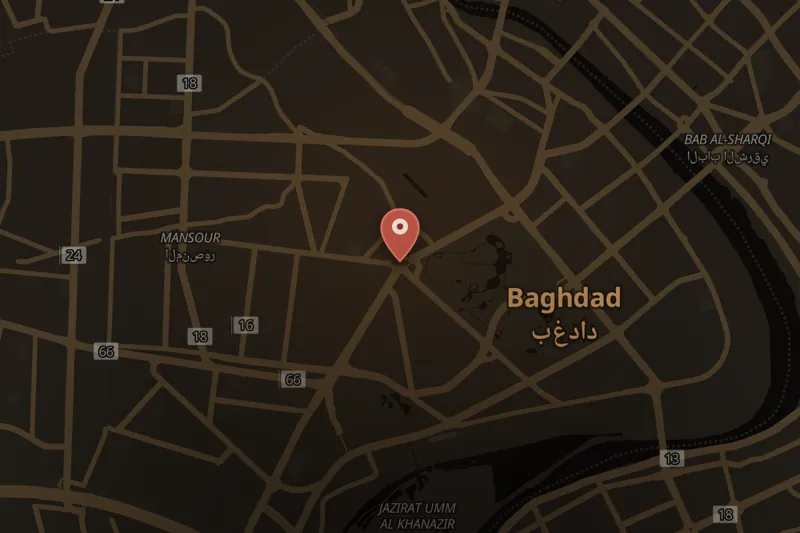
Baghdad and multiple provinces, Iraq · 2010s
A coordinated series of car bombings and shootings struck Baghdad and several central and northern Iraqi provinces on 16 August 2012, killing at least 128 people and wounding more than 400 in the deadliest single day of violence in Iraq since October 2009.
 SOLVEDListen
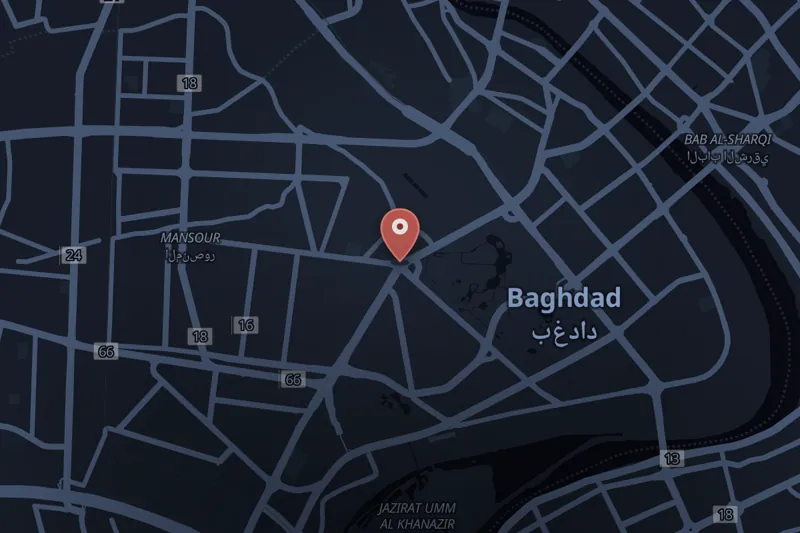
Baghdad, Iraq · 2010s
Two bombings struck Baghdad on 17 August 2010: a suicide bombing at an Iraqi Army recruiting center killed over 60 and wounded more than 100, and a fuel-truck bomb in the Shia neighborhood of Hay Ur killed 8 and wounded 44 that evening.
Sadr City and other Shia neighbourhoods, Baghdad, Iraq · 2016
On 11 May 2016, the Islamic State carried out a series of bombings in and around Shia neighbourhoods of Baghdad, Iraq, including a truck bombing in a crowded Sadr City market, killing and wounding hundreds of people, mostly civilians.
Near Baghdad International Airport, Baghdad, Iraq · 2020
On 3 January 2020, Iranian Major General Qasem Soleimani was killed by a U.S. drone strike near Baghdad International Airport, ordered by President Donald Trump, along with nine others including Iraqi militia leader Abu Mahdi al-Muhandis.
Karrada district, Baghdad, Iraq · 2016
A suicide truck bomb detonated in the Karrada district of Baghdad just after midnight on 3 July 2016, killing at least 324 people and injuring hundreds more; the Islamic State claimed responsibility, and years later Iraqi authorities announced the arrest and execution of individuals connected to the attack.


