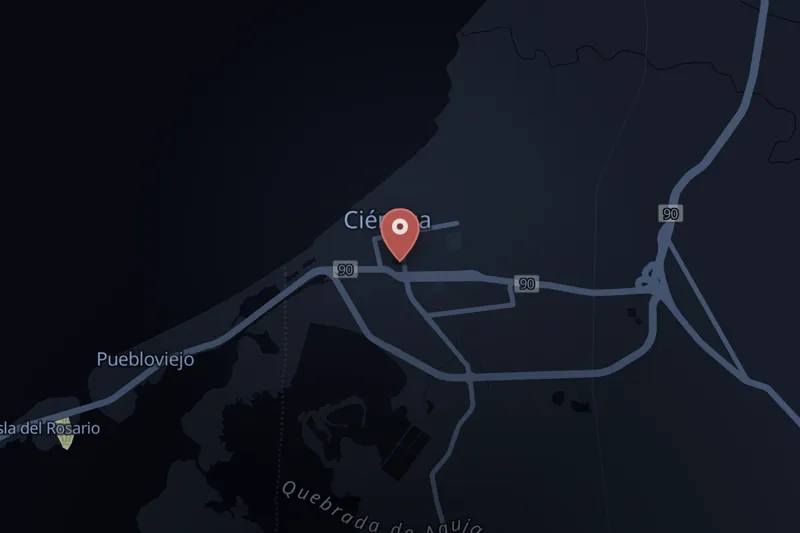
The Banana Massacre occurred between December 5 and 6, 1928, in the town of Ciénaga, near Santa Marta, Colombia, during a labor strike by workers of the United Fruit Company (now Chiquita). The strike began on November 12, 1928, after the company refused to negotiate over nine demands presented by workers in October 1928, including the end of hiring through sub-contractors, mandatory collective insurance, compensation for work accidents, hygienic dormitories, a six-day work week, higher pay, weekly wages, abolition of company stores and coupon-based payment, and improved hospital services. The strike grew into what was, at the time, the largest labor movement in Colombia's history, involving at least 25,000 workers along with participants from the Liberal, Socialist, and Communist parties.
After weeks without an agreement, the government of President Miguel Abadía Méndez appointed General Carlos Cortés Vargas as military chief of the Magdalena department and dispatched roughly 700 Colombian Army soldiers, including 300 sent from Antioquia, to suppress the strikers. On December 5, 1928, about 1,500 banana workers and their families gathered in the town square of Ciénaga, awaiting an anticipated address from the governor. Troops positioned machine guns on rooftops surrounding the square, sealed off access streets, issued a five-minute warning, and then opened fire on the crowd, which included women and children.
The exact death toll has never been confirmed due to a lack of detailed historical records. General Cortés Vargas, who commanded the troops, took responsibility for 47 casualties. Other estimates compiled by historian Herrera Soto range up to 2,000. Congressman Jorge Eliécer Gaitán stated that killed strikers were thrown into the sea, while other accounts claim bodies were buried in mass graves. Contemporaneous U.S. diplomatic telegrams to Secretary of State Frank B. Kellogg described conflicting figures: one December 1928 report cited about fifty strikers killed, while a legal advisor for the United Fruit Company later told the U.S. Embassy in Bogotá that the toll reached five to six hundred, and in January 1929 a company representative reportedly stated the number exceeded 1,000. U.S. officials and United Fruit representatives characterized the strike as having a "communist" and "subversive tendency" in their communications.
Press coverage of the event varied widely by political alignment; Colombian outlets such as the Bogotá newspaper El Tiempo acknowledged workers' grievances while criticizing the strike itself, and American press coverage was described as biased. A survivor, Luis Vicente Gámez, who hid under a bridge for three days, later became known for delivering annual memorial broadcasts about the massacre. The event later inspired fictionalized depictions in Gabriel García Márquez's novel One Hundred Years of Solitude and Álvaro Cepeda Samudio's La Casa Grande, though García Márquez's cited death toll of around 3,000 is not established as factual.

 Credit: Unknown authorPublic domainSourceSOLVEDListen