Background
At the end of World War II, as Yugoslav Partisan forces, including Serbian and Montenegrin brigades, retook Kosovo, tensions escalated between Serbian/Montenegrin Partisan units and ethnic Albanian populations and fighters, some of whom had collaborated with Axis powers earlier in the war. Kosovar Albanian commander Shaban Polluzha, who had resisted the deployment of Albanian men out of Kosovo, was defeated and killed on 21 February 1945. According to Kosovar historians cited in the record, the events that followed in Bar are presumed by some to be connected to this broader period of violence in Kosovo.
The massacre
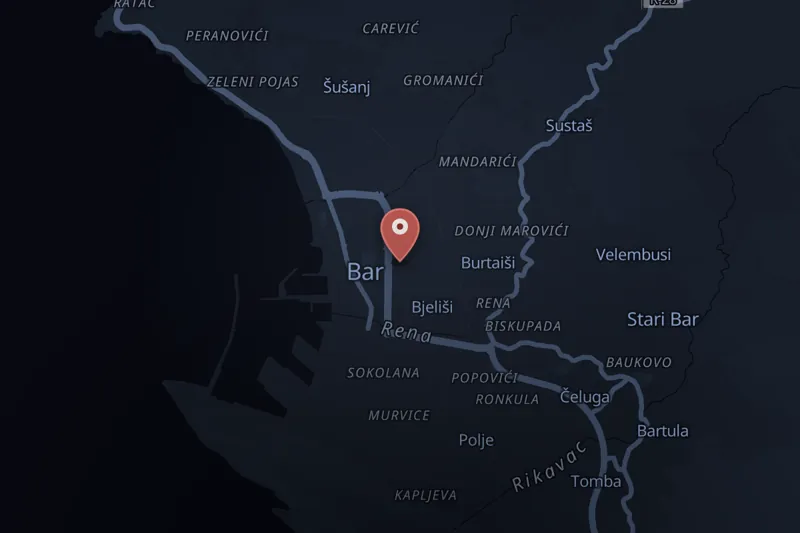
During the spring of 1945, Kosovo Albanian men were forcibly mobilized under the stated purpose of fighting retreating German forces or aiding the National Liberation Movement of Albania. Captured men were assembled in Prizren and marched in three columns, through mountainous terrain, to Bar, where they were told they would receive brief training before being sent to the front. Over March and April, approximately 13,000 men were deported from Kosovo and Macedonia via Bar in four echelons.
Upon arrival in Bar, the first echelon was split into three groups facing different fates: about 1,200 men were ferried toward Trogir, Croatia (65 drowned crossing to Čiovo one night); 400–500 men were confined in an old military barracks; and 450–500 men were led to an outdoor area under the pretext of delousing, where the presence of American military observers is described as having delayed further violence. A second echelon of roughly 2,370 men departed Prizren on 26 March 1945, reaching Shkodra by 30 March, with an estimated 700–800 dying en route. Albanian Franciscan priest Zef Pllumi described encountering exhausted, unarmed men on this march and later hearing reports that partisans had killed young men from Kosovo near Ulqin (Ulcinj).
Accounts describe a column halted near a water fountain in Bar, where an altercation over access to water resulted in the shooting of two men and the subsequent killing of a third; sources state that at dawn on 31 March 1945, unarmed Albanian soldiers waiting to drink water were executed on the order of Montenegrin and Serbian Partisan commanders. A third echelon of about 2,700 men, mostly from Macedonia, departed Prizren on 27 March 1945; 2,626 reached Shkodra amid a typhoid outbreak. On 1 April, a drowning incident at the Buna River led guards to open fire, killing about 20 men. Survivors later held at a military storehouse in Old Dubrovnik died—between 650 and 800 of them—when a fire on 18 April ignited stored chemicals, producing toxic fumes. Other described incidents include gunfire following the killing of a Yugoslav officer, Božo Dabanović, at Barsko Polje, and the asphyxiation of several hundred men sealed inside a tunnel near Bar. Historian Uran Butka has questioned claims that conscripts engaged in armed resistance, noting they had been disarmed before the march.
Death toll
Reported death tolls vary widely by source: Yugoslav sources cite 400 victims, while other sources cite figures up to 2,000 in Bar alone; Croatian historian Ljubica Štefan put the figure at 1,600 killed in Bar on 1 April; journalist Haxhi Birinxhiku cites 2,995 victims. Some accounts state victims included young boys. The site was later covered in concrete and an airport was built on top of the reported mass grave.

 Credit: Voice of AmericaPublic domainSourceSOLVEDListen