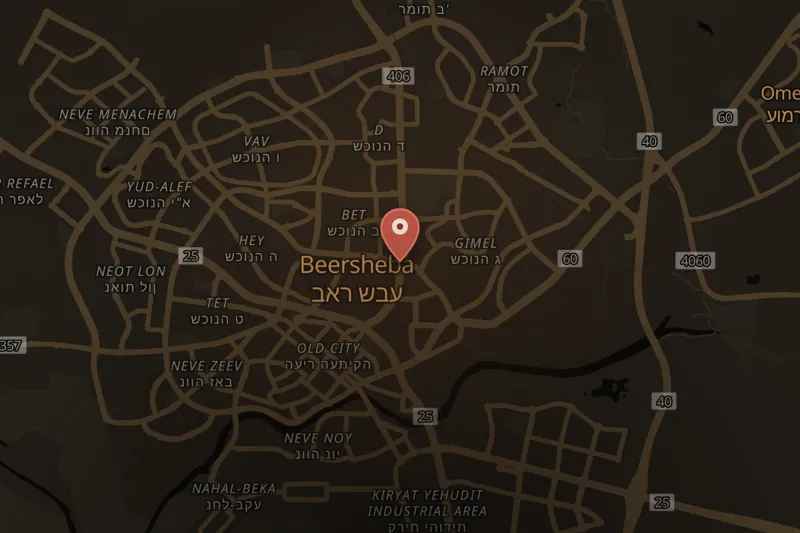
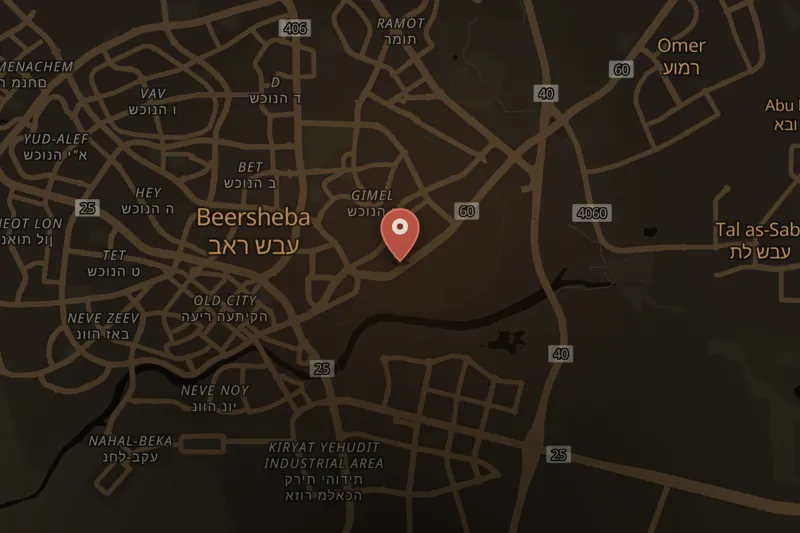
On August 31, 2004, two nearly simultaneous suicide bombings struck public buses in Beersheba, Israel, killing 16 people and injuring more than 100 others. The attacks occurred on "Metrodan Beersheba" buses, lines 6 and 12, which were traveling along Rager Boulevard, the city's main street, near the city hall in a crowded area. At 14:50, the first bomber detonated an explosive device hidden under his clothing aboard bus No. 6 as it passed a busy intersection. Approximately two minutes later, a second bomber detonated a device aboard bus No. 12, located about 100 meters from the first bus. The force of the explosions mutilated many victims' bodies, complicating identification efforts. The youngest victim killed was a boy aged three and a half, who died while sitting on his mother's lap.
Before the attack, Beersheba had been considered relatively safe during the Second Intifada, having not previously experienced a terror attack during that period. The bombings came after tensions had escalated in March and April 2004 with the Israeli assassinations of Hamas leaders Ahmed Yassin and Abdel Aziz al-Rantissi, followed by roughly four months described as the quietest period in Israel since the start of the Second Intifada.
The military wing of Hamas, the Izz ad-Din al-Qassam Brigades, claimed responsibility for the attacks. A videotape released by Hamas after the bombings showed the two suicide bombers, identified as Nassem Jabari, 22, and Ahmad Qawasameh, 26, posing with rifles and posters. Hamas distributed leaflets in Hebron stating the attack was carried out in revenge for the assassinations of Yassin and al-Rantissi. The Israeli government accused Syria and "terror command posts in Damascus" of involvement. Following the bombings, an estimated 20,000 Hamas supporters in Gaza took to the streets to celebrate. Israeli Foreign Minister Silvan Shalom placed blame on Yasser Arafat for failing to prevent the attacks.
The bombings caused shock in Israel, particularly because the two bombers had traveled from Hebron to Beersheba by walking across the Green Line without difficulty. In the aftermath, Israeli officials, including Police Commissioner Moshe Karadi, emphasized the necessity of a separation barrier between Israel and the West Bank; the southern portion of the Israeli West Bank barrier was completed only after the attack.
On September 26, 2004, Izz El-Deen Sheikh Khalil, a senior Hamas military-wing member, was killed in a car bombing in Damascus, Syria; the killing was attributed to Israeli agents, though the Israeli government did not officially claim responsibility. According to later reporting, on February 4, 2026, the Israeli military carried out an airstrike in Gaza that killed a Hamas fighter accused of dispatching the Beersheba bombers; this individual had previously been arrested in October 2004 and released in the 2011 Gilad Shalit prisoner exchange.


 SOLVEDListen