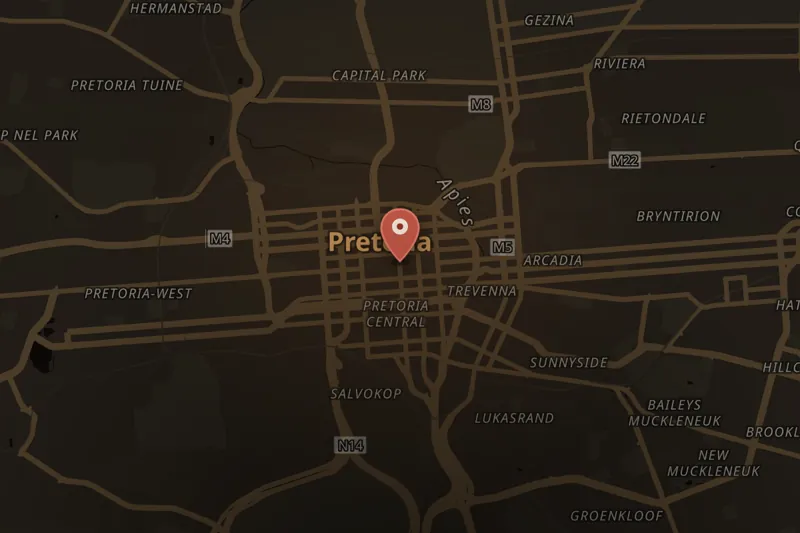
On 20 May 1983, at approximately 4:30 pm, a car bomb detonated on Church Street West in Pretoria, South Africa, outside the Nedbank Square Building, which was rented at the time by the South African Air Force (SAAF). The blast occurred during evening rush hour, and the dead and injured included both military personnel and civilians. Nineteen people were killed in total, including the two men who had planted the device, Freddie Shangwe and Ezekial Maseko, who died when the bomb exploded roughly ten minutes earlier than intended. A further 217 people were wounded, and at least 20 ambulances were used to transport casualties to hospitals.
The attack was carried out by a special operations unit of Umkhonto we Sizwe (MK), the armed wing of the African National Congress (ANC), commanded by Aboobaker Ismail. According to submissions made by the ANC to South Africa's Truth and Reconciliation Commission (TRC) in 1997 and 1998, the unit reported at the time to Joe Slovo as chief of staff, and the operation had been authorised by ANC president Oliver Tambo. The ANC's submission stated that the bombing was carried out in response to a South African military cross-border raid into Lesotho in December 1982, in which 42 ANC supporters were killed, and in response to the assassination of ANC activist Ruth First, who was married to Joe Slovo, in Maputo, Mozambique.
The ANC's TRC submission asserted that 11 of those killed were SAAF personnel and that the site therefore constituted a military target. Legal representatives for some of the victims disputed this characterisation, arguing that administrative staff such as telephonists and typists present at the site could not reasonably be considered legitimate military targets. The TRC itself found that the precise breakdown of civilian versus military casualties was unclear; police statistics at the time indicated that seven SAAF members were among the dead, while the commission found that at least 84 of the injured were SAAF members or employees.
Ten MK operatives, including Aboobaker Ismail, subsequently applied to the TRC for amnesty in connection with the Church Street bombing and other attacks. These applications were opposed on several grounds, including the argument that the bombing was a terrorist act disproportionate to its stated political motive. In 2000, the TRC granted amnesty to the applicants. Nelson Mandela, who was imprisoned at the time of the bombing, later wrote in his autobiography about the violent nature of such incidents, stating that awareness that such events would occur had made the decision to take up armed struggle "grave and reluctant."

 ONGOINGListen