Casepin
Back to cases

Case file

Czarny Las massacre

SOLVED1941Czarny Las (Black Forest), near Pawełcze, Stanisławów region3 SOURCESUPDATED JUL 2026
Illustrative

Background

Before World War II, Stanisławów (now Ivano-Frankivsk, Ukraine) was the seat of Stanisławów Voivodeship in the Second Polish Republic. Following the 1939 invasion of Poland, the region was annexed by the Soviet Union. After Germany invaded the Soviet Union in 1941, Stanisławów was initially occupied by a Hungarian contingent of the Wehrmacht, who were reported to be relatively friendly toward the local Polish population and who ended pogroms against local Jews carried out by groups of Ukrainian nationalists. In early August 1941, German forces replaced the Hungarians and, with assistance from Ukrainian nationalists, began preparations for the mass killing of the Polish intelligentsia, under the command of SS-Hauptsturmführer Hans Krueger, who had previously taken part in the Massacre of Lviv professors.

The massacre

On the orders of Gestapo chief Hans Krueger, during the night of August 8–9, 1941, Ukrainian auxiliary police arrested members of the Polish intelligentsia in Stanisławów, mostly teachers, on the pretext of an organizational meeting ahead of the school year. Some were also targeted on accusations of teaching communist ideas; a list of names had reportedly been partly prepared by a professor at a Ukrainian high school. Around 250 people were arrested that night and held in a Gestapo prison, with families initially permitted to visit.

During the night of August 14–15, 1941, the prisoners were loaded onto trucks and taken to Czarny Las (Black Forest), near the village of Pawełcze, where they were shot. Peasants from Pawełcze had earlier been ordered by the Germans to dig mass graves. One person is reported to have survived by escaping from a truck under cover of rain and darkness — a Polish forester from the village of Sołotwina. Those killed included teachers, doctors, priests, and civil servants.

Families were not informed of the victims' fate. In September 1941, a delegation sought information from the local Gestapo; Krueger falsely assured them that the prisoners were alive and under investigation, and allowed families to send food and clothing parcels, which were reportedly diverted rather than delivered. In the winter of 1942, Countess Karolina Lanckorońska, acting as an envoy of the Central Welfare Council, visited Stanisławów and spoke with Krueger and German prosecutor Rotter; in that conversation, Rotter reportedly suggested that Krueger had been responsible for the killings.

Post-war developments

Mass graves at Czarny Las were located in 1988 through the efforts of victims' families and local residents. In 1991, Poland's Council for the Protection of Struggle and Martyrdom Sites erected a monument at the site. In August 2011, a commemorative cross was placed there during a ceremony attended by the governor of Ivano-Frankivsk Oblast and representatives of victims' families and the Council.

Key facts

Victims
Rev. Łucjan Tokarski, Jan Kuźmycz, Henryka Halpern, Aleksander Jordan, Maksymilian Fleszer, Leon Buchowski, Kajetan Isakiewicz
Date
1941
Location
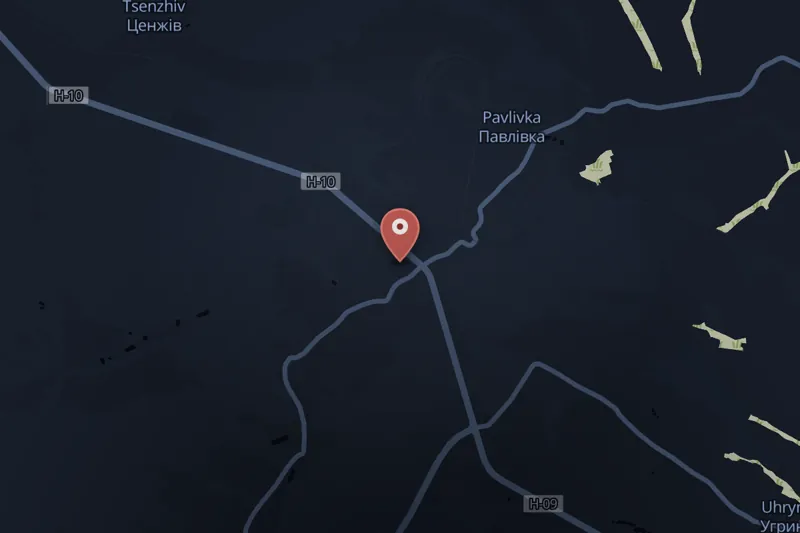
Czarny Las (Black Forest), near Pawełcze, Stanisławów region
Case status
solved

Case timeline

  1. 1941-08

    German forces replace Hungarian occupiers in Stanisławów; preparations begin for mass arrests of Polish intelligentsia.

  2. 1941-08-08

    Ukrainian auxiliary police, acting on Gestapo orders, begin arresting members of the Polish intelligentsia in Stanisławów.

  3. 1941-08-14

    Approximately 250 prisoners are loaded onto trucks and taken to Czarny Las forest, where they are shot.

  4. 1941-09

    A delegation of victims' families seeks information from local Gestapo; Hans Krueger falsely claims prisoners are alive.

  5. 1942

    Countess Karolina Lanckorońska visits Stanisławów and speaks with Krueger and prosecutor Rotter, who suggests Krueger's responsibility for the killings.

  6. 1988

    Mass graves at Czarny Las are located through efforts of victims' families and local residents.

  7. 1991

    Council for the Protection of Struggle and Martyrdom Sites erects a monument at Czarny Las.

  8. 2011-08

    A commemorative cross is placed at Czarny Las during a ceremony attended by regional officials and victims' families.

Best coverage

No approved coverage links are attached yet.

People

  • Rev. Łucjan Tokarski

    VICTIM

    Priest and teacher killed in the massacre.

  • Jan Kuźmycz

    VICTIM

    High school teacher killed in the massacre.

  • Henryka Halpern

    VICTIM

    High school teacher killed in the massacre.

  • Aleksander Jordan

    VICTIM

    High school teacher killed in the massacre; father of biologist Maria Jordan.

  • Maksymilian Fleszer

    VICTIM

    High school teacher killed in the massacre.

  • Leon Buchowski

    VICTIM

    High school teacher killed in the massacre.

  • Kajetan Isakiewicz

    VICTIM

    High school teacher killed in the massacre; relative of Rev. Tadeusz Isakowicz-Zaleski.

  • Hans Krueger

    CHARGED

    SS-Hauptsturmführer and Gestapo chief who ordered the arrests and mass shooting; named in historical accounts as responsible, though no adjudicated conviction is documented in the source.

Roles reflect public records and court outcomes at the time of writing — supporting citations are on file under Sources.

Places

Common questions

What happened to the victim?
In August 1941, Gestapo forces under SS-Hauptsturmführer Hans Krueger arrested roughly 250 members of the Polish intelligentsia in Stanisławów and, days later, shot around 250–300 Poles and Jews in the Czarny Las forest near the village of Pawełcze.
Where did the massacre happen?
Czarny Las (Black Forest), near Pawełcze, Stanisławów region.
What is the current status of the case?
Status: solved.

Sources

  1. ENCYCLOPEDICCzarny Las massacreWikipedia · 2026-07-07
  2. PRESSContemporaneous coverage — pwl1943.republika.plpwl1943.republika.pl · 2026-07-07
  3. PRESSContemporaneous coverage — polityka.plpolityka.pl · 2026-07-07

Record history

First published
JUL 07, 2026