
Start here
A Mother's Influence: The Story of Ed Gein's Family

Bailey Sarian's 11-minute overview: the quickest complete way into the case.
Watch on YouTubeBefore you continue
This case involves crimes against children. Casepin presents the record in neutral, non-graphic language. Choose whether to continue.
Solved case · 1968
Also known as Ed Gein case · The Plainfield Ghoul case
Drama: Monster: The Ed Gein Story (Netflix, Oct 2025)·More new releases

The short answer
Ed Gein, a Plainfield, Wisconsin farmer, was convicted of murdering hardware store owner Bernice Worden in 1957 and confessed to killing tavern owner Mary Hogan in 1954; investigators also found human remains taken from graves used to make household items and clothing.
Start hereA Mother's Influence: The Story of Ed Gein's FamilyBailey Sarian · 11 minThe coverage index
1 piece from 1 creator: ranked, with duplicates removed and short clips set aside.
Start here
Video · YouTube · 11 min · 2025
Bailey Sarian's 11-minute overview: the quickest complete way into the case.
Watch on YouTubeTitles and descriptions are the creators’ own and may not reflect current legal status. The sourced facts are in the file below. Players load only when you press play. Suggest coverage we’re missing.
The case file
On November 16, 1957, Bernice Worden, a 58-year-old hardware store owner in Plainfield, Wisconsin, disappeared from her shop. Her son, Deputy Sheriff Frank Worden, discovered the store's cash register open and blood on the floor that evening. He told investigators that Ed Gein, a local farmer, had been in the store the previous evening and was expected to return for a gallon of antifreeze; a sales slip for that purchase was the last receipt Worden had written. Gein was arrested that night at a nearby grocery store, and the Waushara County Sheriff's Department searched his farm.
Deputies found Worden's decapitated body hung upside down in a shed on Gein's property, with mutilations made after her death. A search of Gein's house recovered numerous items fashioned from human remains, including furniture upholstered in human skin, bowls and masks made from skulls and facial skin, and other remains later identified as belonging to Worden and to Mary Hogan, a 51-year-old tavern owner who had disappeared in December 1954. During interrogation, Gein admitted to shooting Hogan, though he said he had no memory of the details of her death. He also admitted to exhuming bodies from local cemeteries between 1947 and 1952, targeting graves of recently buried middle-aged women he believed resembled his mother, and using their skin and bones to create keepsakes, including a "woman suit." He stated he had visited graveyards as many as forty times and admitted to robbing nine graves; investigators exhumed three test graves and found Gein's account largely corroborated.
Gein was questioned about several other unsolved disappearances in Wisconsin, including those of Georgia Jean Weckler, Evelyn Grace Hartley, Victor Harold Travis, and James Walsh, but lie detector tests did not implicate him in these cases, and no charges related to them were brought.
Gein was arraigned on one count of first-degree murder on November 21, 1957, and pleaded not guilty by reason of insanity. He was initially found incompetent to stand trial due to schizophrenia and was committed to a psychiatric facility. In 1968, doctors determined he was competent, and his trial began on November 7 of that year before Judge Robert H. Gollmar, sitting without a jury at the defense's request. On November 14, 1968, Gollmar found Gein guilty of murdering Bernice Worden. In a subsequent phase addressing his sanity, Gollmar ruled Gein not guilty by reason of insanity and ordered him committed to the Central State Hospital for the Criminally Insane. Gein was never tried for the killing of Mary Hogan, to which he had confessed, reportedly due to the cost of a second trial.
Gein remained institutionalized for the rest of his life and died at the Mendota Mental Health Institute on July 26, 1984, of respiratory failure secondary to lung cancer. He is buried in Plainfield Cemetery.
14 dated entries · 1906–1984
Edward Theodore Gein born in La Crosse County, Wisconsin.
Gein's father, George Gein, dies.
Gein's brother Henry dies under circumstances later reconsidered as possibly suspicious; officially ruled accidental.
Gein's mother, Augusta Gein, dies.
Georgia Jean Weckler disappears near Fort Atkinson; Gein later questioned but not charged.
Victor Harold Travis and Raymond Burgess disappear while hunting near Gein's property; Gein later questioned but not charged.
Evelyn Grace Hartley disappears while babysitting in La Crosse; Gein later questioned but not charged.
Neighbor James Walsh disappears; Gein later tentatively linked but not charged.
Tavern owner Mary Hogan disappears; Gein later confesses to killing her.
Bernice Worden disappears from her Plainfield hardware store; Gein arrested same evening and his farm searched.
Gein arraigned on one count of first-degree murder; pleads not guilty by reason of insanity.
Gein's trial for the murder of Bernice Worden begins before Judge Robert H. Gollmar.
Gollmar finds Gein guilty of murdering Bernice Worden; later phase finds him not guilty by reason of insanity.
Gein dies at Mendota Mental Health Institute of respiratory failure secondary to lung cancer.
5 named in this file
Victims first. Every legal label is set from public records and court outcomes, not from the prose.
58-year-old Plainfield hardware store owner murdered by Ed Gein on November 16, 1957.[3]
51-year-old tavern owner who disappeared in December 1954; Gein confessed to shooting her.[3]
Found guilty of first-degree murder of Bernice Worden in 1968; found not guilty by reason of insanity and committed to a psychiatric institution; confessed to killing Mary Hogan but was never tried for that killing.[3]
Waushara County deputy sheriff and son of victim Bernice Worden; discovered evidence of the crime at the hardware store.[3]
Judge who presided over Gein's 1968 trial without a jury and delivered the guilty verdict and subsequent insanity ruling.[2]
From the record
3 cited
Coverage is not a source: every fact in this file rests on the records below.
PressNew York PostAccessed Jul 18, 2026
PressThe New York TimesAccessed Jul 18, 2026
EncyclopedicWikipediaAccessed Jul 18, 2026
Trust
Are you family of someone named in this file? Corrections and removal requests from victims’ families are prioritized.
Near this case
 SOLVEDListen
Winnebago County, Wisconsin · 1990s
Glenn Kopitske, 37, was shot and stabbed to death in his Winnebago County, Wisconsin home on July 31, 2003. Seventeen-year-old Gary Hirte was convicted of first-degree murder in 2005 after boasting to friends and a girlfriend that he had killed Kopitske, and after DNA and forensic evidence tied him to the crime.
 UNSOLVEDListen
St. Michael School, Dane, Wisconsin · 2010s
Rev. Alfred Joseph Kunz, a Catholic priest in Dane, Wisconsin, was found with his throat slit and stab wounds in the hallway of St. Michael School on March 4, 1998. The case remains unsolved despite a partial DNA sample recovered from retested forensic evidence.
Weston High School, Cazenovia, Wisconsin, United States · 2000s
On September 29, 2006, a 15-year-old freshman shot and fatally wounded Principal John Klang in the main hallway of Weston High School in Cazenovia, Wisconsin, after a custodian disarmed him of a shotgun. The shooter was convicted of first-degree murder and sentenced to life in prison.
 Credit: Public domain (1961 New York booking photo) via Wikimedia Commons·Public domain·SourceSOLVEDListen
Kew Gardens, Queens, New York City · 1960s
Kitty Genovese, a 28-year-old bartender, was raped and stabbed to death outside her Kew Gardens, Queens apartment building on March 13, 1964. A widely circulated New York Times account claiming 38 witnesses saw the attack and did nothing was later found to be significantly exaggerated. Winston Moseley was convicted of the murder and died in prison in 2016.
 Credit: Unknown author·Public domain·SourceSOLVEDListen
16th Street Baptist Church, Birmingham, Alabama · 1963
On September 15, 1963, Ku Klux Klan members bombed the 16th Street Baptist Church in Birmingham, Alabama, killing four Black girls and injuring more than a dozen others, in one of the era's most notorious civil-rights-era terror attacks.
 Credit: Stokes school faculty members (c. 1962).·Public domain·SourceSOLVEDListen
Former residence on East New York Street (near-east side), Indianapolis, Indiana · 1965
Sylvia Likens, a 16-year-old boarder, died in Indianapolis in October 1965 after three months of sustained abuse in the home of her caregiver Gertrude Baniszewski, who was convicted of murder along with several youths.
Also covered by
 Credit: English Wikipedia·Editorial use·SourceSOLVEDListen
Modesto, California · 2002
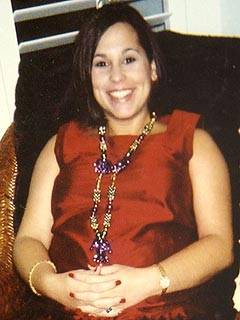
Laci Peterson, 27 and eight months pregnant, disappeared from her Modesto, California home on December 24, 2002; her body and that of her unborn son Conner were found in San Francisco Bay in April 2003, and her husband Scott Peterson was convicted in 2004 of murdering both.
 Credit: CBS News / Travis Alexander (personal photo)·Editorial use·SourceSOLVEDListen
Mesa, Arizona, United States · 2000s
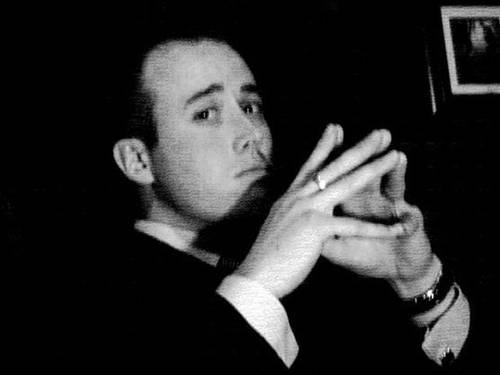
Travis Alexander, 30, was stabbed, slashed, and shot to death in his Mesa, Arizona home on June 4, 2008. His ex-girlfriend, Jodi Arias, was convicted of first-degree murder in 2013 and sentenced to life without parole in 2015 after two juries deadlocked on the death penalty.
 COLDListen
Cumming, Georgia · 2018
Tamla Horsford, a 40-year-old mother of five, died from a fall at a home in Cumming, Georgia, during a gathering on November 3-4, 2018; two separate investigations ruled her death accidental, though her family has disputed that finding and pushed for further inquiry.
 Credit: Los Angeles Police Department·Public domain·SourceUNSOLVEDListen
Leimert Park, Los Angeles, California, USA · 1940s
Elizabeth Short, known posthumously as the Black Dahlia, was found murdered in Los Angeles in January 1947 in a case that remains unsolved.
 Credit: Ted Van Zyl·Editorial use·SourceSOLVEDListen
Albuquerque, New Mexico, United States · 1993
Girly Chew Hossencofft, a Malaysian-born bank teller living in Albuquerque, New Mexico, disappeared on September 9, 1999, shortly after filing for divorce from her husband Diazien Hossencofft. He and his girlfriend Linda Henning were later convicted of her murder. Her body has never been found.
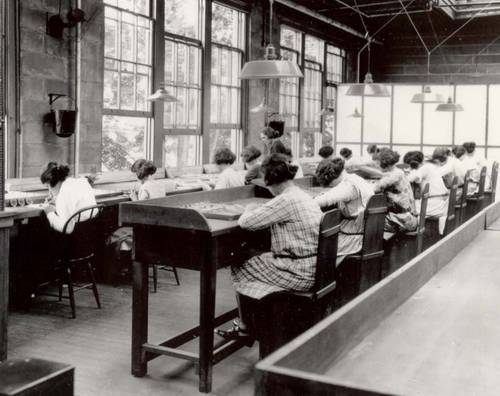 Credit: Argonne National Laboratory / Wikimedia Commons, c.1922–23·Public domain·SourceSOLVEDListen
Orange, New Jersey · 1917
Beginning in 1917, factory workers who came to be known as the Radium Girls were poisoned after being instructed to shape radium-paint brushes with their lips; the resulting illnesses, deaths, and lawsuits against the United States Radium Corporation and the Radium Dial Company reshaped U.S. occupational health and labor law.
