
Start here
THE MURDER OF SYLVIA LIKENS

Bella Fiori's 43-minute breakdown of the whole case.
Watch on YouTubeBefore you continue
This case involves crimes against children. Casepin presents the record in neutral, non-graphic language. Choose whether to continue.
Solved case · 1965
Also known as Sylvia Likens case · Sylvia Marie Likens
 Sylvia Likens Stokes High School portraitCredit: Stokes school faculty members (c. 1962).·Public domain·Source
The short answer
Sylvia Likens, a 16-year-old boarder, died in Indianapolis in October 1965 after three months of sustained abuse in the home of her caregiver Gertrude Baniszewski, who was convicted of murder along with several youths.
Start hereTHE MURDER OF SYLVIA LIKENSBella Fiori · 43 minThe coverage index
2 pieces from 2 creators: ranked, with duplicates removed and short clips set aside.
Start here
Video · YouTube · 43 min · 2021
Bella Fiori's 43-minute breakdown of the whole case.
Watch on YouTubeThe Murder of Sylvia Likens
 The Casual CriminalistVideo · YouTube · 53 min · 2022
Titles and descriptions are the creators’ own and may not reflect current legal status. The sourced facts are in the file below. Players load only when you press play. Suggest coverage we’re missing.
The case file
Sylvia Marie Likens was a sixteen-year-old girl from Indiana whose death in Indianapolis in October 1965 became one of the most consequential criminal cases in the state's history. Born in Lebanon, Indiana, on January 3, 1949, she was one of five children of Lester and Betty Likens, who worked as traveling carnival concessionaires. In the summer of 1965, needing care for two of their daughters while they traveled for work, her parents arranged for Sylvia and her younger sister to board with Gertrude Baniszewski, a single mother of seven who lived on East New York Street. The family agreed to pay a weekly fee for the sisters' room and care until the parents returned that autumn.
Over the following three months, Sylvia was subjected to escalating and sustained abuse within the household. What began as physical punishment developed into prolonged mistreatment in which Baniszewski directed and encouraged some of her own children and several neighborhood youths to take part. Sylvia was increasingly confined, deprived, and harmed. The gradual and collective nature of the cruelty — carried out by multiple people over an extended period inside an ordinary residential home — is a defining and troubling feature of the case. On October 26, 1965, Sylvia died; her death was determined to be a homicide resulting from her injuries together with severe malnutrition.
Police were called to the house that day and quickly recognized that the death was not accidental. Investigators learned that numerous people, most of them minors, had knowledge of or involvement in what had occurred. In December 1965 a grand jury returned murder indictments against Baniszewski, three of her children, and two neighborhood boys.
The 1966 trial drew national attention and was described by prosecutors as among the most terrible crimes in Indiana's history. Gertrude Baniszewski was convicted of first-degree murder and sentenced to life imprisonment. Her eldest daughter, Paula, was convicted of second-degree murder. Her son John Baniszewski Jr. and neighbors Coy Hubbard and Richard Hobbs were convicted of manslaughter. Another daughter, tried separately, was acquitted.
The legal aftermath extended for years. In 1970 the Indiana Supreme Court reversed the convictions of Gertrude and Paula Baniszewski on procedural grounds, citing the denial of motions for a change of venue and separate trials. Both were retried in 1971; Gertrude was again convicted of first-degree murder, while Paula pleaded guilty to voluntary manslaughter. The younger defendants convicted of manslaughter had been paroled by 1968 after serving relatively short terms. Gertrude Baniszewski was paroled in 1985 and died in 1990.
The case has remained a lasting reference point in discussions of child welfare, the duties of caregivers, and the failure of adults and neighbors to intervene. It has been the subject of books, films, and memorials, and Sylvia Likens is commemorated in Indiana. For many, its enduring significance lies less in its notoriety than in what it revealed about how sustained harm to a vulnerable young person could go unrecognized and unstopped.
11 dated entries · 1949–1990
Sylvia Marie Likens is born in Lebanon, Indiana.
Sylvia and her younger sister begin boarding with Gertrude Baniszewski in Indianapolis while their parents travel for work.
Over roughly three months, Sylvia is subjected to escalating and sustained abuse within the household.
Sylvia Likens dies; police are called to the home and her death is ruled a homicide.
A grand jury returns murder indictments against Gertrude Baniszewski, three of her children, and two neighborhood youths.
After a highly publicized trial, Gertrude Baniszewski is convicted of first-degree murder; co-defendants are convicted of lesser offenses and one daughter is acquitted.
The younger defendants convicted of manslaughter are paroled.
The Indiana Supreme Court reverses the convictions of Gertrude and Paula Baniszewski on procedural grounds.
Both are retried; Gertrude is again convicted of first-degree murder and Paula pleads guilty to voluntary manslaughter.
Gertrude Baniszewski is released on parole.
Gertrude Baniszewski dies.
7 named in this file
Victims first. Every legal label is set from public records and court outcomes, not from the prose.
Sixteen-year-old girl who died on October 26, 1965 after three months of sustained abuse while boarding at the Baniszewski home in Indianapolis.[2]
Neighborhood youth convicted of manslaughter and paroled in 1968.[2]
Caregiver in whose home the abuse occurred; convicted of first-degree murder and sentenced to life imprisonment in 1966, reconvicted after a 1971 retrial, and paroled in 1985.[2]
Son of Gertrude Baniszewski; convicted of manslaughter and paroled in 1968.[2]
Eldest daughter of Gertrude Baniszewski; convicted of second-degree murder in 1966 and, after a 1971 retrial, pleaded guilty to voluntary manslaughter.[2]
Neighborhood youth convicted of manslaughter and paroled in 1968.[2]
Daughter of Gertrude Baniszewski who was tried separately and found not guilty.[2]
From the record
2 cited
Coverage is not a source: every fact in this file rests on the records below.
PressEncyclopedia of Indianapolis (The Indianapolis Public Library)Accessed Jul 6, 2026
EncyclopedicWikipediaAccessed Jul 6, 2026
Trust
Are you family of someone named in this file? Corrections and removal requests from victims’ families are prioritized.
Near this case
 SOLVEDListen
Fall Creek Corridor Park, Indianapolis, Indiana · 2000s
In July 2003, 17-year-old Nireah Johnson, a transgender teenager, and her 18-year-old friend Brandie Coleman were shot and killed in Indianapolis after Paul Moore discovered Johnson was transgender; their bodies were then burned in a vehicle. Moore was convicted of murder and sentenced to 120 years; an accomplice, Clarence McGee, received 10 years.
 ONGOINGListen
Indianapolis, Indiana, United States · 2020s
Five-year-old Kinsleigh Welty died from severe neglect and malnutrition in Indianapolis in April 2024; multiple adults were charged, and her mother's first murder trial ended in a mistrial.
 Credit: David Shank·CC BY-SA 4.0·SourceSOLVEDListen
Downtown Indianapolis, Indiana (near Illinois and Washington Streets) · 1840s
John Tucker, a free Black farmer, husband, and father, was beaten to death by three white men in front of a crowd in downtown Indianapolis on July 4, 1845. Two of the men were tried for his death; one was convicted of manslaughter and the other acquitted.
 Credit: Public domain (1961 New York booking photo) via Wikimedia Commons·Public domain·SourceSOLVEDListen
Kew Gardens, Queens, New York City · 1960s
Kitty Genovese, a 28-year-old bartender, was raped and stabbed to death outside her Kew Gardens, Queens apartment building on March 13, 1964. A widely circulated New York Times account claiming 38 witnesses saw the attack and did nothing was later found to be significantly exaggerated. Winston Moseley was convicted of the murder and died in prison in 2016.
 Credit: Unknown author·Public domain·SourceSOLVEDListen
16th Street Baptist Church, Birmingham, Alabama · 1963
On September 15, 1963, Ku Klux Klan members bombed the 16th Street Baptist Church in Birmingham, Alabama, killing four Black girls and injuring more than a dozen others, in one of the era's most notorious civil-rights-era terror attacks.
Shizuoka Prefecture, Japan · 1966
In 1966, an executive, his wife, and their two children were found stabbed to death after a fire at their home in Shizuoka Prefecture, Japan. Former boxer Iwao Hakamada was convicted and sentenced to death in 1968 based on a disputed confession and contested physical evidence; after nearly five decades on death row, DNA testing led to his release in 2014 and acquittal in a 2024 retrial.
Also covered by
 Credit: English Wikipedia·Editorial use·SourceSOLVEDListen
Modesto, California · 2002
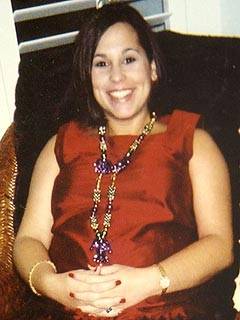
Laci Peterson, 27 and eight months pregnant, disappeared from her Modesto, California home on December 24, 2002; her body and that of her unborn son Conner were found in San Francisco Bay in April 2003, and her husband Scott Peterson was convicted in 2004 of murdering both.
 Credit: Family handout via Suffolk News·Editorial use·SourceCOLDListen
Bury St Edmunds, Suffolk, England · 2016
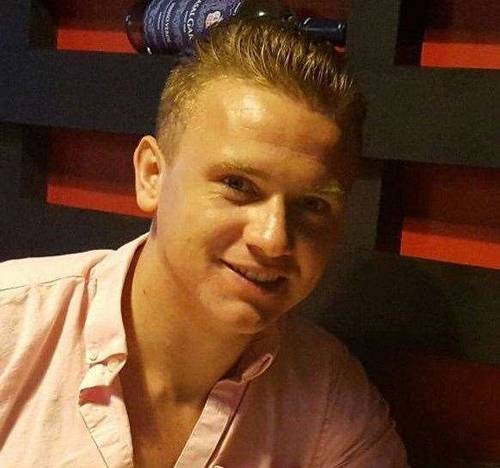
Royal Air Force gunner Corrie McKeague disappeared after a night out in Bury St Edmunds in September 2016, and a 2022 inquest concluded he died after climbing into a waste bin that was tipped into a bin lorry, though his remains were never found.
 Credit: Ted Van Zyl·Editorial use·SourceSOLVEDListen
Albuquerque, New Mexico, United States · 1993
Girly Chew Hossencofft, a Malaysian-born bank teller living in Albuquerque, New Mexico, disappeared on September 9, 1999, shortly after filing for divorce from her husband Diazien Hossencofft. He and his girlfriend Linda Henning were later convicted of her murder. Her body has never been found.
 Credit: Unknown·Editorial use·SourceSOLVEDListen
Slaughter, Louisiana, United States · 2022
Lacey Fletcher, a 36-year-old autistic woman in Slaughter, Louisiana, died in January 2022 after years of medical neglect by her parents, who were later convicted of manslaughter in her death.
 Credit: Via Wikipedia·Editorial use·SourceUNSOLVEDListen
Fulham, London · 1990s
English television presenter Jill Dando was shot dead outside her London home in 1999, and the case remains unsolved.
 Image record·Editorial use·SourceSOLVEDListen
Van Nuys, Los Angeles, California · 1986
Sherri Rasmussen was beaten and shot to death in her Van Nuys condominium in February 1986; the case went cold for more than two decades before Los Angeles police officer Stephanie Lazarus, her husband's former girlfriend, was convicted of first-degree murder in 2012.
 Credit: http://www.dailymail.co.uk/news/article-2681931/Anni-killer-set-freed-months-live.html·Editorial use·SourceSOLVEDListen
Cape Town, South Africa · 2010
Swedish newlywed Anni Dewani was shot dead during a taxi hijacking on her honeymoon near Cape Town in 2010; three men were convicted of the crime and her husband was acquitted and exonerated.
