Start here
KITTY GENOVESE: THE CASE THAT HELPED CREATE 911

Bella Fiori's 39-minute breakdown, the fullest single telling on file.
Watch on YouTubeBefore you continue
This case involves sexual violence. Casepin presents the record in neutral, non-graphic language. Choose whether to continue.
Solved case · 1960s
Also known as Kitty Genovese case · The 38 Witnesses case
 Kitty Genovese (1961)Credit: Public domain (1961 New York booking photo) via Wikimedia Commons·Public domain·Source
The short answer
Kitty Genovese, a 28-year-old bartender, was raped and stabbed to death outside her Kew Gardens, Queens apartment building on March 13, 1964. A widely circulated New York Times account claiming 38 witnesses saw the attack and did nothing was later found to be significantly exaggerated. Winston Moseley was convicted of the murder and died in prison in 2016.
Start hereKITTY GENOVESE: THE CASE THAT HELPED CREATE 911Bella Fiori · 39 minThe coverage index
3 pieces from 3 creators: ranked, with duplicates removed and short clips set aside.
Start here
Video · YouTube · 39 min · 2023
Bella Fiori's 39-minute breakdown, the fullest single telling on file.
Watch on YouTubeKitty Genovese Murder Case Analysis & The Bystander Effect
 Dr. Todd GrandeVideo · YouTube · 13 min · 2020
No one helped?! The Kitty Genovese tragedy & the birth of 911 | Dark History: CLIP
 Bailey SarianVideo · YouTube · 9 min · 2025
Titles and descriptions are the creators’ own and may not reflect current legal status. The sourced facts are in the file below. Players load only when you press play. Suggest coverage we’re missing.
The case file
Catherine "Kitty" Genovese, a 28-year-old bartender who managed Ev's Eleventh Hour Bar in Hollis, Queens, was attacked and killed outside the apartment building where she lived with her girlfriend, Mary Ann Zielonko, at 82–70 Austin Street in the Kew Gardens neighborhood of Queens, New York City, in the early morning hours of March 13, 1964. Genovese had just parked her car near the building when Winston Moseley, who had followed her, attacked her with a hunting knife. She was stabbed, screamed for help, and one neighbor shouted at the attacker, causing him to flee temporarily. Moseley returned about ten minutes later, located Genovese in a rear hallway, stabbed her further, raped her, and robbed her before fleeing again. She was found by her neighbor Sophia Farrar, who comforted her until an ambulance arrived; Genovese died en route to the hospital.
Two weeks after the killing, The New York Times published an article by reporter Martin Gansberg asserting that 37 (later corrected to 38) witnesses saw or heard the attack and that none called police or intervened. This account, encouraged in part by a remark from the police commissioner to a Times editor, became widely cited in psychology textbooks and popular culture as an illustration of urban apathy and what researchers termed the "bystander effect" or diffusion of responsibility, studied notably by psychologists John Darley and Bibb Latané.
Subsequent investigations, including a 2004 New York Times retrospective, a 2007 American Psychologist study, and the newspaper's own 2016 acknowledgment, found the original account substantially exaggerated. Reporting determined that no witness observed the entire attack due to the building's layout and the separate locations of the two assaults, that many neighbors misinterpreted what they heard as a domestic dispute or drunken argument, and that at least two people did attempt to contact police. The Times formally noted in 2016 that its original story had "grossly exaggerated the number of witnesses and what they had perceived."
Winston Moseley, a 29-year-old Queens resident with no prior criminal record, was arrested on March 19, 1964, six days after the murder, during an unrelated burglary investigation. In custody, he confessed to killing Genovese as well as two other women. He was tried only for Genovese's murder, convicted, and sentenced to death in June 1964; the sentence was later commuted to life imprisonment after a 1967 appellate ruling concerning the sanity phase of his sentencing. Moseley escaped custody in 1968, during which he took hostages and committed further assaults before surrendering. He was repeatedly denied parole over subsequent decades and died in prison on March 28, 2016, at age 81, having served 52 years.
The case prompted significant academic research into bystander behavior and is credited by some retrospective reporting with contributing to the eventual development of the U.S. 9-1-1 emergency call system, which did not exist at the time of the murder.
Kitty Genovese, a 28-year-old bar manager, was attacked and fatally stabbed outside her apartment building in Kew Gardens, Queens, in the early hours of 13 March 1964. Winston Moseley was arrested six days later during an unrelated burglary investigation, confessed to the killing, and was convicted in June 1964. Two weeks after her death, The New York Times reported that 38 witnesses had seen or heard the attack and failed to act, an account that shaped decades of psychology teaching on the "bystander effect." Later reporting, a 2007 study in American Psychologist, and the newspaper's own 2016 editor's note found that account substantially exaggerated. Moseley was repeatedly denied parole and died in prison in 2016 after 52 years.
Moseley was not identified through the neighborhood's response at all. He was arrested days later in an unrelated burglary investigation and then confessed to Genovese's killing and to other crimes. The lasting significance of the case turned instead on a newspaper account, prompted in part by a police commissioner's remark to a Times editor, whose central claim about the witnesses was later shown by the paper and by researchers to be inaccurate.
The precise number of people who saw or heard any part of the attack, and what each actually perceived, has never been firmly established. The building's layout and the two separate locations of the assault meant no single witness observed the whole event, and some sounds were misheard as an argument. The claim that the case directly produced the U.S. 9-1-1 emergency system is credited by some retrospective reporting but is not settled as a matter of record.
The widely repeated story that 38 witnesses watched Genovese die and did nothing is not supported by the record. Reporting established that at least two people did try to contact police, that a neighbor reached her and stayed with her as she was dying, and that many who heard sounds did not realize an attack was underway. In 2016 The New York Times appended a note stating that its 1964 article had "grossly exaggerated the number of witnesses and what they had perceived."
The reporting around Genovese's death launched a major line of social-psychology research into how bystanders respond in groups, and it recurs in the history of the emergency-call system that did not yet exist in 1964. The later correction of that reporting is itself a lesson in how an early, vivid narrative can persist after the facts are revised, which is why this file is built around what the record supports about Kitty Genovese herself.
15 dated entries · 1935–2016
Catherine Susan "Kitty" Genovese is born in Brooklyn, New York.
Genovese is attacked and fatally stabbed outside her apartment building in Kew Gardens, Queens.
Genovese is buried at Lakeview Cemetery in New Canaan, Connecticut.
Winston Moseley is arrested during an unrelated burglary investigation and later confesses to Genovese's murder.
The New York Times publishes its article claiming 37 (later corrected to 38) witnesses saw or heard the attack without intervening.
Moseley's trial begins.
A jury finds Moseley guilty of murder.
Moseley is sentenced to death.
The New York Court of Appeals reduces Moseley's sentence to life imprisonment.
Moseley escapes custody while being transported from a hospital in Buffalo, New York.
Moseley takes a couple hostage in Grand Island, New York, before fleeing further.
Moseley surrenders to police after a second hostage incident.
American Psychologist publishes a study finding no evidence for 38 witnesses or that witnesses observed the murder and remained inactive.
Winston Moseley dies in prison at age 81.
The New York Times appends an editor's note to its 1964 article acknowledging significant inaccuracies.
2 named in this file
Victims first. Every legal label is set from public records and court outcomes, not from the prose.
From the record
4 cited
Coverage is not a source: every fact in this file rests on the records below.
Official / agencypubmed.ncbi.nlm.nih.govAccessed Jul 5, 2026
PressNPRAccessed Jul 11, 2026
PressThe New York TimesAccessed Jul 5, 2026
EncyclopedicWikipediaAccessed Jul 5, 2026
Trust
Jul 11, 2026Source review
Added source: 'The Witness' Exposes The Myths, Misconceptions Of Kitty Genovese's Murder (NPR).
SourceJul 11, 2026Source review
Editorial-depth addendum added (the record in sixty seconds; what the investigation turned on; what remains disputed; why this file matters) — a synthesis of the dossier's existing cited record, no new factual claims.
Are you family of someone named in this file? Corrections and removal requests from victims’ families are prioritized.
Near this case
 SOLVEDListen
Forest Hills, Queens, New York City · 2010s
Olga Tsvyk survived a 2016 poisoning in Queens, and Viktoria Nasyrova was convicted of attempting to murder her and steal her identity.
 Credit: Tdorante10·CC BY-SA 4.0·SourceSOLVEDListen
Spring Creek Park, Howard Beach, Queens, New York City · 2010s
Karina Vetrano, a 30-year-old speech pathologist, was sexually assaulted and strangled to death while running in Spring Creek Park, Queens, on August 2, 2016. Chanel Lewis was convicted of her murder in 2019 following a mistrial and retrial, and sentenced to life without parole.
 Image record·Editorial use·SourceSOLVEDListen
Spring Creek Park, Fountain Avenue, Brooklyn, New York · 1980s
Imette St. Guillen, a 24-year-old John Jay College graduate student, was raped and murdered after leaving a Manhattan bar in February 2006. Bouncer Darryl Littlejohn was convicted of her murder in 2009 and sentenced to life without parole.
 Credit: Unknown author·Public domain·SourceSOLVEDListen
16th Street Baptist Church, Birmingham, Alabama · 1963
On September 15, 1963, Ku Klux Klan members bombed the 16th Street Baptist Church in Birmingham, Alabama, killing four Black girls and injuring more than a dozen others, in one of the era's most notorious civil-rights-era terror attacks.
 Credit: Stokes school faculty members (c. 1962).·Public domain·SourceSOLVEDListen
Former residence on East New York Street (near-east side), Indianapolis, Indiana · 1965
Sylvia Likens, a 16-year-old boarder, died in Indianapolis in October 1965 after three months of sustained abuse in the home of her caregiver Gertrude Baniszewski, who was convicted of murder along with several youths.
Shizuoka Prefecture, Japan · 1966
In 1966, an executive, his wife, and their two children were found stabbed to death after a fire at their home in Shizuoka Prefecture, Japan. Former boxer Iwao Hakamada was convicted and sentenced to death in 1968 based on a disputed confession and contested physical evidence; after nearly five decades on death row, DNA testing led to his release in 2014 and acquittal in a 2024 retrial.
Also covered by
 Credit: English Wikipedia·Editorial use·SourceSOLVEDListen
Modesto, California · 2002
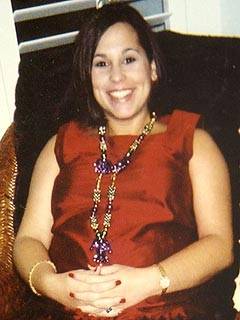
Laci Peterson, 27 and eight months pregnant, disappeared from her Modesto, California home on December 24, 2002; her body and that of her unborn son Conner were found in San Francisco Bay in April 2003, and her husband Scott Peterson was convicted in 2004 of murdering both.
 Credit: Family handout via Suffolk News·Editorial use·SourceCOLDListen
Bury St Edmunds, Suffolk, England · 2016
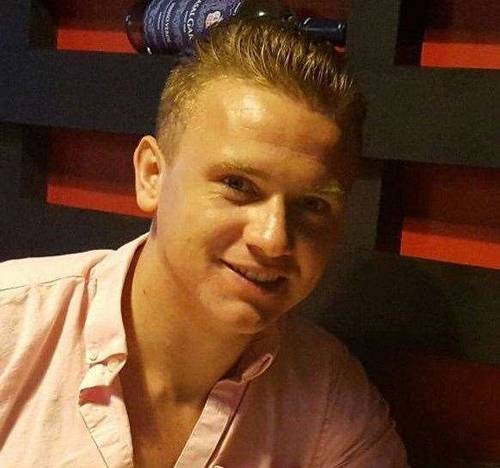
Royal Air Force gunner Corrie McKeague disappeared after a night out in Bury St Edmunds in September 2016, and a 2022 inquest concluded he died after climbing into a waste bin that was tipped into a bin lorry, though his remains were never found.
 Credit: Ted Van Zyl·Editorial use·SourceSOLVEDListen
Albuquerque, New Mexico, United States · 1993
Girly Chew Hossencofft, a Malaysian-born bank teller living in Albuquerque, New Mexico, disappeared on September 9, 1999, shortly after filing for divorce from her husband Diazien Hossencofft. He and his girlfriend Linda Henning were later convicted of her murder. Her body has never been found.
 Credit: Unknown·Editorial use·SourceSOLVEDListen
Slaughter, Louisiana, United States · 2022
Lacey Fletcher, a 36-year-old autistic woman in Slaughter, Louisiana, died in January 2022 after years of medical neglect by her parents, who were later convicted of manslaughter in her death.
 Credit: Via Wikipedia·Editorial use·SourceUNSOLVEDListen
Fulham, London · 1990s
English television presenter Jill Dando was shot dead outside her London home in 1999, and the case remains unsolved.
 Image record·Editorial use·SourceSOLVEDListen
Van Nuys, Los Angeles, California · 1986
Sherri Rasmussen was beaten and shot to death in her Van Nuys condominium in February 1986; the case went cold for more than two decades before Los Angeles police officer Stephanie Lazarus, her husband's former girlfriend, was convicted of first-degree murder in 2012.
 Credit: http://www.dailymail.co.uk/news/article-2681931/Anni-killer-set-freed-months-live.html·Editorial use·SourceSOLVEDListen
Cape Town, South Africa · 2010
Swedish newlywed Anni Dewani was shot dead during a taxi hijacking on her honeymoon near Cape Town in 2010; three men were convicted of the crime and her husband was acquitted and exonerated.