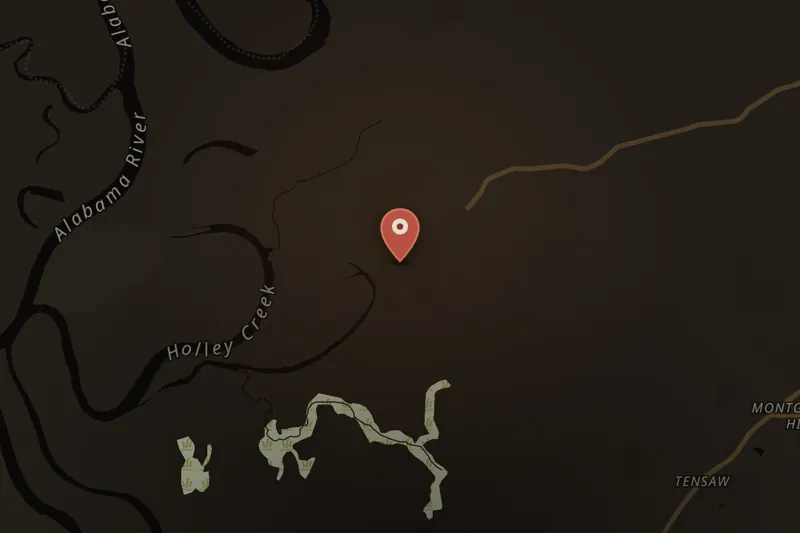
Fort Mims was a stockaded homestead about 35–45 miles north of Mobile, Alabama, built around the house and outbuildings of settler Samuel Mims. During the summer of 1813, civil war within the Creek Nation intensified between the nativist Red Stick faction, based in the Upper Towns and opposed to land cessions and cultural assimilation, and other Creeks who had adopted more elements of European-American culture. Alarmed by rising tensions, white settlers and mixed-heritage Creek families from the Tensaw area took refuge in fortified posts such as Fort Mims, which held roughly 517 people, including about 265 armed militiamen, under the command of Major Daniel Beasley.
In the weeks before the attack, American forces led by Colonel James Caller and Major Beasley had ambushed a Red Stick party returning from Spanish Pensacola with supplies, in the Battle of Burnt Corn in July 1813. Following this clash, nearly 1,000 Red Stick warriors from thirteen Creek towns gathered under the command of Peter McQueen and William Weatherford (Red Eagle) to plan an attack on Fort Mims. Despite warnings from enslaved scouts and mounted patrols in the days and hours before the assault, Beasley dismissed the reports, reportedly while intoxicated, and left the fort poorly defended, including an east gate partially blocked open by drifting sand.
On August 30, 1813, the Red Sticks attacked during the fort's midday meal, rushing the open gate and seizing the outer enclosure and gun loopholes. Defenders under Captain Dixon Bailey held the inner enclosure for about two hours before a lull, during which Creek attackers debated continuing the assault, in part to avenge losses at Burnt Corn. A second assault began around 3 p.m.; defenders fell back to a structure called the "bastion," which the Red Sticks set on fire, and the blaze spread through the stockade. The inner defenses collapsed, and most militia, settlers, and allied Creeks inside were killed. An estimated 500 people—militiamen, settlers, enslaved people, and Creek allies—died or were captured, and the Red Sticks took some 250 scalps. While the Red Sticks generally spared enslaved Black captives' lives, they took more than 100 of them, including at least three women and ten children. About 36 people, mostly men, escaped, along with two women and a girl; Bailey was mortally wounded. A relief party arriving weeks later from Fort Stoddard found 247 defenders' bodies and 100 Creek attackers' bodies.
The attack caused widespread panic across the frontier, prompting thousands of settlers to flee to Mobile, and marked the shift from internal Creek conflict to a war between the United States and the Red Sticks. State militias, eventually commanded by Andrew Jackson with Cherokee allies, later defeated Red Stick forces at the Battle of Horseshoe Bend, ending the Creek War. The Fort Mims site was added to the National Register of Historic Places on September 14, 1972, and is maintained by the Alabama Historical Commission.


 SOLVEDListen